Table of Contents
Ever feel like your car’s interior is a black hole for crumbs, pet hair, and that mysterious glitter you swear wasn’t there yesterday? You’re not alone. Modern vehicles are mobile command centers, yet keeping them spotless often feels like a losing battle against snacks, dirt, and life’s daily debris. Standard household vacuums are too bulky, cords get tangled around seats, and that forgotten french fry? It laughs in the face of your best efforts. The solution isn’t magic—it’s a purpose-built handheld vacuum designed specifically for the unique chaos of car interiors. These compact powerhouses tackle tight crevices, upholstery nightmares, and fleeting messes before they become permanent fixtures.
Forget the frustration of lugging heavy equipment or wrestling with cords in confined spaces. The right handheld vacuum transforms car cleaning from a dreaded chore into a quick, satisfying ritual you might even look forward to. But with so many options flooding the market, how do you cut through the marketing hype to find the truly effective tool for your dashboard, seats, and floor mats? It’s not just about raw suction power; it’s about intelligent design, battery longevity that matches your schedule, and features that solve real problems you face daily. This guide cuts through the noise, focusing on the essential criteria that separate a fleeting gimmick from a garage-worthy essential for maintaining your vehicle’s interior like a pro.
Top 10 Handheld Vacuums for Cars
Detailed Product Reviews
1. EYYA Handheld Cordless Car Vacuum Cleaner, 4-in-1 Portable Mini Car Vacuum Cleaner, 15000PA High Power & Air Duster with LED Light for Home Office

Overview:
The EYYA Handheld Vacuum is a versatile cordless cleaner targeting cars, homes, and offices. Its 15000PA suction tackles debris, dust, and pet hair, while the 4-in-1 functionality (suction, blowing, inflation, vacuum compression) and seven accessories expand its utility beyond typical handheld vacuums.
What Makes It Stand Out:
The true differentiator is its multi-mode versatility—blowing dust from keyboards or inflating air mattresses adds unique value. The integrated LED light illuminates dark crevices, and the dual HEPA/steel filtration ensures consistent suction without clogs. At just 0.88lbs, its ultra-lightweight design and rapid 2.5-hour Type-C charging enhance portability.
Value for Money:
Priced competitively, it outperforms single-function rivals. The reusable filters and 4000mAh battery (25min runtime) reduce long-term costs versus disposable air dusters. While runtime lags behind premium models, the 4-in-1 capability justifies the cost for users needing inflation/blowing features.
Strengths and Weaknesses:
Strengths: Exceptional versatility; quiet operation (40dB); effortless one-click dust emptying; compact size.
Weaknesses: Shorter battery life (25min); smaller dust capacity than competitors; no charging dock included.
Bottom Line:
Ideal for users prioritizing multi-functionality and portability over extended runtime. Its blowing/inflation modes make it a standout for car and home tidying, earning a strong recommendation for casual cleaners.
2. Gxzsk Handheld Vacuum Cordless, 15000PA Strong Suction Hand Held Car Vacuum Cleaner Rechargeable, Portable Hand Vacuum with Multi-Nozzles & Washable Filter for Home Office, Car, Pets

Overview:
The Gxzsk Vacuum delivers robust 15000PA suction in a lightweight (1.52lbs), cordless design suited for cars, homes, and pet hair cleanup. Its 6000mAh battery, dual filtration, and specialized nozzles target thorough cleaning across diverse surfaces.
What Makes It Stand Out:
The 520mL large-capacity dust cup is a key advantage, reducing frequent emptying during extended sessions. The pet-hair-focused brush nozzle and bendable extension hose excel at reaching ceilings or under furniture. Enhanced runtime (30min) and a washable HEPA filter also elevate its practicality.
Value for Money:
Offers excellent balance: the larger dust bin and pet-specific tools justify a mid-tier price. Longer runtime than the EYYA model and reusable filters lower ownership costs versus cheaper vacuums with weak suction or disposable parts.
Strengths and Weaknesses:
Strengths: Generous dust capacity; effective pet-hair removal; 30min runtime; ergonomic grip.
Weaknesses: Slightly heavier than rivals; no LED light for dark areas; 3-hour charging time.
Bottom Line:
A top pick for pet owners and those needing extended cleaning sessions. The large dust cup and specialized attachments deliver superior value, making it highly recommended for homes with animals or cluttered spaces.
3. CKIKH Handheld Vacuum Cordless, 15000PA Strong Suction Hand Held Car Vacuum Cleaner Portable with Multi-Nozzles & Washable Filter, Lightweight Dust Busters Rechargeable for Home, Car, Office, Pets

Overview:
The CKIKH Vacuum combines 15000PA cyclonic suction with a high-capacity 7800mAh battery, targeting deep cleaning in cars, homes, and offices. Its focus on sustained suction power and versatile attachments caters to stubborn debris and pet hair.
What Makes It Stand Out:
Cyclonic technology maintains suction strength by preventing filter clogs—critical for pet hair and fine dust. The industry-leading 7800mAh battery (30min runtime) and 3.5-hour Type-C charge outperform most rivals. Three HEPA/metal filters also ensure superior air quality during use.
Value for Money:
Priced higher but justified by the premium battery and cyclonic system. The extended runtime and reduced maintenance (dual filters) offer savings over models needing frequent filter replacements. Ideal for large vehicles or multi-room homes where power matters.
Strengths and Weaknesses:
Strengths: Unmatched battery capacity; cyclonic suction retention; comprehensive filtration; smart lock for continuous use.
Weaknesses: Heaviest option (1.7lbs); smaller 400mL dust cup; bulkier than ultra-compact rivals.
Bottom Line:
Best for users prioritizing battery life and sustained suction. Its cyclonic tech and large battery make it a premium investment for thorough, frequent cleaning—highly recommended despite the weight trade-off.
4. KMM Handheld Car Vacuum Cleaner, 9000Pa Vacuum Cleaner and Air Duster, 120W High Power Hand Held Vacuum with LED Light and Multi-Nozzles for Car, Home, Office, Pet

Overview:
The KMM Vacuum is a budget-friendly 2-in-1 air duster and cleaner with 9000PA suction. Designed for quick cleanups, it emphasizes portability (0.72lbs) and dual suction/blowing modes for keyboards, cars, and electronics.
What Makes It Stand Out:
Its true air duster functionality stands apart—blowing power rivals compressed air cans, ideal for electronics. The ultra-lightweight build and one-click dust release simplify storage and maintenance. LED lighting also aids dark-area cleaning at a low cost.
Value for Money:
The most affordable option, replacing disposable air dusters while covering basic vacuuming needs. The 4000mAh battery (3-hour charge) and reusable HEPA filter keep long-term costs minimal, though suction is weaker than 15000PA models.
Strengths and Weaknesses:
Strengths: Exceptional portability; genuine air duster utility; budget pricing; LED light.
Weaknesses: Lower suction (9000PA); shorter runtime; less effective on carpets/pet hair.
Bottom Line:
Perfect for occasional use on electronics, desks, or small car messes. Not for deep cleaning, but unmatched as a duster-vacuum hybrid—recommended for students or minimalists on a budget.
5. BLACK+DECKER dustbuster AdvancedClean Handheld Vacuum Cordless, Compact Home and Car Vacuum with Crevice Tool ,Rotating Nozzle and Charging Station, Large Dust Bowl (CHV1410L)

Overview:
The BLACK+DECKER dustbuster leverages its #1 brand reputation with a no-frills cordless vacuum designed for quick home and car cleanups. Its rotating nozzle, compact form, and included charging station prioritize convenience for everyday debris.
What Makes It Stand Out:
The wall-mountable charging dock ensures the vacuum is always ready and stored neatly—rare in this category. The rotating crevice tool adapts to tight spaces like car vents, while the large dust bowl simplifies emptying versus smaller rivals.
Value for Money:
Slightly pricier but justified by brand reliability and the charging station. It lacks ultra-high suction (specs not listed but typically lower than 15000PA models), yet excels as a dependable “always-ready” tool for crumbs or light dust.
Strengths and Weaknesses:
Strengths: Convenient charging dock; rotating nozzle; trusted brand durability; large dust capacity.
Weaknesses: Moderate suction power; no HEPA filter; shorter runtime than high-end models.
Bottom Line:
A reliable, user-friendly choice for routine maintenance cleaning. The charging station and rotating nozzle add practical value, making it ideal for households wanting hassle-free storage—recommended for light-duty use.
6. MONOZEL Car Vacuum Portable Cordless, 18000Pa 2 in 1 Vacuum Cleaner&Air Duster, 130W Brushless Motor Handheld Vacuum Cordless with 7800mAh Battery, LED Light, Multi-Nozzles for Car, Home, Office, Pet

Overview: This versatile cordless handheld vacuum combines 18,000Pa suction (in Max mode) with air-dusting functionality, targeting car interiors, homes, and offices. Its 130W brushless motor, 7,800mAh battery, and multi-nozzle kit emphasize portability and adaptability for quick cleanups.
What Makes It Stand Out: The dual vacuum/blower modes and included inflatable nozzles (for balloons/swim rings) offer exceptional multi-functionality. The brushless motor delivers quiet operation (≤85dB) and extended lifespan versus brushed alternatives, while LED lighting aids visibility in dark crevices.
Value for Money: Priced mid-range, it justifies cost through the large 7,800mAh battery (32 mins Eco/18 mins Max runtime), reusable HEPA filter, and comprehensive accessories. It outperforms cheaper models in suction longevity and versatility, though premium brands may offer larger capacity.
Strengths and Weaknesses: Strengths: Powerful dual-mode suction, quiet brushless motor, rapid Type-C charging, and thoughtful nozzles (including three inflatable sizes). Weaknesses: Small 0.26L dust cup requires frequent emptying; Max mode runtime is limited for large jobs.
Bottom Line: Ideal for pet owners and frequent travelers needing a quiet, multi-functional cleaner for cars and tight spaces. The robust motor and air-dusting capability make it a top value pick despite modest capacity.
7. Portable Cordless Car Vacuum, 4-in-1 Handheld Cordless Vacuum with 30,000Pa Suction, 130,000 RPM, 6,800mAh Battery, 10 Nozzles, Rubber Paint Material for Car, Home,Birthday Gifts for Men Dad Husband
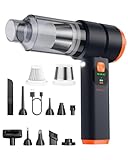
Overview: A 4-in-1 powerhouse claiming 30,000Pa suction and 130,000 RPM speed, designed for vacuuming, blowing, inflating, and air evacuation. Its 6,800mAh battery, 10 specialized nozzles, and dual-filter system target deep cleaning in cars, homes, and offices.
What Makes It Stand Out: Unmatched nozzle variety (10 pieces) covers niches like air evacuation for vacuum bags and pet-hair removal. The dual-filter system captures 99.97% of allergens, while the rubberized grip ensures comfort during extended use—rare in this category.
Value for Money: Competitive pricing for its inflation/evacuation features and 40-minute Eco runtime. However, the 30,000Pa claim is likely overstated (typical handhelds max at 20kPa), reducing perceived value versus honest mid-tier rivals with proven suction.
Strengths and Weaknesses: Strengths: Exceptional nozzle versatility, long runtime, quiet operation (<75dB), and washable filters. Weaknesses: Questionable suction specs; inflation function lacks dedicated nozzles in some kits; bulky for tight storage.
Bottom Line: Best for gift-giving or users needing inflation/evacuation versatility. Despite inflated suction claims, its nozzle range and runtime make it practical for households with diverse cleaning needs.
8. Scstartx Portable Car Vacuum Cordless Mini Handheld Vacuums Cleaner Rechargeable with LCD Display and Multi-Nozzles, High Power Hand held Cleaners for Car, Home, Office, Sofa, Pet Hair,Keyboard

Overview: An ultra-compact vacuum (0.92 lbs) with 17,000Pa suction, LCD battery display, and dual vacuum/blower modes. Targeted at quick cleanups in cars, keyboards, and desks, it features a 2,000mAh battery and ergonomic handle.
What Makes It Stand Out: Its featherlight weight and semi-transparent dirt bowl enable effortless portability and usage monitoring. The front-vacuum/back-blow design simplifies switching functions without nozzle changes—ideal for rapid dust removal from electronics.
Value for Money: Budget-friendly but limited by short 15–30-minute runtime and modest 17,000Pa suction. Better suited for small messes than whole-car cleaning; competes well on price for occasional users but lacks the battery depth of pricier models.
Strengths and Weaknesses: Strengths: Extremely lightweight, intuitive dual-mode airflow, easy washable filter, and LCD display. Weaknesses: Weak suction for embedded debris; tiny 2,000mAh battery; no LED light for dark areas.
Bottom Line: A niche pick for keyboard/electronics cleaning or as a travel companion. Avoid for pet hair or large vehicles due to runtime constraints, but perfect for quick desktop or car-seat spot cleans.
9. KMM Handheld Car Vacuum Cleaner, 10000PA Vacuum Cleaner & Air Duster, 120W High Power Hand Held Vacuum Cordless, Portable Vacuum Rechargeable with Multi-Nozzles & LED Light for Car, Home, Pet, Office

Overview: A balanced 10,000Pa handheld vacuum with 120W motor, Type-C charging, and dual metal/HEPA filtration. Weighing 1.01 lbs, it includes six nozzles for vacuuming, blowing, inflating, and air evacuation, plus an LED light.
What Makes It Stand Out: The dual-filter system (metal pre-filter + HEPA) excels at trapping fine dust and extending motor life. Unique air-evacuation nozzle for vacuum bags adds unexpected utility, while the 75dB noise level ensures discreet operation.
Value for Money: Mid-priced with strong justification: 30-minute runtime, versatile nozzles, and durable metal filters. Outperforms entry-level models in filtration and build, though higher-end units offer stronger suction.
Strengths and Weaknesses: Strengths: Superior dual filtration, quiet operation, ergonomic design, and useful air-evacuation feature. Weaknesses: Modest 10,000Pa suction struggles with wet debris; 200mL dust cup fills quickly.
Bottom Line: Highly recommended for allergy sufferers and pet owners needing reliable, quiet cleaning. Its filtration and nozzle versatility deliver exceptional everyday value for car and home use.
10. Car Vacuum Portable Cordless Handheld Vacuum Cleaner 4-in-1 Mini Cordless Vacuum with 2 Suction Modes and 16800pa Suction Power Blowing & Inflating 2 Modes Handheld Vacuum for Car, Desk, Keyboards

Overview: A minimalist 4-in-1 vacuum (16.8kPa suction) with two suction modes, blowing/inflating functions, and 10 accessories. Its 1 lb weight and 170ml dust cup target commuters and minimalists for car and desk cleanups.
What Makes It Stand Out: Unbeatable portability—it fits in door pockets or travel bags. The dual suction modes (Eco: 30–40 mins; Max: 10–20 mins) balance runtime and power, while the push-in brush head tackles stubborn dust without extra attachments.
Value for Money: Excellent for its size and price, but compromises exist: suction drops noticeably in Max mode when low on battery. Ideal as a secondary vacuum; primary users may prefer models with larger capacity.
Strengths and Weaknesses: Strengths: Ultra-portable, intuitive latch-emptying system, Type-C charging, and effective crevice tools. Weaknesses: Weak Max-mode suction consistency; small dust cup; no LED light.
Bottom Line: The go-to choice for road trips or office desks where space is critical. Not for heavy-duty cleaning, but unmatched for quick, cord-free spot treatments in tight quarters.
Why Standard Vacuums Fail in Your Car
The Cramped Quarters Conundrum
Car interiors present unique spatial challenges that render traditional vacuums nearly useless. Awkward angles behind seats, narrow gaps between the center console and door, and the low clearance under front seats demand a tool that’s inherently compact and maneuverable. Bulky uprights or even larger stick vacuums simply can’t pivot effectively in these tight spots, leaving dirt trapped where you can see it but can’t reach. A true car-cleaning vacuum must be designed from the ground up for agility, fitting effortlessly where larger machines dare not tread.
Upholstery and Material Sensitivity
Vehicle interiors combine a complex mix of surfaces: delicate leather stitching, textured cloth seats prone to snagging, smooth plastic trim, rubber floor mats, and sometimes even carpeting with deep pile. Standard vacuums often use aggressive brush rolls or lack precise suction control, risking damage to sensitive materials. The ideal handheld solution incorporates gentle yet effective cleaning heads and variable suction settings to handle everything from fine dust on a dashboard to embedded gravel in floor mats without causing wear or tear.
The Debris Spectrum Challenge
Cars accumulate an incredibly diverse range of messes—from fine sand and coffee grounds that sink deep into fibers to sticky spills, pet hair that tangles relentlessly, and large debris like leaves or food wrappers. A vacuum built only for fine dust will choke on larger items, while one optimized for heavy debris might lack the finesse for delicate surfaces. Effective car vacuums need versatile cleaning capabilities, adapting suction and airflow dynamically to handle this unpredictable debris spectrum without constant filter clogs or performance drops.
Critical Performance Factors You Can’t Ignore
Suction Power: Beyond the PSI Hype
While suction strength (often measured in air watts or kPa) is crucial, raw numbers alone are misleading. What matters most is sustained suction—how well the vacuum maintains power as the dustbin fills or when tackling dense debris like wet sand. Look for models emphasizing airflow efficiency and motor design that prevents rapid suction decay. True car-cleaning effectiveness comes from consistent performance across the entire cleaning session, not just a brief peak at the start.
Battery Life Realities for Real-World Use
Don’t be fooled by maximum runtime claims under ideal lab conditions. For car cleaning, you need realistic runtime that covers your typical session—including multiple passes over seats, floors, and tight spots. Aim for models offering at least 15-20 minutes of usable runtime on medium suction (the most common setting for detailed car work). Crucially, check the recharge time; a vacuum that takes 4+ hours to recharge defeats the purpose of quick cleanups. Fast-charging capabilities (under 2 hours) are a significant advantage for spontaneous use.
Filtration That Actually Captures Fine Particles
In the confined space of a car, kicking up fine dust isn’t just ineffective—it’s counterproductive and potentially harmful. A multi-stage filtration system, particularly one featuring a certified HEPA filter, is non-negotiable. This ensures microscopic particles like pollen, mold spores, and fine allergens are trapped inside the vacuum, not blown back into your breathing space. Washable filters are a major plus for longevity and cost savings, but verify their cleaning process is straightforward and doesn’t compromise seal integrity.
Design Elements That Make or Break Car Cleaning
Ergonomic Mastery for Confined Maneuvering
Cleaning a car involves contorting into awkward positions: reaching under seats, leaning across consoles, twisting to clean door pockets. The vacuum must feel balanced and comfortable in hand for these extended, often one-handed maneuvers. Lightweight construction (under 3 lbs) is essential, but so is grip design—non-slip materials, intuitive button placement, and a shape that won’t roll off your lap. Avoid top-heavy designs that strain your wrist during prolonged use.
Attachment Versatility Without the Hassle
Generic crevice tools and brushes won’t cut it for cars. Seek specialized, securely attachable tools designed for automotive specifics: a narrow, tapered nozzle for seat tracks and AC vents; a soft-bristle brush for dashboards and screens without scratching; and a motorized pet hair tool if applicable. The attachment storage system is equally critical—magnets or dedicated docks on the vacuum body itself prevent losing tiny tools in your glove compartment. Avoid models requiring separate cases.
Dustbin Capacity vs. Practicality Trade-Off
A massive dustbin seems appealing until you realize it makes the vacuum top-heavy and cumbersome for overhead cleaning or tight spots. For most cars, a 0.2 to 0.4-liter bin strikes the ideal balance—large enough for multiple seats and mats without constant emptying, yet small enough to maintain agility. Crucially, the emptying mechanism must be truly hygienic and tool-free; nobody wants to touch compacted debris or use fingers to dislodge stubborn hair from a tiny bin. Look for one-touch, bottom-eject designs.
Smart Features Elevating Basic Functionality
Wet/Dry Capability: Worth the Investment?
While most car messes are dry, unexpected spills happen. A vacuum with true wet/dry capability (not just “damp” tolerance) handles coffee, soda, or melted snow without motor damage. This requires specific seals, a non-porous dustbin, and often a separate foam filter. Assess your risk—if you regularly carry kids, pets, or drinks—the ability to quickly tackle minor liquid spills justifies the slightly higher cost and weight, preventing stains and odors from setting in.
Noise Levels: Preserving Your Sanity
Loud vacuums aren’t just annoying; they disrupt your focus during cleaning and can be startling in a quiet garage. Opt for models specifically engineered for lower decibel output (under 75 dB). This is achieved through motor insulation, optimized airflow paths, and acoustic dampening materials. Quieter operation makes the task less stressful and allows you to clean without disturbing neighbors or household members.
LED Task Lighting: Seeing the Unseen
Dust, crumbs, and hair love to hide in shadows—under seats, in seat crevices, and along floor mat edges. Integrated, bright LED lights positioned near the nozzle tip illuminate these dark zones, ensuring you actually see what you’re cleaning. This isn’t just a gimmick; it dramatically improves effectiveness by revealing debris standard vacuums would miss, turning guesswork into targeted cleaning.
Optimizing Your Vacuum for Long-Term Car Care Success
Strategic Storage Solutions Within Reach
The best vacuum is useless if it’s buried in the trunk or garage. Prioritize models with compact charging docks that mount securely inside your vehicle—on a seatback, under a seat, or in the trunk organizer. Magnetic wall mounts in the garage also ensure it’s always charged and visible. Avoid solutions requiring complex installation; easy, tool-free mounting encourages regular use.
Simplified Maintenance for Peak Performance
A vacuum clogged with hair or a dirty filter loses suction rapidly. The easiest-to-maintain models feature:
- Tool-free bin emptying: One-button release where debris ejects cleanly downward.
- Washable, accessible filters: No hidden compartments; filters that dry quickly.
- Tangle-free brush rolls (if applicable): Designs that prevent hair wrap or allow easy removal for cleaning.
- Visible bin levels: Clear chambers so you know when to empty before performance drops. Neglecting maintenance turns even the best vacuum into a paperweight.
Tailoring Use to Your Specific Vehicle Layout
Consider your car’s unique anatomy. SUVs and trucks often demand longer runtime for larger interiors and tougher debris (mud, gravel). Compact cars prioritize extreme maneuverability for tight footwells. Convertibles need extra attention to fabric tops and potential water exposure. Vehicles frequently used for pets require exceptional hair-handling tools and robust filtration. Match the vacuum’s strengths to your vehicle’s primary challenges.
Beyond the Vacuum: Building an Effective Car Cleaning Routine
The Power of Pre-Cleaning Prep
Don’t just grab the vacuum and dive in. Take 30 seconds to:
- Remove large debris by hand (empty bottles, wrappers).
- Shake out floor mats vigorously outside the vehicle.
- Use a microfiber cloth to lift surface dust from dashboards and screens before vacuuming (prevents scratching). This simple prep prevents vacuum clogs and ensures the machine focuses on embedded dirt, not large obstacles.
Targeted Cleaning Techniques for Stubborn Areas
- Seat Tracks: Use the narrowest crevice tool at full suction, moving slowly back and forth while gently vibrating the tool to dislodge packed debris.
- Between Seats & Center Console: Angle the vacuum nozzle carefully, using short bursts of suction to avoid scratching surfaces. A soft brush attachment helps loosen grit first.
- Carpeted Mats: Employ a motorized brush roll attachment (if equipped) on medium suction to agitate fibers, then follow with a crevice tool for edges. Always vacuum with the pile direction.
- Vents: Use the smallest nozzle with low suction to avoid damaging delicate vanes; blow compressed air first if heavily caked.
Integrating Vacuuming into Your Maintenance Schedule
Consistency beats deep cleans. Aim for 5-10 minute “spot vacuuming” sessions weekly—focus on high-traffic zones (driver’s seat, floor mats). Do a thorough interior vacuum monthly. This prevents dirt buildup that becomes exponentially harder to remove, preserving upholstery and reducing odors. Pair vacuuming with wiping surfaces for a truly refreshed cabin.
Frequently Asked Questions
Frequently Asked Questions
How often should I vacuum my car interior for optimal cleanliness?
Weekly spot cleaning of high-traffic areas prevents deep-set dirt, while a full interior vacuum every 4-6 weeks maintains long-term cleanliness and protects upholstery.
Can these vacuums effectively remove pet hair from car seats?
Yes, but effectiveness depends on specialized tools. Look for models with motorized pet hair attachments featuring tangle-free designs and strong, focused suction to lift hair embedded in fabric or leather seams.
Is HEPA filtration necessary for car vacuuming?
Absolutely. Cars trap concentrated allergens like pollen and dust mites. HEPA filtration captures 99.97% of particles 0.3 microns or larger, preventing recirculation of fine dust into the confined cabin air you breathe.
What’s the ideal battery runtime for thorough car cleaning?
Aim for 15-20 minutes of real-world runtime on medium suction. This covers seats, floor mats, and tight spots without needing a recharge mid-task. Always prioritize sustained suction over maximum advertised time.
Can I use a handheld vacuum on wet spills in my car?
Only if it’s explicitly designed for wet/dry use. Standard dry vacuums can suffer motor damage or electrical issues from liquid. True wet/dry models have sealed motors and non-porous bins—never assume a vacuum handles moisture.
How do I prevent hair from clogging the vacuum bin and filter?
Use the motorized pet tool attachment to minimize tangles at the source. Empty the bin after every use before hair compacts. Regularly rinse washable filters and clear any debris from the brush roll (if equipped) using the included unclogging tool.
Are corded handheld vacuums viable for car cleaning?
Generally not recommended. Cords limit mobility in tight spaces, create tripping hazards around open doors, and require access to an outlet—defeating the purpose of quick, spontaneous cleanups. Cordless offers essential freedom.
What suction level should I use for delicate car dashboards?
Always start on the lowest setting. Use the soft-bristle brush attachment with gentle pressure. High suction can potentially dislodge fragile components or scratch sensitive finishes over time—low and steady wins the race.
How can I maximize the lifespan of my car vacuum’s battery?
Avoid fully depleting the battery regularly; recharge when it drops to 20-30%. Store it partially charged (around 50%) in a cool, dry place if unused for weeks. Extreme heat (like a hot car interior) significantly degrades battery health.
Why does my vacuum lose suction quickly during car cleaning?
This usually indicates a clog in the nozzle, wand, or filter. Check for hair or debris blocking airflow immediately. A full dustbin or a dirty, uncleaned filter are the most common culprits—empty the bin and rinse filters as per the manual after each use.