Table of Contents
Living with asthma means constantly navigating a world filled with potential triggers, and indoor air quality is a battlefield many fight daily. Dust mites, pet dander, pollen tracked inside, and microscopic debris can linger in carpets and on hard floors, becoming invisible adversaries that turn a simple walk through your living room into a potential breathing challenge. It’s not just about comfort; it’s about creating a sanctuary where every breath feels easier. The right cleaning tool isn’t a luxury—it’s a critical component of managing your health and reclaiming peace of mind within your own home.
Canister vacuums often emerge as a top contender for allergy and asthma sufferers, but not all models deliver the relief you desperately need. The market is flooded with options boasting “allergy-friendly” labels, yet many fall short when it comes to truly capturing and containing the ultrafine particles that wreak havoc on sensitive airways. Choosing wisely requires moving beyond marketing hype and understanding the specific engineering features that transform a vacuum from a mere dirt mover into a powerful ally for cleaner, healthier indoor air. This guide cuts through the noise, focusing solely on the science-backed features that matter most for reducing airborne irritants and supporting better respiratory health.
Top 10 Canister Vacuums for Asthma Sufferers
Detailed Product Reviews
1. Eureka WhirlWind Bagless Canister 2.5L Vacuum Cleaner, Lightweight Vac for Carpets and Hard Floors, NEN110A, Blue
, Lightweight Vac for Carpets and Hard Floors, NEN110A, Blue](https://m.media-amazon.com/images/I/41ml8jhfQOL._SL160_.jpg)
Overview: The Eureka WhirlWind is a compact, bagless canister vacuum designed for versatile home cleaning across carpets, hard floors, and upholstery. Its lightweight 8.15-pound build and 960-watt motor target easy maneuverability without sacrificing core suction power for everyday messes. What Makes It Stand Out: Integrated airflow control on the handle allows instant surface switching, while the 2-in-1 crevice tool/dusting brush stored in the hose handle ensures tools are always accessible. The washable filters and automatic cord rewind significantly reduce user hassle compared to bagged competitors. Value for Money: Priced mid-range, it offers excellent value for small-to-medium homes. Eliminating bag costs over time and avoiding complex maintenance (thanks to the simple bagless design) makes it economical long-term, though its 960W motor is less powerful than some pricier models. Strengths and Weaknesses: Strengths: Extremely lightweight, intuitive tool storage, zero ongoing filter/bag costs, effortless emptying. Weaknesses: Lower wattage may struggle with deep carpet debris, 2.5L bin fills quickly on larger jobs, plastic wand feels less durable than metal alternatives. Bottom Line: Ideal for apartment dwellers or those prioritizing ease of use and low upkeep over heavy-duty power; a smart, budget-friendly choice for routine cleaning on mixed surfaces.
2. Eureka 3670M Canister Cleaner, Lightweight Powerful Vacuum for Carpets and Hard floors, w/ 5bags,Yellow

Overview: This bagged canister vacuum emphasizes portability and strong suction for whole-home use. At 8.6 pounds and 1200 watts, it tackles carpets, stairs, cars, and upholstery, coming with five dust bags and essential attachments for versatile cleaning tasks. What Makes It Stand Out: The 12-amp motor delivers robust, consistent suction ideal for embedded dirt, while the “messy-free” bag replacement system minimizes dust exposure. Its lightweight design paired with two extension wands enables access to tight spaces like car seats and high ceilings. Value for Money: The included 5-bag starter kit adds initial value, but ongoing bag costs ($20-$30 for 5) elevate long-term expenses. It’s competitively priced for its power, though bagless models may prove cheaper over 2+ years despite similar upfront cost. Strengths and Weaknesses: Strengths: Powerful motor for deep cleaning, highly portable, excellent reach with wands, hassle-free bag changes. Weaknesses: Continuous bag purchases increase cost of ownership, lacks washable filters (relying solely on bags), no swivel steering limits maneuverability around furniture. Bottom Line: A solid pick for those preferring bagged convenience and needing strong suction for carpets/pet hair, but budget-conscious users should factor in recurring bag expenses.
3. Miele Classic C1 Pure Suction Bagged Canister Vacuum, Graphite Grey - Portable, Household
 Vacuum, Graphite Grey - Portable, Household](https://m.media-amazon.com/images/I/31L7mYRuflL._SL160_.jpg)
Overview: The Miele C1 Pure Suction is a precision German-engineered canister vacuum optimized for hard floors and low-pile rugs. It focuses on exceptional filtration and maneuverability rather than raw power, using a bagged system for consistent performance. What Makes It Stand Out: Miele’s Airclean 3-tiered filtration (bag, motor, exhaust filters) captures 99.9% of particles, expelling cleaner air. Six adjustable suction settings fine-tune cleaning for delicate surfaces, while the compact design glides effortlessly under furniture with minimal effort. Value for Money: Higher upfront cost is justified by Miele’s legendary durability (often 15+ years) and health-focused filtration. Though bags cost more ($15-$25 for 4), reduced filter replacements and longevity make it economical for allergy sufferers or hardwood-focused homes long-term. Strengths and Weaknesses: Strengths: Unmatched air quality, whisper-quiet operation, superb build quality, effortless handling. Weaknesses: Underpowered for deep carpet cleaning, premium bag costs, fewer included tools (no turbo brush) limit versatility on carpets/upholstery. Bottom Line: The premier choice for hard-surface homes prioritizing air purity and reliability; less suitable for high-pile carpets but worth the investment for targeted, health-conscious cleaning.
4. Miele Classic C1 Turbo Team Bagged Canister Vacuum, Tech Blue - Portable, Household

Overview: Building on the C1 Pure, this Miele variant adds specialized tools for homes with mixed flooring, particularly low-to-medium pile carpets. It retains the core German engineering but enhances versatility with a motorized turbo brush. What Makes It Stand Out: The included STB 305-3 TurboTeQ floorhead actively lifts pet hair and embedded debris from carpets, while the SBB Parquet-3 head protects hard floors. Combined with Miele’s 6-level suction control and 3-stage Airclean filtration, it masterfully adapts to any surface. Value for Money: Priced higher than the Pure model, the Turbo Team justifies it with the essential turbo brush for carpeted homes. Long-term bag costs remain, but Miele’s 20-year service life and performance consistency offer superior value over cheaper vacuums needing frequent replacement. Strengths and Weaknesses: Strengths: Best-in-class carpet cleaning with turbo brush, exceptional filtration, seamless transition between surfaces, durable construction. Weaknesses: Highest initial cost in this lineup, turbo brush requires occasional maintenance, bags are pricier than generic brands. Bottom Line: The definitive upgrade for carpeted homes seeking Miele’s reliability and filtration; ideal for pet owners or allergy sufferers needing thorough carpet care without compromising hard-floor performance.
5. Kenmore 600 Series Pet Friendly Lightweight Bagged Canister Vacuum with Pet PowerMate, Pop-N-Go Brush, 2 Motors, HEPA Filter, Aluminum Telescoping Wand, Retractable Cord and 4 Cleaning Tools, Purple
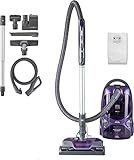
Overview: Engineered for pet owners, this Kenmore canister vacuum features dual motors (183W hose suction) and specialized tools to combat pet hair on carpets, furniture, and hard floors, though its 22.6-pound weight impacts portability. What Makes It Stand Out: The motorized Pet PowerMate attachment aggressively removes embedded pet hair, while the Pop-N-Go brush prevents hair wrap. Its triple HEPA filtration traps 99.97% of allergens, and the 10-foot aluminum wand extends reach significantly for stairs or ceilings. Value for Money: Competitive pricing for dual-motor power and pet-specific tools. HEPA bags cost moderately ($15 for 4), but the robust build and included accessories (4 tools + wand) deliver strong value for multi-pet households despite the higher weight. Strengths and Weaknesses: Strengths: Outstanding pet hair removal, excellent HEPA filtration, versatile attachments, sturdy telescoping wand. Weaknesses: Heaviest model here (22.6 lbs), cumbersome on stairs, retractable cord mechanism can jam, dual motors increase noise. Bottom Line: A top recommendation for pet owners needing serious hair-lifting power and allergen control; prioritize it if pets are your main concern, but consider lighter models if maneuverability is critical.
6. Kenmore 81214 200 Series Pet Friendly Lightweight Bagged Canister Vacuum with HEPA, 2 Motor System, and 3 Cleaning Tools-Orange

Overview:
The Kenmore 81214 is a bagged canister vacuum designed for allergy sufferers and pet owners. Its HEPA filtration and dual-motor system target deep cleaning on bare floors, carpets, and tight spaces, weighing under 20 pounds for easy handling.
What Makes It Stand Out:
Its sealed HEPA system traps 99.97% of dander and dust, preventing allergens from recirculating. The dual motors deliver strong suction across four height settings, while included tools (dusting brush, crevice tool, bare floor tool) streamline transitions between surfaces. The bagged design eliminates post-clean dust clouds.
Value for Money:
Priced mid-range, it justifies cost through durability and health benefits. Though bags add recurring expense, they simplify disposal and maintain consistent suction—unlike bagless models that lose power as bins fill. Ideal for those prioritizing air quality over long-term consumable savings.
Strengths and Weaknesses:
Strengths: Superior allergen capture; lightweight maneuverability; versatile attachments; reliable suction. Weaknesses: Requires ongoing bag purchases; non-cordless design limits mobility; bare-floor focus may underwhelm on thick carpets.
Bottom Line:
A top pick for allergy-prone households seeking reliable, hygienic cleaning. Its HEPA efficacy and pet-friendly tools outweigh the minor bag maintenance, making it a worthwhile investment for health-focused users.
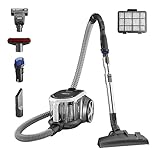
7. Eureka Bagless Canister Vacuum Cleaner, Lightweight Vac for Carpets and Hard Floors, Silver with Black, NEN180
Overview:
The Eureka NEN180 is a bagless canister vacuum engineered for quick, versatile cleaning on carpets and hard floors. Weighing under 17 lbs, it combines portability with strong 1000W suction and advanced filtration for homes, cars, and garages.
What Makes It Stand Out:
Stepless suction control lets users adjust power/noise instantly via a knob, while swivel steering enhances maneuverability. Its three-stage HEPA filtration captures 99.9% of 0.3-micron dust, and the large 2L bin with washable filters eliminates bag costs. The retractable 17’ cord and pet brush add practicality.
Value for Money:
Excellent value for budget-conscious buyers. The bagless design saves long-term expenses, and washable filters reduce upkeep. Though suction lags behind premium models, its balance of power, convenience, and sub-$150 pricing outperforms many entry-level competitors.
Strengths and Weaknesses:
Strengths: No bag costs; intuitive suction adjustment; lightweight; easy filter maintenance; strong HEPA filtration. Weaknesses: Suction diminishes as bin fills; 2L bin requires frequent emptying on large jobs; less powerful than 1200W+ vacuums.
Bottom Line:
Highly recommended for small-to-medium homes needing an affordable, low-maintenance vacuum. Its adaptability and health-focused filtration make it a smart choice despite minor power limitations.
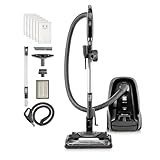
8. Kenmore BC3006 400 Series Pet Friendly Lightweight Bagged Canister Vacuum Cleaner 2-Motor Design with Hair Eliminator Brushroll, HEPA Filter, LED Headlight, Extended Wand and Auto Cord Rewind
Overview:
The Kenmore BC3006 tackles pet hair with a specialized bagged canister design. Featuring a unique Hair Eliminator brushroll and dual motors, it targets embedded fur on carpets while its HEPA system traps allergens, all in a lightweight frame.
What Makes It Stand Out:
The Hair Eliminator automatically clears缠绕 pet hair from the brushroll—no manual cutting required. Combined with a sealed HEPA path capturing 99.97% of 0.3-micron particles, an LED headlight for dark corners, and auto cord rewind, it excels in pet-specific convenience and deep cleaning.
Value for Money:
Positioned as a premium pet vacuum, its value lies in time savings. The hair-clearing tech avoids frustrating maintenance, and bags ensure consistent performance. While pricier than basic models, it’s cost-effective for heavy pet owners compared to repeated brushroll replacements on competitors.
Strengths and Weaknesses:
Strengths: Revolutionary hair removal; exceptional allergen control; extended wand reach; auto cord rewind; no dust plumes. Weaknesses: Bag costs add up; slightly heavier than bagless rivals; limited hard-floor optimization.
Bottom Line:
An essential buy for multi-pet households. The BC3006’s hair-management innovation and health-focused filtration justify its price, delivering unmatched ease for pet hair battles.
9. Aircliff Canister Vacuum Cleaner, Specially Designed Nozzle for Pet Family, 1200W & 17Kpa Strong Suction, 2 HEPA Filters & 5 Cleaning Tools for Hard Floor, Carpet, Upholstery, Pet Hair(Sliver)

Overview:
Aircliff’s pet-focused canister vacuum leverages 1200W power and 17Kpa suction for thorough cleaning on all surfaces. Its dual HEPA filters and five specialized tools target pet hair, while eco-conscious design reduces energy and waste.
What Makes It Stand Out:
Lab-tested 37% energy savings over conventional motors and two washable HEPA filters cut long-term costs. The turbo brush effortlessly lifts pet hair from upholstery, and multi-layer cyclonic tech maintains fade-free suction. At 4.5kg, it’s ultra-lightweight with a 3-meter reach.
Value for Money:
Premium-priced but justified by sustainability and performance. Washable filters eliminate replacements, and energy efficiency lowers utility bills. The comprehensive toolset (including unique pet and ash brushes) replaces multiple cleaners, offering holistic value despite the higher upfront cost.
Strengths and Weaknesses:
Strengths: Eco-friendly operation; powerful consistent suction; exceptional pet-hair tools; lightweight; versatile attachments. Weaknesses: Shorter cord (5m) than some rivals; HEPA filters require frequent rinsing; premium price may deter casual users.
Bottom Line:
Ideal for eco-minded pet owners needing a single, versatile cleaner. Its sustainability edge and specialized pet tools make it a future-proof investment worth the splurge.
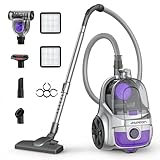
10. Aspiron Canister Vacuum, Upgraded 1600W Bagless Canister Vacuum Cleaner, Auto Cord Rewind, H13 HEPA Filter, 3.7Qt Large Capacity, 5 Tools for Hard Floors, Carpet, Pet, Upholstery, Tiles, Violet
Overview:
The Aspiron bagless canister vacuum boasts 1600W brushless motor power (30Kpa suction) for heavy-duty cleaning. Targeting pet owners and large homes, it features auto cord rewind, a massive dust cup, and specialized tools for diverse surfaces.
What Makes It Stand Out:
Industry-leading 30Kpa suction tackles embedded pet hair and debris, while the 3.7QT dust cup halves emptying frequency versus standard models. Auto cord rewind (20ft cord) and cyclone-based HEPA-H13 filtration ensure convenience and clean air output without secondary pollution.
Value for Money:
Competitively priced for its power tier. The bagless design and washable filters save ongoing costs, and the large dust cup boosts efficiency. Though pricier than entry models, its suction and capacity offer better long-term value than similarly powered alternatives with smaller bins.
Strengths and Weaknesses:
Strengths: Extreme suction power; auto cord rewind; huge dust capacity; compact storage; versatile attachments. Weaknesses: Heavyweight for a canister; loud at max power; H13 filter not washable (unlike some rivals).
Bottom Line:
A powerhouse for large homes with pets or deep-cleaning needs. Prioritize it if suction and bin size outweigh noise concerns—it’s the most efficient heavy-duty option here.
Understanding Asthma Triggers and the Vacuum’s Role
How Indoor Allergens Impact Respiratory Health
Indoor environments harbor a complex mix of potential asthma triggers, including microscopic dust mite feces, pet dander, mold spores, and pollen. These particles, often smaller than 10 microns, can remain suspended in the air for hours and easily penetrate deep into the lungs when inhaled. Effective vacuuming isn’t just about visible dirt; it’s a crucial strategy for physically removing these embedded allergens from carpets, rugs, and upholstery before they become airborne hazards, directly contributing to a reduction in symptom frequency and severity.
Why Canister Designs Offer Advantages
Canister vacuums typically provide superior maneuverability around furniture and up stairs compared to uprights, thanks to their separate canister and wand/hose system. This design often translates to better access for thorough cleaning in corners, under furniture, and along baseboards—common reservoirs for allergen buildup. The separation of the motor unit (canister) from the cleaning head can also contribute to lower noise levels and potentially less vibration disturbance during use, which is beneficial for sensitive individuals.
Critical Filtration Systems for Asthma Management
The Non-Negotiable: True HEPA Filtration
The single most important feature for asthma sufferers is a certified True HEPA filter. True HEPA (High-Efficiency Particulate Air) filters are laboratory-tested to capture at least 99.97% of particles as small as 0.3 microns—the most penetrating particle size (MPPS). This includes the vast majority of dust mite allergens, pet dander, and mold spores. Beware of terms like “HEPA-like” or “HEPA-type”; these do not meet the stringent True HEPA standard and are ineffective for trapping the smallest, most problematic irritants.
The Importance of a Fully Sealed System
Having a True HEPA filter is only half the battle. If the vacuum’s body, hoses, or connections aren’t airtight, dirty air can bypass the filter entirely, leaking allergens back into your breathing space. A fully sealed system ensures that all the air drawn in by the vacuum passes only through the filtration stages, with none escaping unfiltered. Look for models explicitly designed and marketed as “sealed HEPA systems” specifically for allergy and asthma relief.
Pre-Motor Filtration Stages
Effective allergen capture starts before air even reaches the main HEPA filter. High-quality models incorporate multiple pre-motor filtration stages, such as foam filters, fabric filters, or cyclonic pre-separation. These stages capture larger debris and prevent the HEPA filter from clogging prematurely, maintaining strong, consistent suction power and ensuring the HEPA filter can focus on the microscopic particles it’s designed for. Regular cleaning or replacement of these pre-filters is essential for optimal performance.
Suction Power and Airflow Dynamics
Suction vs. Airflow: What Really Matters for Allergens
Raw suction power (measured in airwatts) is often overemphasized. For allergen removal, consistent, effective airflow is paramount. Airflow refers to the volume of air moving through the system (measured in cubic feet per minute - CFM). Strong, uninterrupted airflow is necessary to lift embedded allergens from deep within carpet fibers and transport them efficiently through the hose and into the dust container or bag, where they can be captured by the filtration system. A balance between suction and airflow is key.
Maintaining Performance on Deep Pile and Rugs
Carpets, especially plush or shag varieties, trap allergens deep within their fibers. A vacuum needs sufficient brush roll agitation combined with strong airflow to dislodge and extract these particles. Look for models with adjustable suction control and height settings specifically designed for different carpet depths. Effective edge cleaning is also critical, as allergens accumulate along baseboards and in corners where standard brush rolls may not reach.
The Role of Brush Roll Design
The brush roll (or beater bar) plays a vital role in agitation. For asthma sufferers, a brush roll that effectively loosens embedded dirt without scattering fine dust is ideal. Some models feature specialized brush roll designs or technologies that minimize dust dispersion during operation. Consider models with the ability to turn off the brush roll for hard floors to prevent scattering fine particles that might become airborne.
Minimizing Dust Re-Release and User Exposure
Bagged vs. Bagless: Weighing the Allergen Factor
This is a significant consideration. Bagged vacuums generally contain allergens more effectively during disposal. When the bag is full, you simply seal it and discard it, minimizing direct contact with collected dust. Bagless models require emptying a dust container, which inevitably stirs up fine particles into the air you breathe—a major risk for asthma triggers. If opting for bagless, prioritize models with bottom-empty or “point-and-shoot” dust release mechanisms designed to minimize user exposure and mess.
Dust Container and Bag Handling Protocols
Regardless of type, how you handle the full container or bag matters immensely. For bagless models, empty the container outdoors if possible, wearing a mask, and rinse the container thoroughly afterward. For bagged models, ensure bags are made of dense, allergen-proof material and change them before they become overly full (typically at 2/3 capacity) to maintain suction and filtration efficiency. Never shake filters or containers indoors.
Low-Dust Emptying Mechanisms
Innovative emptying systems are crucial for bagless vacuums. Look for designs where the container detaches cleanly and empties through a sealed port directly into the trash, with minimal need to handle the dirty parts. Features like rubberized seals on the container and one-touch release mechanisms significantly reduce the cloud of dust typically associated with emptying. This isn’t just convenient; it’s a health necessity for sensitive individuals.
Noise Levels and User Comfort
The Stress Factor of Loud Vacuums
High noise levels aren’t just annoying; they can be physically stressful. For individuals managing chronic conditions like asthma, unnecessary stress can sometimes act as a secondary trigger or exacerbate existing symptoms. Louder vacuums may also discourage frequent cleaning, which is vital for maintaining low allergen levels. Quieter operation promotes more consistent use and a calmer cleaning experience.
Finding Models with Reduced Sound Output
Canister vacuums often have a reputation for being quieter than uprights due to the motor being housed in the separate canister, which can be placed further away. Look for models specifically advertising low decibel (dB) ratings. While absolute silence isn’t realistic, models operating below 70 dB are significantly less disruptive. Quieter vacuums make it easier to clean while others are home without causing disturbance or stress.
Additional Features for Enhanced Allergen Control
UV-C Light Technology: Fact vs. Fiction
Some vacuums incorporate UV-C lights, claiming to kill dust mites and bacteria. While UV-C light can be effective under specific laboratory conditions (intense exposure for sufficient duration), the brief, intermittent exposure as debris passes under a small light in a moving vacuum is highly unlikely to have any meaningful impact on live dust mites deep within carpets. Don’t prioritize this feature over core filtration and sealing; it’s largely ineffective for real-world allergen reduction in vacuuming.
Specialized Tools for High-Allergen Zones
Effective cleaning requires the right tools for specific areas. Look for models that include a dedicated, motorized turbo brush or upholstery tool specifically designed for pet hair and dander removal from furniture and bedding—critical zones for allergen accumulation. A crevice tool with a narrow profile is essential for deep cleaning along baseboards and in corners where dust bunnies form.
Ease of Maintenance for Consistent Performance
A vacuum is only as good as its maintenance. Filters need regular cleaning or replacement (HEPA filters typically annually, pre-filters more often). Choose a model where accessing and servicing all filters is straightforward and tool-free. Complex maintenance routines often lead to neglected upkeep, drastically reducing filtration efficiency and potentially worsening indoor air quality over time. Simplicity encourages consistency.
Making Your Selection Process Asthma-Safe
Prioritizing Features Over Brand Names
Focus intently on the specific engineering features discussed—True HEPA, sealed system, effective airflow, and low-dust emptying—rather than brand reputation alone. Performance varies significantly even within a single manufacturer’s lineup. Read independent reviews that specifically test filtration efficiency and allergen containment, not just general cleaning performance.
Testing Before You Commit (If Possible)
If feasible, visit a store to see models in person. Check the weight of the canister and wand, the ease of maneuvering the head, the smoothness of the hose retraction, and how intuitively the settings and tools operate. Pay close attention to how easily you can access the filters and empty the container (ask staff if you can simulate it). A vacuum you dread using won’t get used often enough.
Investing in Long-Term Health
View this purchase as a long-term investment in your respiratory health and daily comfort. While budget is a consideration, prioritize models that deliver on the core asthma-focused features. A slightly higher initial cost for a vacuum that effectively reduces your triggers can lead to significant savings on medication and doctor visits, not to mention the immeasurable value of easier breathing and improved quality of life.
Frequently Asked Questions
How often should I vacuum if I have asthma?
Vacuum at least 2-3 times per week, focusing on high-traffic areas and bedrooms. Consistent cleaning prevents deep buildup of allergens. Using a vacuum with strong allergen containment allows for more frequent cleaning without worsening air quality during the process.
Is a bagged vacuum really better for asthma than bagless?
Generally, yes, for minimizing user exposure during disposal. Sealing and discarding a full bag contains allergens effectively. Bagless models require emptying, which almost always releases dust into the air. If you choose bagless, prioritize models with exceptional low-dust emptying mechanisms and always empty outdoors while wearing a mask.
What does “True HEPA” really mean, and why is it crucial?
True HEPA is a strict standard (capturing 99.97% of 0.3-micron particles). Only certified True HEPA filters reliably capture the microscopic dust mite allergens and pet dander that trigger asthma. Terms like “HEPA-style” or “HEPA-filter” without certification are marketing terms and do not offer the same level of protection.
Can vacuuming worsen my asthma symptoms?
Yes, if your vacuum lacks a sealed True HEPA system. Poorly filtered vacuums can blow fine dust and allergens back into the air you breathe. Always ensure your vacuum has a certified sealed HEPA system to capture particles, not recirculate them.
How often do I need to replace the HEPA filter?
Typically, True HEPA filters should be replaced every 12-18 months with regular use, or as specified by the manufacturer. Pre-motor filters often need cleaning monthly and replacement more frequently. Neglecting filter changes drastically reduces allergen capture efficiency.
Are cordless stick vacuums suitable for asthma sufferers?
Generally, most cordless stick vacuums lack the consistent, powerful airflow and robust sealed HEPA systems found in high-end canister models. Their smaller filters clog faster, and maintaining strong suction for deep allergen removal is challenging. Canister vacuums are usually the more reliable choice for severe asthma.
Do I need special attachments for asthma management?
Yes. Prioritize a motorized turbo brush/upholstery tool for furniture and bedding (major dander reservoirs) and a quality crevice tool for baseboards and corners. These target high-allergen zones that standard floor tools miss.
How can I tell if my vacuum has a sealed system?
Look for explicit statements from the manufacturer: “sealed HEPA system,” “allergen seal,” or “asthma & allergy friendly certified” (by organizations like AAFA). Generic claims like “HEPA filter” do not guarantee a sealed system. Independent reviews testing for leakage are also valuable.
Should I wear a mask while vacuuming?
If you have severe asthma or are using a vacuum not specifically designed for allergies/asthma, wearing a well-fitting N95 respirator mask during cleaning is advisable. Even with a good sealed HEPA vacuum, initial agitation can temporarily increase airborne particles before they are captured.
Can vacuuming eliminate the need for air purifiers?
Vacuuming removes settled allergens from surfaces, while air purifiers capture airborne particles. They serve complementary roles. Vacuuming frequently with a sealed HEPA vacuum significantly reduces the source of allergens, lessening the burden on your air purifier, but both are often recommended for optimal indoor air quality management with asthma.
See Also
- 10 Expert-Recommended Cordless Vacuums for Allergy Sufferers in 2026
- 10 Expert-Recommended Canister Vacuums for Large Homes in 2026
- The 10 Best Cordless Canister Vacuums for Small Apartments in 2026
- 10 Best Upright Vacuums for Allergy Sufferers in 2026
- How to Choose the 10 Best Canister Vacuums for Small Living Spaces in 2026