Table of Contents
Living with allergies means constantly battling invisible irritants that turn your home into a minefield. That post-vacuuming sneezing fit or the persistent dust cloud hanging in the air? It’s not just annoying—it’s a sign your current cleaning approach might be making things worse. For allergy-prone households, the right vacuum isn’t a luxury; it’s a non-negotiable tool for reclaiming breathable, comfortable living spaces. Modern solutions have evolved far beyond basic suction, focusing on sealing allergens inside the machine rather than blowing them back into your environment.
The good news is that canister vacuums, often overlooked for stick or upright models, offer unique advantages for sensitive households. Their powerful, consistent suction across multiple floor types, combined with superior filtration engineering, makes them ideal for trapping pollen, pet dander, and microscopic dust mites. Forget the outdated image of bulky, hard-to-maneuver machines—today’s canister designs prioritize agility, quiet operation, and hospital-grade filtration. Understanding which features truly matter (and which are marketing fluff) is the key to transforming your home from an allergy trigger zone into a sanctuary. Let’s dive into what makes a canister vacuum genuinely effective for allergy relief.
Top 10 Canister Vacuums for Allergy-Prone Households
Detailed Product Reviews
1. Kenmore 81214 200 Series Pet Friendly Lightweight Bagged Canister Vacuum with HEPA, 2 Motor System, and 3 Cleaning Tools-Orange
 Vacuum with HEPA, 2 Motor System, and 3 Cleaning Tools-Orange](https://m.media-amazon.com/images/I/3154pdmZ19L._SL160_.jpg)
Overview:
The Kenmore 81214 is a bagged canister vacuum designed for whole-home cleaning, targeting pet owners and allergy sufferers with its HEPA filtration. Its 120W dual-motor system and lightweight (under 20 lbs) build aim to simplify cleaning on bare floors, carpets, and tight spaces.
What Makes It Stand Out:
Its sealed HEPA system captures 99.97% of dust and dander, making it ideal for sensitive households. The dual-motor design ensures strong suction across four height settings, while three included tools (dusting brush, crevice tool, bare floor tool) attach directly to the unit for quick transitions.
Value for Money:
Priced moderately, it justifies cost through durability and health-focused filtration. Though bagged models incur ongoing filter/bag expenses, the elimination of dust clouds during emptying offers long-term value for allergy-prone users compared to budget bagless alternatives.
Strengths and Weaknesses:
Strengths: Superior allergen containment; effortless maneuverability; versatile attachments; quiet operation.
Weaknesses: Corded design limits mobility; bags require recurring purchases; less powerful suction than newer high-wattage models.
Bottom Line:
A reliable, health-conscious choice for pet owners prioritizing air quality over cordless convenience. Best suited for small-to-medium homes where HEPA filtration is non-negotiable.
2. Aspiron Canister Vacuum, Upgraded 1600W Bagless Canister Vacuum Cleaner, Auto Cord Rewind, H13 HEPA Filter, 4Qt Large Capacity, 5 Tools for Hard Floors, Carpet, Pet, Upholstery, Tiles, Sapphire
, Auto Cord Rewind, H13 HEPA Filter, 4Qt Large Capacity, 5 Tools for Hard Floors, Carpet, Pet, Upholstery, Tiles, Sapphire](https://m.media-amazon.com/images/I/41EzaI7RrlL._SL160_.jpg)
Overview:
Aspiron’s 1600W bagless canister vacuum delivers robust cleaning for diverse surfaces, featuring 40Kpa suction, auto cord rewind, and cyclone-based HEPA filtration. It targets pet hair, debris, and allergens across carpets, tiles, and upholstery.
What Makes It Stand Out:
The standout 40Kpa suction power outperforms many rivals, while the 4QT dust cup minimizes frequent emptying. Cyclone technology and a fully sealed H10 HEPA system prevent secondary pollution, and the auto cord rewind (with 33ft reach) enhances usability. Five included tools cover specialized needs.
Value for Money:
Competitively priced for its suction strength and large capacity. The bagless, washable design saves long-term costs versus bagged models, though HEPA filters may need periodic replacement. Excellent value for large homes or pet-heavy environments.
Strengths and Weaknesses:
Strengths: Exceptional suction; large dust capacity; effective allergen control; convenient auto cord rewind; lightweight storage.
Weaknesses: HEPA filter maintenance required; cyclone system may clog with fine dust; heavier than some canisters.
Bottom Line:
A powerhouse for deep cleaning and pet hair removal. Highly recommended for allergy sufferers and large households seeking a bagless system with minimal maintenance hassles.
3. Kenmore BC3006 400 Series Pet Friendly Lightweight Bagged Canister Vacuum Cleaner 2-Motor Design with Hair Eliminator Brushroll, HEPA Filter, LED Headlight, Extended Wand and Auto Cord Rewind
 2-Motor Design with Hair Eliminator Brushroll, HEPA Filter, LED Headlight, Extended Wand and Auto Cord Rewind](https://m.media-amazon.com/images/I/41qe9rpESrL._SL160_.jpg)
Overview:
Kenmore’s BC3006 combats pet hair with a unique Hair Eliminator brushroll and sealed HEPA filtration. This bagged canister vacuum includes an LED headlight, extended wand, and auto cord rewind for comprehensive home cleaning.
What Makes It Stand Out:
The automatic Hair Eliminator prevents tangled fur on the brushroll—a game-changer for pet owners. The sealed system traps 99.97% of particles, while the 9ft telescoping wand and LED headlight enhance reach and visibility in dark areas. Auto cord rewind adds convenience.
Value for Money:
Priced higher than basic models, but the Hair Eliminator and HEPA bagged system justify the cost for pet-focused households. Ongoing bag expenses are offset by reduced maintenance time and superior allergen control versus cheaper bagless alternatives.
Strengths and Weaknesses:
Strengths: Revolutionary hair management; excellent allergen containment; extended cleaning reach; bright LED light; quiet operation.
Weaknesses: Bags increase long-term costs; cord limits mobility; wand storage could be more secure.
Bottom Line:
The top pick for pet owners tired of de-tangling brushrolls. Ideal for allergy sufferers needing a low-maintenance, high-efficacy solution despite recurring bag costs.
4. Eureka WhirlWind Bagless Canister 2.5L Vacuum Cleaner, Lightweight Vac for Carpets and Hard Floors, NEN110A, Blue

Overview:
Eureka’s WhirlWind is an ultra-lightweight (8.15 lbs) bagless canister vacuum with 960W power, targeting quick cleans on carpets and hard floors. Its swivel steering and integrated tools emphasize ease of use for stairs and furniture.
What Makes It Stand Out:
At just 8.15 lbs, it’s exceptionally portable. The 2-in-1 crevice tool/dusting brush stores on the hose handle, eliminating lost accessories. Airflow control on the handle and 1-button dust cup emptying streamline transitions between surfaces. Auto cord rewind saves time.
Value for Money:
An affordable entry-point into bagless canister vacuums. The washable filters and no-bag design eliminate recurring costs, though suction (960W) lags behind premium models. Best for small spaces or users prioritizing maneuverability over raw power.
Strengths and Weaknesses:
Strengths: Remarkable lightweight build; intuitive tool storage; simple emptying; budget-friendly.
Weaknesses: Lower suction for deep carpet cleaning; small 2.5L dust cup requires frequent emptying; basic filtration lacks true HEPA.
Bottom Line:
Perfect for compact homes, renters, or light-duty cleaning. Choose this for effortless handling and low upkeep, but avoid for heavy pet hair or deep-pile carpets.
5. Aspiron Canister Vacuum, Upgraded 1600W Bagless Canister Vacuum Cleaner, Auto Cord Rewind, H13 HEPA Filter, 3.7Qt Large Capacity, 5 Tools for Hard Floors, Carpet, Pet, Upholstery, Tiles, Violet
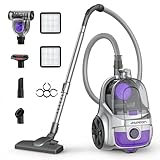
Overview:
This Aspiron model offers 30Kpa suction, a 3.7QT dust cup, and HEPA filtration in a bagless canister design. It covers multi-surface cleaning with auto cord rewind and cyclone technology, positioned as a versatile mid-tier option.
What Makes It Stand Out:
Balancing power and capacity, its 30Kpa suction handles pet hair effectively while the near-4QT dust cup reduces emptying frequency. The cyclone-sealed HEPA system minimizes airborne allergens, and the auto cord rewind (33ft radius) enhances usability. Compact storage appeals to small-space dwellers.
Value for Money:
Slightly more affordable than its 40Kpa sibling (Product 2), it delivers 90% of the performance at a better price. The bagless design cuts long-term costs, making it a smart buy for budget-conscious pet owners needing reliable allergen control.
Strengths and Weaknesses:
Strengths: Strong suction-to-price ratio; large dust capacity; excellent portability; effective HEPA filtration; user-friendly cord management.
Weaknesses: Suction trails Product 2; dust cup can be tricky to clean thoroughly; filter replacement needed periodically.
Bottom Line:
A cost-efficient powerhouse for pet owners seeking HEPA filtration without overspending. Ideal for medium-sized homes where 30Kpa meets most cleaning demands.
6. Eureka 3670M Canister Cleaner, Lightweight Powerful Vacuum for Carpets and Hard floors, w/ 5bags,Yellow

Overview:
The Eureka 3670M is a lightweight 8.6lb canister vacuum designed for versatile whole-home cleaning. With a 1200W motor, 2.5L dustbag capacity, and included attachments, it tackles carpets, hard floors, stairs, upholstery, and vehicles. Its portability and straightforward bagged system target users prioritizing convenience over high-tech features.
What Makes It Stand Out:
Its standout feature is the mess-free dustbag replacement system, minimizing contact with debris—ideal for pet hair or allergy sufferers. The 8.6lb weight and compact design enhance mobility, while the dual extension wands and specialized tools (e.g., crevice tool) access tight spaces unreachable by uprights. The included 5 bags add immediate value.
Value for Money:
Priced mid-range, it offers solid value for those preferring bagged convenience. While bags incur long-term costs (vs. bagless competitors), the included 5 bags offset initial expenses. It undercuts premium bagless models but lacks advanced filtration or suction power (12A vs. 40KPa+ in newer units), making it best for light-to-medium cleaning needs.
Strengths and Weaknesses:
Strengths: Exceptionally lightweight; easy bag changes; versatile attachments; quiet operation; reliable for stairs and cars.
Weaknesses: Bag replacement costs add up; weaker suction than modern cyclonic models; no HEPA filtration; limited dust capacity (2.5L) requires frequent changes on large jobs.
Bottom Line:
A practical, no-fuss choice for small spaces or users who dislike emptying dust cups. Ideal for pet owners needing quick bag swaps, but bypass if you prioritize HEPA air quality or heavy-duty suction.
7. PKUYIE Canister Vacuum Cleaner, 40Kpa 1600W Cyclon Power Bagless Canister Vacuum Cleaners for Home, 3.7QT Large Dust Cup, Lightweight Vac for Hard Floors, Carpets, Pet Hair,Pink
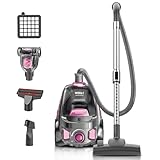
Overview:
The PKUYIE SL159 delivers robust 40KPa suction via a 1600W brushless motor in a lightweight, bagless canister design. Targeting pet owners and allergy sufferers, it features dual H13 HEPA filtration, a 3.7QT dust cup, and smart full indicators. Its focus is deep cleaning with minimal noise (68dB) and effortless maneuverability.
What Makes It Stand Out:
Unmatched 40KPa cyclonic suction effortlessly lifts embedded pet hair and fine dust. The dual H13 HEPA system captures 99.97% of particles, expelling cleaner air than most competitors. The washable design, large dust cup, and smart full indicator eliminate bag costs and guesswork, while its quiet operation suits shared living spaces.
Value for Money:
Competitively priced for its specs, it outperforms budget models with professional-grade suction and filtration. The bagless system saves long-term costs (no replacements), and HEPA quality rivals pricier allergy vacuums. Slightly narrower cleaning radius (vs. auto-rewind models) is its only compromise for the price.
Strengths and Weaknesses:
Strengths: Industry-leading 40KPa suction; exceptional HEPA filtration; quiet operation; washable components; large dust cup reduces emptying frequency.
Weaknesses: No auto cord rewind (manual retraction); dust cup can be tricky to clean thoroughly; less maneuverable around tight corners than ultra-compact rivals.
Bottom Line:
A top-tier pick for pet owners and allergy sufferers seeking powerful, hygienic cleaning without bag hassles. Highly recommended for homes needing deep carpet cleaning and air purity.
8. Aspiron Canister Vacuum, Upgraded 1600W Bagless Canister Vacuum Cleaner, Auto Cord Rewind, H13 HEPA Filter, 4Qt Large Capacity, 5 Tools for Hard Floors, Carpet, Pet, Upholstery, Tiles, Coral

Overview:
Aspiron’s 1600W bagless canister vacuum combines 40KPa suction with user-friendly innovations like auto cord rewind and a 4QT dust cup. Designed for whole-home efficiency, it includes five tools for hard floors, carpets, and upholstery, targeting busy households needing speed and versatility without compromising air quality.
What Makes It Stand Out:
The standout feature is automatic cord rewind—a rarity in this category—saving time with a single pedal press. The sealed H10 HEPA system prevents allergen leakage, while the 4QT dust cup (larger than most 3.7QT rivals) minimizes interruptions. Its compact size and tight turning radius excel in cluttered spaces.
Value for Money:
Offers exceptional value with premium conveniences at a mid-tier price. Auto cord rewind and the oversized dust cup justify a slight premium over basic models, while the bagless design eliminates recurring costs. Outperforms similarly priced units lacking these time-saving features, especially for large homes.
Strengths and Weaknesses:
Strengths: Auto cord rewind; large 4QT dust cup; lightweight and agile; sealed HEPA filtration; versatile toolset.
Weaknesses: HEPA is H10 (not H13 like PKUYIE); suction slightly less intense than 45KPa models; wand storage could be more secure.
Bottom Line:
A must-consider for efficiency-focused users. The auto rewind and large capacity make it ideal for multi-room cleaning, though allergy sufferers may prefer H13 filtration elsewhere.
9. NaceCare Henry Allergy HVA160 Canister Vacuum with Allergy Easing Hepa-Filtration and AST9 kit

Overview:
The NaceCare Henry Allergy HVA160 is a specialized canister vacuum certified by the British Allergy Foundation. Built for severe allergy sufferers, it features an H13 HEPA filter with triple-layer filtration, trapping particles 800x smaller than a human hair. Its whisper-quiet operation and targeted tools focus on air purity over raw power.
What Makes It Stand Out:
Its independently verified allergy certification is unmatched, ensuring microscopic allergens (dust mites, pollen) are captured—not just vacuumed. The H13 HEPA filter with dual pre-filters guarantees medical-grade air expulsion, while the “combination tool” simplifies transitions between carpets and hard floors. Quiet operation (ideal for open-plan homes) is a key differentiator.
Value for Money:
Priced higher than standard vacuums, it’s justified for allergy sufferers where health impacts outweigh cost. No bags or expensive filters needed long-term, and the included AST9 kit adds versatility. Cheaper models lack certified filtration efficacy, making this a worthwhile investment for sensitive households.
Strengths and Weaknesses:
Strengths: British Allergy Foundation certification; H13 HEPA filtration; ultra-quiet; effective allergen capture; durable build.
Weaknesses: Lower suction power (prioritizes filtration over debris removal); limited tool variety; heavier than lightweight competitors (10+ lbs).
Bottom Line:
The definitive choice for allergy-prone homes. Sacrifices some power for unparalleled air quality—essential if health is the priority over speed or pet-hair removal.
10. 1600W Canister Vacuum Cleaner, Bagless Vacuum Cleaner with 45kPa Strong Suction, 4L Large Dust Cup, Variable Speed Control, 5 Tools, Lightweight Canister Vacuum for Home, Pet, Carpet, Hard Floor, Blue
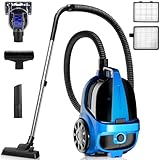
Overview:
This versatile 1600W canister vacuum boasts 45KPa suction—the highest in this lineup—and a 4L dust cup. Designed for pet owners and multi-surface homes, it features variable speed control, a pet turbo brush, and a three-stage HEPA filtration system. Its auto cord rewind and lightweight build cater to efficient whole-house cleaning.
What Makes It Stand Out:
Record-breaking 45KPa suction annihilates embedded pet hair, while the dedicated tangle-free turbo tool is a game-changer for fur-covered furniture. Auto cord rewind (33ft radius) and variable suction (for delicate rugs or deep carpets) enhance usability. The triple-sealed HEPA system ensures zero secondary pollution, rivaling allergy-specific models.
Value for Money:
Exceptional value for its power and features. The pet-focused toolkit, largest dust cup (4L), and auto rewind typically cost more in competing brands. It undercuts premium vacuums while matching or exceeding their suction and filtration—ideal for pet owners seeking a do-all machine without overspending.
Strengths and Weaknesses:
Strengths: Industry-leading 45KPa suction; best-in-class pet turbo tool; auto cord rewind; massive 4L dust cup; intuitive speed control.
Weaknesses: HEPA filtration lacks formal allergy certification (unlike NaceCare); dust cup design may leak if not seated perfectly; slightly louder than claimed.
Bottom Line:
The top recommendation for pet owners needing brute-force cleaning. Combines elite suction, thoughtful pet tools, and smart conveniences at a fair price—just verify HEPA needs if allergies are severe.
Why Canister Vacuums Excel for Allergy Sufferers
Superior Sealed System Engineering
Unlike many uprights, high-quality canister vacuums are built as fully sealed systems from hose to exhaust. This means every particle sucked in travels through a continuous, airtight pathway directly to the dust container. Critical gaps or leaks in non-sealed systems—common in cheaper models—allow fine allergens to escape back into your breathing zone through joints or the motor housing. For true allergy control, verify the entire airflow path is gasketed and HEPA-sealed, not just the filter itself.
Optimized Suction Consistency on Multiple Surfaces
Allergy triggers hide everywhere: deep in carpets, wedged between hardwood cracks, and clinging to area rugs. Canister vacuums deliver stable, powerful suction regardless of floor type thanks to their centralized motor placement and dedicated turbine heads. This eliminates the “suction drop” common in uprights when transitioning between surfaces, ensuring consistent agitation and pickup of embedded debris without scattering particles. Look for models with automatic height adjustment for seamless carpet-to-hardfloor transitions.
Reduced Airborne Particle Disturbance
The physics of canister design inherently minimizes dust dispersion. With the main unit stationary and only the lightweight wand/hose moving, there’s far less vibration and agitation of settled dust compared to pushing a heavy upright. Combined with low-turbulence hose designs, this means fewer allergens get kicked up ahead of the vacuum head during cleaning—critical for preventing immediate reactions while you clean.
Enhanced Filtration Placement and Capacity
Canister vacuums typically house larger, multi-stage filtration systems closer to the exhaust point. This strategic positioning ensures air passes through the finest filters last, capturing even the tiniest escapees before clean air exits the machine. Larger filter surface areas also prevent rapid clogging, maintaining peak filtration efficiency longer—essential when tackling high volumes of allergen-laden dust.
Critical Features for Allergy-Sensitive Cleaning
HEPA Filtration: Non-Negotiable Certification
Not all “HEPA-like” filters deliver. True HEPA (High-Efficiency Particulate Air) filters must capture 99.97% of particles as small as 0.3 microns—the size most likely to penetrate deep into lungs. Demand independent certification (like IEST or EN 1822 standards) on packaging. Beware of terms like “HEPA-type” or “HEPA-style,” which lack regulatory testing. This filter must be the final stage before exhaust air leaves the vacuum.
Fully Sealed Construction Verification
A HEPA filter alone is useless if air bypasses it. Insist on explicit “sealed system” labeling and check for: rubber gaskets at all joints (hose connections, dust container, filter housing), airtight motor compartments, and smooth internal airflow channels. Some manufacturers provide smoke-testing videos demonstrating zero leakage—this is the gold standard evidence for allergy sufferers.
Bagged vs. Bagless: The Allergy Trade-Off
Bagged systems generally offer superior allergen containment during disposal. High-quality microfiber or multi-layer bags act as a pre-filter, trapping larger debris before it reaches the main HEPA filter, and seal completely when removed. Bagless cyclonic models require meticulous emptying over a trash can (often releasing clouds of dust), though some newer designs feature “allergy lock” seals on bins. For severe allergies, bags often provide safer disposal.
Motorized Brush Roll Design Matters
Aggressive beater bars can grind allergens deeper into carpets or aerosolize fine dust. Opt for brush rolls with soft, anti-allergen bristles (like carbon fiber or specialized polymers) that lift debris gently without excessive heat or static. Some models include clutch mechanisms that disengage the brush on hard floors, preventing dust scattering. Avoid rubberized belts that degrade and emit volatile compounds.
Low-Noise Operation for Sensitive Environments
Loud vacuums (over 70 dB) can trigger stress responses that worsen allergy symptoms. Modern canister models use insulated motor housings and brush roll dampeners to operate below 65 dB—quiet enough for daytime cleaning without disturbing sleep or increasing sensitivity. Check decibel ratings; lower is better for household comfort during frequent use.
Maintenance Practices That Maximize Allergy Relief
Strict Filter Replacement Schedules
HEPA filters lose efficiency when clogged. Follow the manufacturer’s replacement timeline exactly—typically every 6-12 months—but replace sooner if you notice reduced suction or visible dust on the exhaust filter. Never rinse HEPA filters; moisture damages the fine mesh. Always replace pre-motor and post-motor filters simultaneously to maintain system integrity.
Strategic Emptying/Cleaning Protocols
If using a bagless model, empty the dust container outdoors wearing a mask. Hold it over a trash can, twist the release mechanism slowly, and step away immediately—don’t tap or shake it. For bagged systems, seal the full bag in a secondary plastic bag before disposal. Clean the dust container with a microfiber cloth (not water) to avoid static buildup that attracts new particles.
Hose and Accessory Allergen Flushing
Allergens accumulate deep in hoses and crevice tools. Monthly, detach the hose and run it under cool water from both ends (ensure complete drying for 24+ hours before reuse). For wand attachments, wipe interiors with a damp microfiber cloth dipped in diluted vinegar solution to neutralize odors and organic residues. Never use chemical cleaners that leave volatile residues.
Carpet Pre-Treatment for Deep Allergen Removal
Before vacuuming carpets, lightly mist with an allergen-neutralizing solution (check compatibility with fibers). Allow 10 minutes for it to bind to dust mites and dander, then vacuum slowly with overlapping passes. This “locks” particles for capture rather than merely redistributing them. Avoid steam cleaners immediately after, as moisture can reactivate mites if carpets stay damp.
Smart Usage Strategies for Daily Allergy Management
Optimal Vacuuming Frequency Based on Allergen Load
Dense carpets in high-traffic homes may require vacuuming 3-4 times weekly, while hard floors might need it every other day. Track your symptom severity—if reactions worsen mid-week, increase frequency. Use your vacuum’s suction gauge (if equipped) to detect when hidden debris levels rise, signaling it’s time to clean again.
Room-by-Room Cleaning Sequencing
Always vacuum from the least dusty areas (like bedrooms) to the most polluted zones (kitchens, entryways). Close doors behind you to prevent cross-contamination. Start with high surfaces (baseboards, shelves) using a dusting brush, then proceed to floors. This prevents freshly disturbed allergens from resettling in “clean” rooms.
Combining Vacuuming with Air Purification
Turn on a HEPA air purifier in the room before vacuuming. It captures airborne particles stirred up during cleaning, significantly reducing your exposure. Keep the purifier running for 30+ minutes post-vacuuming to clear residual aerosols. Position it away from the vacuum’s exhaust path for maximum efficiency.
Seasonal Adjustments for Pollen and Mold Spikes
During high-pollen seasons, vacuum window sills, curtains, and entry mats daily. Use a crevice tool along door thresholds to capture tracked-in pollen. In humid months, focus on basements and bathrooms with mold-resistant attachments. Store vacuums in cool, dry places to prevent internal mold growth in filters or hoses.
Troubleshooting Common Allergy Vacuum Issues
Addressing Post-Vacuuming Symptom Flare-Ups
If symptoms worsen after cleaning, check for filter gaps, worn hose gaskets, or an overfilled dust container. Test for leaks by holding a tissue near seams while running—the vacuum should hold it firmly against every joint. Also, ensure you’re not vacuuming during peak pollen hours; early evening is often safest.
Managing Pet Dander Without Spreading Allergens
Use a rubberized pet-hair tool that generates static to lift dander from upholstery. Vacuum pet bedding outdoors when possible. Immediately wipe down hard surfaces after vacuuming floors to capture dander resettled by air currents. Never use the same brush roll on carpets and pet areas without thorough cleaning in between.
Eliminating Musty Odors from the Vacuum Itself
Musty smells indicate trapped moisture or organic buildup. Replace all filters, then run the vacuum over baking soda sprinkled on hard floors (not carpets) to absorb odors. For persistent smells, wipe internal components with a 50/50 water-vinegar solution and dry completely in sunlight. Store with moisture-absorbing packets inside the dust container.
Frequently Asked Questions
Do I really need a HEPA filter for allergies?
Yes. Standard filters capture only large particles, allowing microscopic allergens like dust mites (0.1-0.3 microns) to recirculate. True HEPA filtration is clinically proven to reduce airborne allergens by over 99%, directly improving respiratory symptoms for most sufferers.
Can a vacuum make my allergies worse?
Absolutely. Vacuums without sealed systems or HEPA filters blow allergens back into the air you breathe. Loud models can also trigger stress responses that amplify allergic reactions. Always choose a certified sealed HEPA system to avoid this.
How often should I vacuum if I have severe allergies?
High-pile carpets may need vacuuming 3-4 times weekly; hard floors typically require every other day. Monitor your symptoms—if congestion or sneezing increases mid-week, clean more frequently. Daily quick passes on high-traffic zones often help.
Are bagged vacuums better for allergies than bagless?
Generally, yes. Bags seal allergens inside during disposal, preventing exposure. Bagless models require emptying over trash cans, often releasing dust clouds. However, some premium bagless designs now feature “allergy lock” seals that mitigate this risk if handled carefully.
Does suction power matter more than filtration for allergies?
Filtration is paramount. Extreme suction without HEPA sealing simply moves allergens around more violently. Prioritize a fully sealed HEPA system over raw suction numbers—consistent, medium suction with excellent containment outperforms powerful but leaky models.
Can I use my allergy vacuum on hardwood floors without scratching?
Yes, but verify the brush roll has hard-floor mode (disengaging the beater bar) and soft roller brushes. Avoid models with metal edges on tools. Always adjust height settings correctly—too low causes friction, while too high reduces pickup efficiency.
Why does my vacuum still leave dust clouds after cleaning?
This indicates leaks in the system or a clogged/replacement-needed HEPA filter. Test all gaskets with a tissue while running. Also, vacuum too quickly—slow, overlapping passes give the machine time to capture settled dust before it becomes airborne.
Do I need special attachments for upholstery and stairs?
Essential. Standard floor heads can’t effectively clean fabric surfaces where allergens embed. Look for a dedicated motorized upholstery tool with soft bristles and a crevice tool for baseboard gaps—both should connect directly to the hose without wands for better maneuverability.
How do I know if my vacuum’s seal is compromised?
Signs include visible dust escaping from seams, reduced suction despite clean filters, or worsening allergy symptoms during use. Perform a “tissue test” on all joints while running—if the tissue isn’t held firmly against every connection point, the seal is broken.
Are newer 2026 models significantly better for allergies than older ones?
Key advancements focus on quieter operation, smarter sealed-system verification (like leak-detection sensors), and longer-lasting HEPA media. However, older models meeting true HEPA and sealed-system standards remain effective—prioritize certified features over model year.
See Also
- 10 Best Value Canister Vacuums for Large Households in 2026
- 10 Best Value Canister Vacuums for Multi-Pet Households in 2026
- 10 Must-Have Robotic Vacuums for Busy Households in 2026
- The 10 Best Cordless Canister Vacuums for Small Apartments in 2026
- How to Choose the 10 Best Canister Vacuums for Small Living Spaces in 2026