Table of Contents
Ever feel like your vacuum cleaner is working harder than it should, yet your floors still seem dusty? The culprit might be hiding in plain sight—the humble vacuum bag. While often overlooked, this simple component plays a critical, behind-the-scenes role in capturing microscopic particles, allergens, and everyday grime. A high-efficiency bag isn’t just a container; it’s the final barrier ensuring what you suck up stays sucked up, preventing that frustrating cloud of dust from re-entering your air the moment you turn off the machine. Choosing the wrong bag can undermine even the most powerful vacuum, turning your cleaning effort into a losing battle against airborne irritants.
Think of your vacuum bag as the unsung hero of your home’s air quality. When it performs optimally, you breathe easier, surfaces stay cleaner longer, and your vacuum motor runs cooler and lasts longer. But with so many options labeled “high-efficiency,” “HEPA,” or “multi-layer,” how do you cut through the marketing noise? This guide cuts to the chase, focusing on the actual features that transform a basic bag into a powerhouse for true dust collection. We’ll explore the engineering, materials, and compatibility factors that matter most—so you can make an informed choice without falling for empty claims or wasting money on mismatches.
Top 10 Vacuum Cleaner Bags
Detailed Product Reviews
1. Miele Genuine AirClean GN Vacuum Cleaner Bags, 4 Bags Included, for Miele Complete C2 and C3 Vacuum Cleaners
 Bags, 4 Bags Included, for Miele Complete C2 and C3 Vacuum Cleaners](https://m.media-amazon.com/images/I/31IqEY8oG5L._SL160_.jpg)
Overview:
These are genuine Miele AirClean GN replacement bags designed specifically for Miele Complete C2, C3, Classic C1, S8, S5, and S2 vacuum cleaners. The pack includes four bags, plus essential motor protection and exhaust filters, emphasizing Miele’s recommendation for using only genuine parts to prevent damage and ensure peak performance. Packaging may vary due to an eco-friendly transition to HyClean design, though functionality remains identical.
What Makes It Stand Out:
The patented AirClean 3D efficiency system uses airflow guides to distribute dirt evenly, maintaining optimal suction and preventing clogs. The automatic HyClose seal locks dust inside during bag removal, eliminating messy spills. Including both motor and exhaust filters in the pack adds significant convenience and ensures comprehensive filtration system maintenance.
Value for Money:
Priced competitively for genuine Miele parts, this bundle offers excellent value by including critical filters alongside the bags. While generic alternatives are cheaper, Miele explicitly warns they risk machine damage and reduced efficiency, justifying the premium for reliability and longevity of your vacuum.
Strengths and Weaknesses:
Strengths: Superior dust containment with HyClose seal; optimized airflow prevents suction loss; includes necessary filters; eco-conscious packaging update. Weaknesses: Strict model compatibility limits use; genuine parts cost more than off-brand options; packaging inconsistency might confuse new buyers.
Bottom Line:
Essential for Miele C2/C3 owners seeking reliable, high-performance maintenance. The included filters and dust-locking seal justify the price, making it a smart investment for preserving vacuum efficiency and indoor air quality over generic alternatives.
2. Miele Genuine AirClean 3D FJM Vacuum Cleaner Bags, 4 x Bags, 1 AirClean Exhaust Filter
 Bags, 4 x Bags, 1 AirClean Exhaust Filter](https://m.media-amazon.com/images/I/41FNFghgJsL._SL160_.jpg)
Overview:
This genuine Miele kit provides four AirClean 3D FJM bags and two filters (Pre-Motor and Exhaust) tailored for Miele Complete C1, Compact C1/C2, S6, and S4 series vacuums. Miele stresses that only genuine bags prevent damage and maintain suction, filtering fine dust to improve indoor air quality even with low-wattage models.
What Makes It Stand Out:
The bags feature a tight-seal design that captures microscopic particles, reducing airborne dust significantly. The automatic hygiene closure ensures mess-free replacement by sealing the bag instantly upon removal. This system works synergistically with the included filters to enhance overall filtration efficiency beyond standard bags.
Value for Money:
The inclusion of two high-quality filters alongside four bags delivers strong value, covering a full maintenance cycle. While pricier than non-genuine options, the risk of vacuum damage and degraded performance with substitutes makes this a cost-effective choice for preserving your Miele’s lifespan and effectiveness.
Strengths and Weaknesses:
Strengths: Exceptional fine-dust filtration; automatic hygiene closure for clean changes; includes essential Pre-Motor and Exhaust filters; maintains optimal suction. Weaknesses: Limited to specific Miele models (C1/S4/S6); higher upfront cost than generic bags; no large-pack option mentioned.
Bottom Line:
A top-tier choice for compatible Miele vacuum owners prioritizing air quality and hassle-free maintenance. The bundled filters and reliable sealing mechanism solidify its worth, ensuring your vacuum operates at peak efficiency without compromising health.
3. Vacuum Cleaner Bags Genuine Bissell Style 7 3 Bags in A Pack Vacuum Cleaner Bags (1 Pack of 3, Model Number: 32120
 Bags Genuine Bissell Style 7 3 Bags in A Pack Vacuum Cleaner Bags (1 Pack of 3, Model Number: 32120](https://m.media-amazon.com/images/I/418lFU9UeHL._SL160_.jpg)
Overview:
This pack contains three replacement bags for Bissell Style 7 vacuum cleaners (Model 32120). Unlike premium brands, it provides minimal details beyond basic packaging dimensions (3.81" x 20.83" x 20.83") and weight (3.5 lb), raising questions about filtration quality and construction.
What Makes It Stand Out:
Little distinguishes this product; it lacks notable features like HEPA filtration, hygiene seals, or included filters. Its primary appeal is basic compatibility with older Bissell Style 7 models at a low entry price point, though performance claims are absent.
Value for Money:
While inexpensive, the absence of performance specs, filtration details, or durability assurances makes value hard to justify. Generic bags often underperform, leading to reduced suction or frequent replacements. It suits only budget-focused users with compatible vacuums who prioritize cost over air quality.
Strengths and Weaknesses:
Strengths: Low initial cost; fits specific Bissell models; simple replacement. Weaknesses: No filtration efficiency data; lacks hygiene seals or motor filters; minimal brand trust indicators; packaging details overshadow product specs; high risk of poor dust retention.
Bottom Line:
Only consider if budget is the absolute priority and you own a compatible Bissell Style 7. The lack of performance transparency and critical features like seals makes it a weak choice compared to branded alternatives, potentially costing more long-term via reduced vacuum life.
4. Miele GN AirClean 3D Efficiency Vacuum Cleaner Bags - 2 Boxes - Includes 8 Genuine Airclean GN Bags + 2 Genuine Super Air Clean Filter + 2 Genuine Pre-Motor Protection Filters

Overview:
This bulk kit offers eight genuine Miele GN AirClean bags plus four filters (two Super Air Clean exhaust, two Pre-Motor) for numerous Miele canister models (S2/S4/S5/S6/S8/C1/C3 series). It emphasizes the GN bag’s hygiene shutter and rubber seal to trap dust, alongside advanced filter technology capturing 94% of 0.3-micron particles.
What Makes It Stand Out:
The spring-loaded hygiene shutter instantly seals dirt inside upon removal—a standout convenience feature. The Super Air Clean filters’ electrostatic multi-ply material significantly boosts air quality by trapping ultrafine particles, far exceeding basic filtration. The bulk pack reduces long-term cost per replacement.
Value for Money:
Buying two boxes at once lowers the per-bag/filter cost substantially versus single packs. For frequent users of compatible Miele models, this eliminates repeated purchases while ensuring genuine parts protect the vacuum’s motor and maintain suction, offering excellent long-term savings.
Strengths and Weaknesses:
Strengths: Hygiene shutter prevents dust escape; high-efficiency Super Air Clean filters; cost-effective bulk pricing; rubber-sealed bags for total containment; ideal for heavy-use households. Weaknesses: Strict model compatibility (GN bags only); large pack may expire unused for light cleaners; no eco-packaging noted.
Bottom Line:
Highly recommended for owners of compatible Miele canisters seeking convenience and air quality. The shutter seal and premium filters justify the investment, especially for regular cleaning, making this bundle the most practical and economical genuine-parts solution.
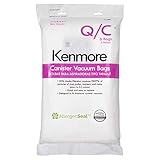
5. Kenmore 53292 Type Q HEPA Replacement Dust Bags for Canister Vacuum 81214, 81414, 81714, 21814, BC2005, BC3005, BC3006, 81615, BC4039, BC7005, 6 Count (Pack of 1)
Overview:
This 6-pack of Kenmore Type Q HEPA bags fits numerous Kenmore canister vacuums (e.g., 81214, BC3005 series). Each bag holds 2.1 liters and promises hospital-grade filtration, capturing 99.97% of particles as small as 0.3 microns, targeting dust, pollen, and allergens.
What Makes It Stand Out:
True HEPA filtration (99.97% at 0.3 microns) is rare in replacement bags and a major health-focused differentiator. The large 2.1L capacity reduces change frequency, while the one-step locking mechanism ensures quick, secure installation without fiddly adjustments.
Value for Money:
At six bags per pack, it offers solid value for HEPA-grade performance. Generic bags rarely achieve true HEPA standards, and dedicated HEPA vacuums often cost more—this upgrade transforms compatible Kenmore models into high-efficiency cleaners at minimal cost per bag.
Strengths and Weaknesses:
Strengths: Genuine HEPA filtration for allergy sufferers; generous 2.1L capacity; effortless one-step installation; broad compatibility across Kenmore models; cost-effective per-bag HEPA solution. Weaknesses: Only fits specific Kenmore canisters; no hygiene seal mentioned (dust exposure during changes); basic paper construction may tear if overfilled.
Bottom Line:
A must-buy for Kenmore Type Q vacuum owners needing superior air cleaning, especially allergy-prone households. The certified HEPA performance and large capacity deliver exceptional value, making it the smart upgrade over standard bags for healthier indoor air.
6. Miele Genuine AirClean XL Pack GN Vacuum Cleaner Bags, 8 Bags Included, for Miele Complete C3, Complete C2, and Classic C1 Vacuum Cleaners
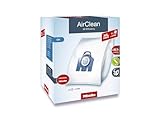
Overview: These are OEM replacement bags and filters exclusively designed for specific Miele canister vacuums, including the Complete C3/C2 and Classic C1 series, ensuring optimal machine performance and longevity.
What Makes It Stand Out: Miele’s AirClean 3D efficiency bags feature electrostatic filtration capturing fine dust and allergens, combined with an automatic hygiene closure for mess-free replacement. The pack includes 8 bags plus essential motor and exhaust filters, maintaining factory-calibrated suction and air quality.
Value for Money: While pricier than generics, the included filters and guaranteed compatibility prevent costly damage from off-brand alternatives. At roughly $2.50 per complete set (bags + filters), it’s justified for Miele owners prioritizing machine health over short-term savings.
Strengths and Weaknesses: Strengths: Prevents motor damage, superior dust retention, seamless integration with Miele’s auto-seal system, and comprehensive filtration. Weaknesses: Limited to specific Miele models, higher per-bag cost than compatibles, and no bulk discount for large households.
Bottom Line: Essential for Miele vacuum owners seeking peak performance and longevity; avoid risking damage with non-genuine parts despite the premium price.
7. Envirocare Replacement Vacuum Bags Compatible with Kenmore Canister Type C/Q. 5055, 50557 and 50558 Panasonic Type C-5 Vacuums,15 pack

Overview: A 15-pack of aftermarket vacuum bags engineered for Kenmore Type C/Q (5055 series) and Panasonic Type C-5 canister vacuums, emphasizing filtration and durability as a cost-effective alternative.
What Makes It Stand Out: Its multi-layered, electrostatically charged microfiltration liner captures 99.7% of particles as small as 0.3 microns—ideal for allergy sufferers. The tear-resistant construction ensures reliability, while the 15-bag count offers extended value.
Value for Money: At under $15 for 15 bags (~$1 each), it significantly undercuts OEM pricing while delivering near-HEPA filtration. The large pack suits frequent users, though long-term durability versus OEM remains unproven.
Strengths and Weaknesses: Strengths: High filtration efficiency, affordable bulk pricing, broad compatibility (including Panasonic models), and U.S. design. Weaknesses: Slightly thinner material than some OEM bags, potential minor fit variations in older vacuums, and no included filters.
Bottom Line: An excellent budget-friendly choice for Kenmore/Panasonic canister owners needing reliable filtration without OEM costs, especially for allergy-prone households.
8. HIBAG Vacuum Storage Seal Bags, 10 Jumbo Space Saver Vacuum Sealer Bags for Clothes, Comforters, Blankets, Bedding (10J)

Overview: A set of 10 reusable jumbo vacuum storage bags designed to compress bulky items like comforters and seasonal clothing by up to 80%, aiding organization during travel, moving, or off-season storage.
What Makes It Stand Out: The triple-seal turbo valve and double zip closure ensure airtight, leak-proof compression, while the extra-thick PA+PE material resists punctures. The included hand pump adds portability, and bags work with any household vacuum.
Value for Money: Priced competitively for 10 jumbo bags, the reusability and space savings justify the cost versus disposable alternatives. The durable build reduces long-term replacement needs, though the pump is basic.
Strengths and Weaknesses: Strengths: High compression ratio, exceptional durability, versatile storage orientations, and universal vacuum compatibility. Weaknesses: Hand pump requires manual effort (slower than electric), zip seals may snag if rushed, and jumbo size demands significant storage space post-compression.
Bottom Line: Highly recommended for efficient space management; ideal for travelers or small-space dwellers needing robust, reusable compression without specialized equipment.
9. Hoover Vacuum Cleaner Bags for Upright Vacs, Pack of 3, Multicolor, Type Y Allergen Filtration, Part # 4010100Y, Hoover Vacuum Bags Refill

Overview: Genuine Hoover Type Y/Z bags engineered for Wind Tunnel upright vacuums, featuring allergen-specific filtration to capture microscopic irritants like dust mites and pollen.
What Makes It Stand Out: The electrostatically charged liner traps 100% of dust mites/eggs and 99.98% of common pollens, exceeding standard filtration. Designed exclusively for Hoover compatibility, it maintains suction efficiency without risking machine damage.
Value for Money: At ~$3 per bag (3-pack), it’s moderately priced for genuine parts. While compatible bags exist cheaper, the allergen focus and machine safety offer tangible health/performance ROI for sensitive households.
Strengths and Weaknesses: Strengths: Superior allergen capture, preserves vacuum suction, prevents filter clogging, and ensures seamless fit. Weaknesses: Small pack size increases long-term costs, limited to specific Hoover models, and no added convenience features (e.g., auto-seal).
Bottom Line: A must-buy for Hoover Wind Tunnel owners with allergies; the health benefits and machine protection outweigh the modest premium over generic bags.
10. Kenmore IB600 HEPA Replacement Intuition Upright Vacuum Cleaner Bags for BU4022, BU4020, BU4018, BU4050, BU3040,White
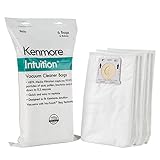
Overview: HEPA-certified replacement bags for Kenmore Intuition upright vacuums (e.g., BU4022), featuring No Touch bag technology for hygienic disposal and large 3.2L capacity.
What Makes It Stand Out: Combines true HEPA filtration (99.97% of particles ≥0.3 microns) with hands-free disposal—bags self-seal upon removal, eliminating dust exposure. The one-step installation and high capacity streamline routine cleaning.
Value for Money: Priced fairly for HEPA-grade OEM bags, the No Touch system adds convenience worth the slight markup versus basic compatibles. Long-term value shines for allergy sufferers avoiding dust exposure during changes.
Strengths and Weaknesses: Strengths: Medical-grade HEPA filtration, mess-free bag replacement, large debris capacity, and effortless installation. Weaknesses: Kenmore-specific compatibility limits use, HEPA efficiency may reduce suction slightly over time, and bags aren’t reusable.
Bottom Line: Top pick for Kenmore Intuition users prioritizing air quality and hygiene; the No Touch system and HEPA performance justify its cost for health-conscious households.
Why Vacuum Bags Matter More Than You Think
The Hidden Impact on Air Quality
Many assume vacuuming simply moves dirt from floor to bag, but the reality is far more complex. An inefficient bag allows fine particles—dander, pollen, and dust mite debris—to escape back into your living space through exhaust airflow. This defeats the purpose of cleaning, especially for allergy sufferers. High-efficiency bags act as a critical secondary filter, capturing 99.97% of particles as small as 0.3 microns when properly designed and sealed, significantly reducing airborne contaminants that standard bags miss.
Protecting Your Vacuum’s Longevity
Beyond air quality, the right bag safeguards your investment. When a bag is compromised—whether by thin material, poor seams, or incorrect sizing—dust bypasses filtration and coats the motor, sensors, and internal ducts. This forces the machine to work harder, increasing strain and heat buildup. Over time, this accelerates wear on critical components, leading to premature failure and costly repairs. A quality bag maintains optimal airflow dynamics, ensuring your vacuum operates at peak efficiency for years.
The Efficiency Myth: Suction vs. Retention
It’s a common misconception that stronger suction alone equals better cleaning. In reality, retention is equally vital. A bag might initially pull dirt effectively, but if it can’t trap fine particles permanently, they recirculate. True high-efficiency cleaning requires balancing powerful suction with exceptional filtration retention. Bags that prioritize one over the other create false efficiency—lots of noise and effort, but subpar results for your health and home cleanliness.
Decoding Bag Materials and Construction
Microfiber Weave Technology
Advanced bags utilize ultra-fine microfiber weaves that create a labyrinth of microscopic channels. Unlike basic paper bags, these synthetic fibers trap particles through mechanical interception and electrostatic attraction. The tightness of the weave directly impacts filtration efficiency—too loose, and fine dust escapes; too dense, and airflow suffocates the motor. Look for bags specifying micron-level retention capabilities rather than vague terms like “premium.”
Multi-Layer Filtration Systems
Top-tier bags employ strategic layering: an outer layer for large debris, a middle electrostatic layer to attract fine particles, and an inner HEPA-grade layer as the final barrier. This staged approach prevents clogging while maximizing capture. Single-layer bags, even if labeled “HEPA-compatible,” often lack this sophistication, leading to rapid performance decline as the sole layer becomes overloaded.
Seam Integrity and Sealing Mechanisms
A bag is only as strong as its weakest seam. Weak stitching or glued edges can rupture under suction pressure, especially when full. High-efficiency bags feature reinforced, heat-sealed seams and secure closure flaps that create an airtight seal with the vacuum’s dust chamber. This prevents leaks around the edges—a common escape route for dust that even the best filter material can’t compensate for.
Compatibility: It’s Not Just About Size
Model-Specific Engineering
Vacuum manufacturers design bags to precise internal dimensions, airflow paths, and sensor placements. A bag that’s slightly too short, too wide, or has misaligned tabs won’t seat correctly, creating gaps for dust leakage. Worse, ill-fitting bags can interfere with fullness sensors, causing premature “bag full” alerts or, conversely, overfilling that strains the motor. Never assume generic bags are interchangeable, even within the same brand family.
Understanding Vacuum Sensor Types
Modern vacuums use optical, mechanical, or airflow sensors to detect bag fullness. Bags must interact flawlessly with these systems. For instance, optical sensors require specific reflective surfaces on the bag; generic versions often lack this, triggering false alerts. Research your vacuum’s sensor type and ensure the bag is engineered to communicate accurately with it—critical for maintaining consistent performance.
Aftermarket vs. OEM: The Trade-Offs
Original Equipment Manufacturer (OEM) bags guarantee perfect fit and sensor compatibility but often carry a premium price. High-quality aftermarket bags can offer savings but require meticulous verification of compatibility charts and user reviews focused on sensor function and seal integrity. Avoid ultra-cheap generics; their inconsistent sizing and subpar materials frequently cause more problems than they solve.
Filtration Standards Demystified
HEPA Certification: What It Really Means
True HEPA certification (per EN 1822 or IEST standards) requires capturing 99.97% of 0.3-micron particles in independent lab testing. However, a bag labeled “HEPA-like” or “HEPA-style” typically meets no verifiable standard. Crucially, the entire vacuum system—not just the bag—must be sealed to achieve true HEPA performance. A certified bag in a non-sealed vacuum won’t deliver the promised filtration, as leaks elsewhere bypass the filter.
MERV Ratings for Vacuum Bags
While MERV (Minimum Efficiency Reporting Value) is typically used for HVAC filters, some premium vacuum bags reference it. A MERV 17-20 rating indicates near-HEPA efficiency. This provides a useful benchmark, but always confirm testing methodology. Bags quoting MERV should specify the particle size tested (e.g., MERV 19 at 0.3-1.0 microns) to be meaningful.
Electrostatic Charge: A Double-Edged Sword
Some bags incorporate electrostatically charged fibers to attract and hold fine particles. This boosts initial efficiency but can degrade over time or in humid conditions, as moisture dissipates the charge. Bags relying solely on electrostatics may show significant performance drops after the first few uses. Opt for bags combining electrostatic layers with mechanical filtration for consistent, long-term results.
Capacity vs. Efficiency: Finding Your Balance
The Overfilling Trap
Larger capacity bags seem economical—fewer changes, right? But overfilling beyond 70-80% capacity drastically reduces airflow and filtration efficiency. Dust compaction blocks the filter media, forcing the vacuum to work harder while capturing less. High-efficiency bags often have smaller optimal capacities than basic bags to maintain consistent performance. Prioritize a bag size that encourages timely changes over maximum volume.
Frequency of Replacement Matters
Even if not visibly full, bags lose efficiency over time. Dust embeds in fibers, reducing pore space and airflow. As a rule, replace bags when 2/3 full or every 1-2 months in average households. For allergy sufferers or pet owners, monthly changes are advisable. Ignoring this leads to diminished cleaning performance and increased motor strain, negating any cost savings from stretching bag life.
Cost Per Use Analysis
While premium bags cost more upfront, their superior dust retention and compatibility often extend vacuum lifespan and improve cleaning efficacy. Calculate cost per use: (Bag price) / (Expected uses before replacement). A $5 bag changed monthly costs $60/year. A $8 bag changed every 6 weeks might cost $69/year but could save $200 in motor repairs over five years. Factor in long-term value, not just sticker price.
Environmental and Practical Considerations
Biodegradable Options: Reality Check
Some brands offer “eco-friendly” biodegradable bags, typically made from plant-based fibers. While appealing, these often sacrifice strength and filtration efficiency compared to synthetic multi-layer bags. They may tear easily or degrade prematurely in humid environments. If sustainability is key, verify independent durability and efficiency testing—don’t rely solely on marketing claims.
Dust Containment During Disposal
A high-efficiency bag is pointless if dust explodes out when you remove it. Look for bags with secure twist-ties, self-sealing flaps, or “no-spill” designs that lock dust inside before detachment. This feature is crucial for allergy sufferers and ensures the captured pollutants don’t re-enter your home during disposal—a common oversight in bag design.
Storage and Shelf Life
Vacuum bags, especially those with electrostatic layers, can degrade if stored improperly. Keep them in a cool, dry place away from direct sunlight. Avoid humid basements or hot garages. Most quality bags have a 2-3 year shelf life; older stock may have compromised fibers or adhesives. Check manufacturing dates when buying in bulk to ensure peak performance.
Maximizing Your Investment
Pre-Use Inspection Ritual
Before installing a new bag, spend 10 seconds checking for defects: feel seams for weak spots, inspect the intake opening for tears, and ensure the closure mechanism works smoothly. A quick check prevents mid-clean ruptures and frustration. It’s also wise to verify the bag model number against your vacuum’s manual—mistakes happen even with reputable sellers.
Optimizing Vacuum Settings
Pair your high-efficiency bag with correct vacuum settings. On carpets, ensure the height adjustment allows optimal brush roll contact without straining the motor. For hard floors, reduce suction slightly if your model allows—this minimizes fine dust agitation while maintaining capture efficiency. The right settings reduce bag fill rate and extend its effective life.
Regular Vacuum Maintenance Synergy
Your bag works best alongside clean maintenance habits. Empty canisters (if your model has them), clean brush rolls monthly, and check pre-motor filters every 3 months. A clogged pre-filter forces the main bag to handle excessive fine dust, overwhelming its capacity. Treat the bag as part of a system—not a standalone solution.
Frequently Asked Questions
Frequently Asked Questions
How do I know if my vacuum bag is truly high-efficiency? Look for specific filtration claims backed by standards (e.g., “captures 99.97% of particles at 0.3 microns per EN 1822”). Vague terms like “advanced” or “max” are marketing fluff. Check independent lab reports if available, and prioritize bags with multi-layer construction over single-layer designs.
Can a high-efficiency bag restore suction power? Not directly. Bags affect airflow after the motor. If suction loss stems from a clogged filter or full bag, replacing it helps. But if the motor or seals are damaged, a better bag won’t fix underlying mechanical issues—it only ensures captured dust stays contained.
Do all HEPA bags fit all HEPA vacuums? No. HEPA refers to filtration efficiency, not physical compatibility. A HEPA bag must match your specific vacuum model’s dimensions and sealing mechanism. Using a HEPA bag in a non-HEPA vacuum (or vice versa) won’t magically make the system HEPA if the machine itself isn’t fully sealed.
How often should I replace a high-efficiency bag compared to a standard one? Replacement frequency depends on capacity and usage, not efficiency level. However, high-efficiency bags often fill faster with fine dust due to superior capture. Replace when 2/3 full or every 1-2 months—slightly more often than basic bags in the same environment.
Will a better bag reduce allergens in my home? Yes, significantly. High-efficiency bags trap allergens like pollen and pet dander that standard bags recirculate. For maximum impact, pair with a vacuum that has a sealed system and clean pre-filters regularly. This combination minimizes airborne triggers.
Can I reuse or wash vacuum cleaner bags? No. Washing destroys filtration media and seams. Reusing leads to tears, poor seals, and reduced efficiency. Bags are single-use for a reason—attempting to extend life compromises performance and risks damaging your vacuum.
Do bagged vacuums clean better than bagless models? Bagged vacuums often achieve higher sustained filtration because bags create a sealed system that bagless cyclonic models struggle to match. Bagless models can leak fine dust during emptying, while bags contain pollutants until disposal. For true dust retention, high-efficiency bags have an edge.
Why do some high-efficiency bags cost twice as much? Cost reflects multi-layer materials, precision manufacturing for sensor compatibility, reinforced seams, and rigorous quality control. Cheaper bags skimp on these, leading to leaks, premature failure, or inconsistent filtration. The price often correlates with real-world performance and vacuum protection.
Will a HEPA bag work in my older vacuum model? Possibly, but verify compatibility first. Older vacuums weren’t designed for modern HEPA bags’ exact dimensions or sensor requirements. An ill-fitting HEPA bag may not seal properly, negating its benefits. Check manufacturer compatibility charts before purchasing.
How do I dispose of vacuum bags without releasing dust? Seal the bag completely using its built-in closure before removal. Place it directly into an outdoor trash bin if possible. For severe allergies, double-bag it or wear a mask during disposal. Never shake or compress the bag indoors—that aerosolizes trapped particles.
See Also
- 10 Best Vacuum Cleaner Bags for High-Efficiency Allergen Capture This Year
- 10 Best Paper Vacuum Bags for Maximum Dust Retention This Year
- 10 Best Vacuum Cleaner Bags for Allergen Reduction This Year
- Stop Wasting Money with the 10 Best Budget Vacuum Cleaner Bags Under $20 This Year
- 10 Best HEPA Vacuum Bags for Pet Hair Removal This Year