Table of Contents
High-traffic tile floors face a daily assault of dirt, moisture, and abrasion that can quickly transform even the most beautiful surfaces into dull, grimy pathways. Whether you’re managing a bustling family kitchen, a commercial lobby, or a busy retail space, the constant foot traffic grinds in dirt particles that act like sandpaper on tile surfaces and seep deep into porous grout lines. Standard household cleaners simply aren’t formulated to handle this relentless wear, often leaving behind residues that attract even more dirt or failing to break down the complex mixtures of oils, organic matter, and tracked-in debris that accumulate in these demanding environments.
Choosing the right cleaning solution for high-traffic tile areas requires understanding the unique chemistry of soil removal, grout preservation, and surface protection. The ideal cleaner must work efficiently without damaging the tile finish, be safe for frequent use, and dry quickly to minimize slip hazards and disruption. This comprehensive guide explores the essential features, formulations, and application strategies that separate effective high-traffic tile cleaners from ordinary products, empowering you to make informed decisions that keep your floors pristine despite heavy daily use.
Top 10 Tile Floor Cleaners
Detailed Product Reviews
1. Shark Steam & Scrub Steam Mop, All-in-One Scrubbing and Sanitizing Hard Floor Cleaner, LED Headlights, 4 Dirt Grip Soft Scrub Pads Included, XL Water Tank, Swivel Steering, Hawaiian Grey, S8001
, LED Headlights, 4 Dirt Grip Soft Scrub Pads Included, XL Water Tank, Swivel Steering, Hawaiian Grey, S8001](https://m.media-amazon.com/images/I/41tn+V3BA9L._SL160_.jpg)
Overview: The Shark S8001 Steam & Scrub reimagines floor cleaning by combining chemical-free steam sanitization with mechanical scrubbing action. This corded electric mop tackles stuck-on messes across sealed hard floors using rotating pads that automatically scrub at high speed. With a generous water tank and swivel steering, it promises thorough cleaning without the elbow grease traditional mops require.
What Makes It Stand Out: The automatic scrubbing head delivering 150+ rotations per minute sets this apart from standard steam mops that rely solely on steam pressure. Three adjustable steam modes (Light, Normal, Deep) provide tailored cleaning intensity for different soil levels. Integrated LED headlights illuminate debris in dark spaces, while the included Dirt Grip pads are designed to trap and lock away grime. The sanitizing claim* (when used correctly) offers peace of mind for households prioritizing hygiene.
Value for Money: Priced in the premium steam mop category, the S8001 justifies its cost through dual-functionality that eliminates need for separate scrubbing tools. Comparable to buying a quality steam mop and electric spin mop separately, it consolidates two devices into one. The four included pads and XL tank reduce ongoing expenses and refill frequency versus budget competitors.
Strengths and Weaknesses: Pros: Superior stain removal via mechanical scrubbing; chemical-free sanitization; versatile steam settings; headlights reveal hidden dirt; large water capacity. Cons: Corded design limits mobility; sanitization requires precise technique per manual; may be too abrasive for delicate floors; rotating mechanism adds maintenance complexity.
Bottom Line: Ideal for busy households with children or pets, the Shark S8001 excels at deep cleaning tile and sealed hardwood. While the cord restricts reach, its scrubbing power and sanitization capabilities make it a worthwhile investment for those seeking professional-grade results without chemicals.
2. Bissell Crosswave Turbo Vacuum Mop All in One Wet and Dry Vac Combo Hard Floor & Area Rug Cleaner, 3888A

Overview: The Bissell CrossWave Turbo 3888A revolutionizes multi-surface cleaning by vacuuming and washing floors simultaneously. This hybrid machine eliminates the traditional two-step process of sweeping before mopping, handling hard floors and area rugs with equal proficiency. Its two-tank system ensures clean solution never mixes with dirty water, delivering consistently fresh cleaning performance.
What Makes It Stand Out: True simultaneous wet/dry cleaning represents a significant time-saving innovation. The antimicrobial-treated FreshStart filter combats odor-causing bacteria—a crucial feature for pet owners. Bissell’s Pet Foundation partnership adds philanthropic value. Multi-surface capability spans tile, sealed wood, laminate, linoleum, and area rugs without manual mode changes, while the specialized brush roll tackles both debris and stains.
Value for Money: Positioned as a mid-to-high-range floor cleaner, the CrossWave Turbo delivers strong value by replacing separate vacuum and mop systems. The time savings alone justify the investment for larger homes. While more expensive than basic mops, it performs comparably to owning a stick vacuum plus steam mop, consolidating storage and cost.
Strengths and Weaknesses: Pros: Vacuums and washes simultaneously; excellent for pet hair and spills; antimicrobial filter reduces odors; multi-surface versatility; separate tanks prevent cross-contamination. Cons: Requires regular maintenance and filter replacement; not suitable for deep carpet cleaning; corded design limits range; cleaning solution adds ongoing cost.
Bottom Line: Perfect for pet owners and busy families, the CrossWave Turbo streamlines floor care with impressive efficiency. Accept the maintenance demands and cord limitation, and you’ll reclaim significant cleaning time while achieving noticeably cleaner floors across multiple surfaces.
3. Zep Neutral PH Industrial Floor Cleaner - 1 Gallon - ZUNEUT128 - Concentrated Pro Trusted All-Purpose Floor Cleaner

Overview: Zep’s Neutral pH Industrial Floor Cleaner is a professional-grade concentrated solution designed for daily maintenance of polished floors. This one-gallon container yields up to 128 gallons of ready-to-use cleaner, making it ideal for both commercial facilities and large residential spaces. Its neutral pH formula cleans without damaging protective coatings or finishes.
What Makes It Stand Out: The extreme concentration ratio (1:128) delivers exceptional economy unmatched by ready-to-use products. Its neutral pH specifically preserves floor polish and sealants while effectively removing soils—critical for marble, granite, and vinyl surfaces. The no-rinse formulation saves labor time, and professional-trusted performance ensures reliable results without streaking or residue.
Value for Money: This represents outstanding long-term value. A single gallon provides months of cleaning for typical households and weeks for commercial spaces. Cost-per-use is pennies compared to dollars for pre-mixed alternatives. For property managers or large homes, the savings multiply dramatically while delivering professional results.
Strengths and Weaknesses: Pros: Incredible concentration reduces cost; safe for sensitive stone and sealed floors; no-rinse saves time; neutral pH preserves finishes; versatile across multiple surfaces. Cons: Requires accurate dilution measurement; industrial scent may be strong for some; not formulated for heavy grease; lacks sanitizing claims; needs separate bucket/mop system.
Bottom Line: Best suited for routine maintenance of large or commercial spaces, Zep offers unbeatable economy and surface safety. Homeowners with extensive hard flooring should invest in proper dilution equipment to maximize this professional cleaner’s value and protective benefits.
4. Hoover FloorMate Deluxe Hard Floor Cleaner Machine, Lightweight Cleaning Machine, Floor Scrubber with Spin Scrub Brushes, Wash and Dry Mode, Ideal for Hardwood, Vinyl, Tile, Laminate and More

Overview: The Hoover FloorMate Deluxe is a dedicated hard floor scrubbing machine that applies cleaning solution, agitates with rotating brushes, and extracts dirty water in one pass. Its lightweight design and dual-mode operation (Wash and Dry) provide targeted cleaning for sealed hardwood, tile, laminate, and vinyl. The included trial solution lets users test performance immediately.
What Makes It Stand Out: The proprietary SpinScrub brush system offers deeper mechanical cleaning than flat mops while remaining gentle on sealed surfaces. Dual-mode functionality transitions seamlessly from scrubbing to water extraction, significantly reducing drying time. The fingertip control system enables on-the-fly mode switching, while the dual-tank design guarantees clean solution application throughout the job.
Value for Money: Mid-range pricing positions this as an affordable alternative to professional floor cleaning services. For households with large hard floor areas, it pays for itself within months compared to outsourcing. While pricier than manual mops, its extraction capability and brush agitation deliver superior results that justify the investment.
Strengths and Weaknesses: Pros: Powerful scrubbing action; effective water extraction speeds drying; dual tanks maintain solution purity; lightweight for easy maneuvering; safe for multiple sealed surfaces. Cons: Bulky storage footprint; requires proprietary cleaning solutions for warranty; brushes need periodic replacement; cord restricts mobility; not suitable for unsealed wood.
Bottom Line: Excellent for homes with substantial hard flooring needing periodic deep cleaning. The FloorMate Deluxe bridges the gap between mops and professional equipment. If you can accommodate its storage needs and cord limitations, it delivers noticeably cleaner floors with faster drying times.
5. Mr. Clean 2X Concentrated Multi Surface Cleaner with Unstopables Fresh Scent 41 fl oz

Overview: Mr. Clean’s 2X Concentrated Multi-Surface Cleaner delivers amplified cleaning power in a compact 41-ounce bottle, formulated to cut through dirt, grease, and grime across household surfaces. Infused with Unstopables Fresh Scent, it leaves long-lasting fragrance while safely cleaning finished wood floors, countertops, bathrooms, and more when properly diluted.
What Makes It Stand Out: The double concentration formula provides twice the cleaning sessions of standard Mr. Clean, reducing packaging waste and storage needs. Unstopables scent technology offers premium fragrance longevity typically found in air fresheners. Its versatility eliminates need for multiple specialized cleaners, and the wood-floor-safe designation (when diluted) expands utility across most household surfaces.
Value for Money: Highly economical due to concentration—each bottle yields significant cleaning solution at pennies per use. Competes favorably with single-purpose cleaners, replacing several products. The 41-ounce size balances value with manageable weight, though fragrance-focused users may find premium scents cost slightly more than unscented versions.
Strengths and Weaknesses: Pros: Excellent concentration reduces cost; versatile across surfaces; pleasant long-lasting scent; effective grease cutting; compact storage. Cons: Strong fragrance may overwhelm sensitive individuals; chemical composition lacks eco-friendly certifications; requires careful dilution for wood floors; not a disinfectant; scent may clash with other products.
Bottom Line: A practical, cost-effective solution for general household cleaning. Mr. Clean 2X excels in homes wanting fresh fragrance with their cleaning power. Use proper dilution and ventilation, and this single bottle can replace most surface cleaners while delivering signature scent satisfaction and reliable performance.
6. Black Diamond Stoneworks MARBLE & TILE FLOOR CLEANER. Great for Ceramic, Porcelain, Granite, Natural Stone, Vinyl and Brick. No-rinse Concentrate.(1-Gallon)

Overview: This professional-grade concentrated floor cleaner from Black Diamond Stoneworks delivers specialized care for natural stone and tile surfaces. The one-gallon container provides a powerful, pH-neutral solution designed for marble, granite, travertine, ceramic, porcelain, and even brick. Its no-rinse formula simplifies maintenance while preserving the delicate beauty of premium flooring materials.
What Makes It Stand Out: The pH-neutral chemistry sets this apart from generic cleaners that can etch or dull stone surfaces. Its streak-free, no-rinse performance eliminates residue buildup, while the biodegradable, non-toxic formulation ensures safety around children and pets. The concentrate’s versatility across multiple hard surfaces makes it a true multi-surface specialist.
Value for Money: With dilution rates of just 2-4 ounces per gallon, this single bottle yields 32-64 gallons of cleaning solution. For homes with extensive stone or tile flooring, the cost-per-use is exceptionally low compared to ready-to-use alternatives. The investment pays dividends in preserved sealers and avoided restoration costs.
Strengths and Weaknesses: Strengths include superior stone safety, genuine eco-friendliness, remarkable economy, and streak-free results. The family-safe formula allows daily use without concern. Weaknesses: the upfront price exceeds standard cleaners, requires careful measuring for proper dilution, and the unscented nature may disappoint those preferring fragrance.
Bottom Line: For homeowners invested in natural stone flooring, this cleaner is essential. It delivers professional-quality results while protecting your investment, making it worth every penny despite the higher initial cost.
7. Bissell® SpinWave Hard Floor Expert Corded Spin Mop Cleaner with Washable mop Pads for Sealed Hard Floors, 20393
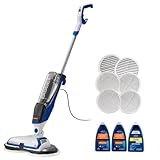
Overview: The Bissell SpinWave 20393 revolutionizes hard floor cleaning with its corded spin mop technology. This machine-powered system takes the elbow grease out of scrubbing, using rotating pads to tackle tough messes on sealed wood, tile, and linoleum. The lightweight design and swivel steering make it surprisingly maneuverable despite its motorized operation.
What Makes It Stand Out: Unlike manual mops, the SpinWave’s powered scrubbing pads deliver consistent agitation that lifts sticky spills and dried stains effortlessly. The on-demand spray system precisely controls solution distribution, preventing waste and over-wetting. The package includes six reusable pads and three travel-size formulas, providing six complete cleaning sessions right out of the box.
Value for Money: While pricier than traditional mops, the reusable pad system eliminates disposable waste, and the included formulas add immediate value. For households with frequent tough messes, the time and effort saved justify the premium. However, corded operation may require outlet changes in larger spaces.
Strengths and Weaknesses: Strengths include powerful motorized cleaning, excellent edge access, lightweight construction, and eco-friendly reusable pads. It’s safe for all sealed floors. Weaknesses: the power cord limits range and mobility, it’s unsuitable for unsealed or waxed floors, and replacement pad costs should be considered.
Bottom Line: Ideal for busy households needing deep cleaning power without the physical strain. The SpinWave excels on sealed hard floors, making it a worthwhile upgrade from conventional mopping systems.
8. Stardrops - The Pink Stuff - The Miracle All Purpose Floor Cleaner 33.8fl oz

Overview: Stardrops’ Pink Stuff Floor Cleaner brings the viral cleaning sensation to hard floors. This 33.8-ounce solution penetrates and dissolves stubborn stains, dirt, and grime across tiles, linoleum, vinyl, and laminate. Marketed as a miracle worker, it promises gleaming results without harsh treatment, making it suitable for kitchens, bathrooms, and living areas throughout the home.
What Makes It Stand Out: The Pink Stuff leverages its cult-following brand recognition while delivering genuine multi-surface versatility. Its formulation targets scuffs and spills effectively, yet remains gentle enough for regular use. The product’s ability to work across diverse flooring types simplifies cleaning routines for households with mixed floor materials.
Value for Money: Positioned as a mid-range option, this ready-to-use formula offers convenience without premium pricing. However, it’s less concentrated than professional-grade alternatives, meaning more frequent repurchases for larger homes. The 33.8-ounce size suits apartments or smaller spaces better than expansive floor plans.
Strengths and Weaknesses: Strengths include effective stain-fighting power, broad surface compatibility, gentle formulation, and strong brand reputation. It handles everyday grime admirably. Weaknesses: it’s not specifically pH-balanced for natural stone, lacks the concentration of professional products, and may require rinsing on certain surfaces for optimal results.
Bottom Line: A solid choice for general floor maintenance and tackling stubborn marks. While not specialized for premium stone, it performs excellently on standard hard surfaces and delivers good value for typical household cleaning needs.
9. Bona Multi-Surface Floor Cleaner Refill - 128 fl oz - Lemon Mint - Residue-Free Floor Cleaning Solution refill for Spray Mop and Spray Bottles - For Use on Stone, Tile, Laminate, and Vinyl Floors

Overview: Bona’s Multi-Surface Floor Cleaner Refill delivers eco-conscious cleaning in a substantial 128-ounce container. This lemon mint-scented solution works exclusively with Bona spray mops and bottles, offering residue-free, fast-drying performance across stone, tile, laminate, and luxury vinyl floors. The pH-neutral formulation protects floor finishes while simplifying maintenance.
What Makes It Stand Out: The impressive 92% USDA-certified biobased content and Safer Choice Certification demonstrate genuine environmental commitment. Splashless technology and a wide handle ensure clean, controlled pouring. The residue-free formula eliminates haze and sticky buildup, while rapid drying prevents water damage and allows quick room return.
Value for Money: This bulk refill significantly reduces cost-per-ounce compared to smaller bottles, making it economical for large homes or frequent cleaners. However, value depends on already owning a Bona spray mop or bottle. For Bona system users, it’s exceptional; for others, additional equipment costs apply.
Strengths and Weaknesses: Strengths include outstanding eco-credentials, user-friendly packaging, streak-free results, and versatile floor compatibility. The pH-neutral formula protects sealed surfaces effectively. Weaknesses: it’s limited to Bona dispensing systems, the lemon mint fragrance may not suit everyone, and it’s not suitable for unsealed or waxed floors.
Bottom Line: Perfect for environmentally conscious households already using Bona systems. The large size, green certifications, and excellent performance make it a smart, sustainable choice for maintaining beautiful hard floors.
10. MARBLE & TILE FLOOR CLEANER. Great for Ceramic, Porcelain, Granite, Natural Stone, Vinyl and Brick. No-rinse Concentrate. (1-Quart)

Overview: This concentrated marble and tile floor cleaner offers the same professional-grade formula as its larger counterpart in a more manageable quart size. Designed for natural stone, ceramic, porcelain, granite, and brick, the pH-neutral solution cleans without etching or dulling surfaces. The no-rinse, streak-free formula simplifies maintenance while protecting premium flooring investments.
What Makes It Stand Out: The quart size provides an accessible entry point for homeowners wanting to test the product before committing to a gallon. It retains all the premium features: stone-safe pH neutrality, biodegradable ingredients, and family-safe formulation. The concentrate’s versatility across multiple surfaces makes it ideal for smaller homes or targeted cleaning areas.
Value for Money: While the per-ounce cost exceeds the gallon version, the lower upfront investment appeals to budget-conscious shoppers or those with limited storage. The concentrated nature still yields 8-16 gallons of cleaning solution, offering reasonable economy for apartments or homes with modest floor space. It’s a practical compromise between performance and price.
Strengths and Weaknesses: Strengths include the same stone-protecting chemistry, eco-friendly credentials, and streak-free results in a portable size. The family-safe formula allows daily use without concern. Weaknesses: higher cost-per-use than bulk options, requires careful dilution measuring, and frequent repurchases for larger areas. The smaller bottle empties quickly in spacious homes.
Bottom Line: An excellent choice for first-time users or those with smaller floor areas. It delivers professional stone care without the bulk commitment, making premium floor maintenance accessible and convenient.
Understanding High-Traffic Tile Challenges
The Impact of Foot Traffic on Tile Surfaces
Every step across a tile floor transfers microscopic particles from shoes onto the surface, creating an abrasive paste when combined with moisture. In high-traffic zones, this process repeats thousands of times daily, embedding grit into grout lines and creating microscopic scratches on tile glazes. These scratches don’t just dull the appearance—they become collection points for even more dirt, accelerating the degradation cycle. Effective cleaners for these areas must contain ingredients that can lift embedded particles without requiring aggressive scrubbing that would further damage the surface.
Common Contaminants in Busy Areas
High-traffic tile accumulates a complex cocktail of substances far beyond ordinary dust. Think kitchen grease aerosolized during cooking, coffee spills in office break rooms, salt and de-icing chemicals tracked in during winter, bathroom soap scum mixed with body oils, and organic matter from outdoor spaces. Each contaminant type requires different chemical approaches: oils need surfactants that can emulsify them, while mineral deposits demand acidic components for dissolution. Understanding your specific contaminant profile is crucial for selecting a cleaner with the right active ingredients.
Why Standard Cleaners Fall Short
Typical multi-surface cleaners often contain fillers, fragrances, and moisturizers that leave sticky residues on tile. In low-traffic areas, this might go unnoticed, but in busy spaces, those residues become magnets for dirt, creating rapid re-soiling. Additionally, many household cleaners lack the concentration of active ingredients needed to break down heavily compacted grime in grout pores. High-traffic formulations prioritize soil suspension and complete rinsing over convenience features, ensuring that once dirt is lifted, it’s completely removed rather than redeposited.
Key Features to Look for in Tile Floor Cleaners
Concentrated Formulas for Heavy-Duty Cleaning
Concentrated cleaners offer superior value and performance for large, busy spaces. These formulations contain higher levels of active surfactants and builders, allowing you to adjust dilution ratios based on soil load. For daily maintenance, a light dilution prevents buildup, while a stronger mix tackles periodic deep cleaning without requiring separate products. Look for concentrates with clear dilution instructions and measuring systems that prevent waste and ensure consistent results.
pH-Neutral vs. Alkaline Cleaners: Making the Right Choice
pH-neutral cleaners (6.5-7.5) safely clean most glazed ceramic and porcelain tiles daily without etching or dulling finishes. However, for breaking down heavy grease and organic soils common in high-traffic areas, alkaline cleaners (pH 9-11) offer superior performance. The trade-off is that frequent alkaline use can degrade grout sealers over time. The best approach often involves alternating: alkaline cleaners for weekly deep cleans and pH-neutral products for daily maintenance. Always verify your specific tile manufacturer’s pH tolerance before selecting.
Fast-Drying Properties for Minimal Disruption
In commercial environments, floors must dry quickly to prevent slip hazards and allow uninterrupted traffic. Premium high-traffic cleaners contain accelerants that reduce surface tension, allowing water to evaporate rapidly. This is particularly critical for 24/7 operations like hospitals or retail stores where closing sections for extended drying isn’t feasible. Fast-drying formulations also prevent water from penetrating grout lines, reducing the risk of mold growth and subfloor damage.
Residue-Free Formulations
The ultimate test of any high-traffic cleaner is what it leaves behind—literally. Residue-free products use volatile surfactants that evaporate completely, leaving no film to attract new dirt. This characteristic is non-negotiable for busy areas because any residue creates a vicious cycle of rapid re-soiling. Test for residue by cleaning a small section and running your hand over the dry tile; if it feels tacky or squeaky, the product is leaving something behind.
Eco-Friendly and Low-VOC Options
Modern high-performance cleaners don’t require harsh solvents to be effective. Plant-derived surfactants, biodegradable chelating agents, and low-VOC formulations protect indoor air quality in enclosed spaces while delivering powerful cleaning. For LEED-certified buildings or facilities prioritizing sustainability, look for third-party certifications like Green Seal or EPA Safer Choice, which verify both environmental safety and cleaning efficacy.
Types of Tile Floor Cleaners for High-Traffic Areas
Daily Maintenance Cleaners
These lightweight formulations are designed for frequent use—often daily in very busy spaces. They contain mild surfactants that prevent soil buildup without stripping sealers or damaging finishes. The best maintenance cleaners include anti-resoiling agents that create a microscopic protective barrier, making subsequent cleaning easier. They’re typically pH-neutral and require no rinsing, making them ideal for quick cleaning during operating hours.
Deep Cleaning Solutions
Reserved for periodic intensive cleaning, these heavy-duty formulations tackle compacted grime and stained grout. They often contain stronger alkalis, solvents, or acids (for specific mineral deposits) and require dwell time to break down soils. Deep cleaners work best with mechanical agitation from floor machines or scrub brushes. While too aggressive for daily use, they’re essential for restoring heavily trafficked floors to like-new condition quarterly or semi-annually.
Enzyme-Based Cleaners for Organic Stains
In spaces like restaurant kitchens, locker rooms, or pet facilities, organic matter gets trapped in grout pores where traditional cleaners can’t reach. Enzyme formulations use beneficial bacteria that digest organic material, literally eating away stains and odors at the source. These cleaners require longer dwell times but provide ongoing cleaning action for hours after application as enzymes continue working. They’re particularly effective for eliminating urine odors, food grease, and biological waste.
Disinfecting Cleaners for Hygiene-Critical Spaces
Healthcare facilities, schools, and food preparation areas require cleaners that both clean and disinfect. These dual-action products contain EPA-registered antimicrobial agents that kill pathogens while removing soil. The key is ensuring the disinfectant component doesn’t compromise cleaning performance—some products excel at disinfection but leave sticky residues. For high-traffic areas, seek formulations where the cleaning agents and disinfectants are balanced, and always verify the required contact time for effective pathogen kill.
Grout-Specific Cleaning Products
Grout, being cementitious and porous, requires different chemistry than non-porous tile. Grout cleaners typically contain acids or strong alkaline agents that open pore structures to release embedded dirt. Some include whitening agents or color sealers that restore appearance while cleaning. For high-traffic areas, consider grout cleaners with built-in sealers that deposit protective polymers during cleaning, reducing future staining and making maintenance easier.
Application Methods and Tools
Mop-and-Bucket Techniques
Traditional mopping remains common, but technique dramatically affects results in high-traffic areas. Use two-bucket systems—one for cleaning solution, one for rinse water—to prevent soil redistribution. Flat microfiber mops outperform string mops by providing more contact surface and better soil pickup. For best results, work in small sections, change solution frequently, and always finish with clean water rinse to remove any cleaner residue.
Spray-and-Wipe Systems
For spot cleaning or very busy areas where wet floors are problematic, spray-and-wipe systems apply cleaner directly to the tile surface. This method uses minimal moisture, reducing slip risks and drying time. Battery-powered sprayers ensure consistent application rates, while microfiber cloths or pads lift and trap soil effectively. This approach works best for daily maintenance rather than heavy soil removal.
Auto-Scrubber Compatibility
Large commercial spaces benefit from automatic floor scrubbers that apply solution, agitate, and vacuum in one pass. Not all cleaners are formulated for these machines—some foam excessively, clogging vacuum systems, while others may damage internal components. Look for low-foaming, machine-safe formulations specifically labeled for auto-scrubber use. These cleaners often include defoaming agents and corrosion inhibitors to protect equipment investments.
Microfiber Technology Integration
Microfiber’s split fibers create millions of tiny hooks that physically trap dirt particles rather than just pushing them around. Pairing the right cleaner with microfiber mops or pads multiplies effectiveness. Some cleaners are specifically designed to work with microfiber, containing ingredients that break surface tension and allow fibers to reach into microscopic pores. Avoid cotton mops in high-traffic areas—they’re less effective and can leave lint behind.
Matching Cleaners to Tile Types
Ceramic and Porcelain Tile Considerations
These non-porous, glazed surfaces are most common in high-traffic areas and can tolerate a wide pH range. However, the grout between them is vulnerable. For glazed tiles, focus on cleaners that target grout without etching the glaze. Avoid abrasive cleaners that can wear down the glaze over time, especially on through-body porcelain where color runs through the entire tile. Test any new cleaner in an inconspicuous area to ensure it doesn’t affect the tile’s finish.
Natural Stone Tile Special Requirements
Marble, travertine, limestone, and slate are acid-sensitive and porous, requiring pH-neutral, stone-specific cleaners. Even in high-traffic areas, you cannot use acidic or highly alkaline products on these surfaces without risking etching and discoloration. Stone cleaners contain gentle surfactants and often include conditioners that replenish natural oils. They clean without stripping sealers, which are critical for protecting porous stone from staining.
Quarry and Terracotta Tile Care
These unglazed, highly porous tiles require completely different chemistry. They absorb cleaners like a sponge, making residue-free formulations absolutely critical. Use specialized cleaners that clean while reinforcing sealers, as unsealed quarry tile will stain permanently. These products typically contain mild alkaline builders and are designed for dilution to prevent over-saturation. Never use acids on these surfaces.
Cement Tile Maintenance
Cement tiles are trendy but extremely porous and pH-sensitive. They require neutral cleaners that won’t degrade the tile’s surface or remove pigmentation. High-traffic areas with cement tile need cleaners with excellent soil suspension to prevent dirt from embedding in pores. Avoid anything containing hydrochloric acid, citric acid, or strong alkalis. Instead, use specialized cement tile cleaners that often include color enhancers to maintain vibrancy.
Performance Factors for High-Traffic Environments
Soil Suspension Capabilities
The best high-traffic cleaners don’t just dissolve dirt—they keep it suspended in solution until it’s removed. This prevents redeposition, where dissolved soil settles back into grout lines as water evaporates. Look for products containing polymeric soil suspension agents that encapsulate dirt particles, keeping them floating in the cleaning solution until mopped or vacuumed away. This technology is especially important for dark-colored grout that shows soil easily.
Anti-Slip Properties
Wet tile surfaces in high-traffic areas create serious liability risks. Some advanced cleaners include proprietary additives that reduce slip coefficient on wet surfaces without leaving residue. These temporary anti-slip agents provide protection during and immediately after cleaning. While not a substitute for proper drying protocols, they offer an extra safety layer in environments like hospital corridors or grocery store aisles where traffic can’t be completely halted.
Odor Control Technology
High-traffic areas develop persistent odors from trapped organic matter in grout. Premium cleaners incorporate odor-neutralizing compounds that chemically bond with odor molecules, eliminating them rather than masking with fragrances. Some use cyclodextrin technology that traps odor molecules within molecular cages. For best results, choose unscented or lightly scented products—heavy fragrances often indicate poor odor elimination and can trigger sensitivities in enclosed spaces.
Color-Fastness Protection
In areas with colored grout or pigmented tiles, harsh cleaners can cause fading or discoloration. Color-safe formulations contain UV inhibitors and color stabilizers that protect against chemical bleaching. They’re especially important in sunlit areas where UV exposure combines with cleaning chemicals to accelerate fading. Test any cleaner on a spare tile or hidden area to verify color stability before full application.
Cost-Effectiveness and Value
Concentrated vs. Ready-to-Use Economics
Ready-to-use cleaners offer convenience but cost significantly more per use. A gallon of concentrate making 64 gallons of solution typically costs less than three gallons of pre-diluted product. For high-traffic areas requiring frequent cleaning, concentrates reduce costs by 70-80% annually. The key is proper dilution control—over-diluting wastes product and under-diluting risks residue or damage. Invest in automatic dilution systems for consistent, economical results.
Bulk Purchasing Strategies
Facilities managing large tile areas should negotiate bulk purchasing agreements. Many manufacturers offer tiered pricing for case, pallet, or drum quantities. Consider storage life when buying in bulk—most concentrates remain stable for 1-2 years if stored properly. Calculate usage rates based on square footage and cleaning frequency to optimize order quantities. Some suppliers offer just-in-time delivery programs that reduce storage requirements while maintaining bulk pricing.
Dilution Control Systems
Inconsistent dilution is the biggest waste of money with concentrates. Manual mixing often leads to over-concentration, leaving sticky residues that require re-cleaning. Wall-mounted proportioning systems connect to water lines and dispense exact ratios at the push of a button. For mobile cleaning, portable dispensing bottles with built-in measuring chambers ensure accuracy. These systems typically pay for themselves within months through reduced product usage and improved results.
Safety and Environmental Considerations
VOC Content and Indoor Air Quality
Volatile Organic Compounds (VOCs) evaporate from cleaning products, contributing to indoor air pollution and potential health issues. High-traffic areas cleaned frequently compound this exposure. Choose low-VOC formulations (under 50 g/L) that meet California’s stringent standards. These products use water-based carriers and avoid harsh solvents like glycol ethers. In poorly ventilated spaces, VOC-free options are worth the premium price for occupant health.
Child and Pet Safety Factors
Homes with children and pets require cleaners that are effective yet non-toxic if contacted or ingested. While no cleaner should be consumed, accidents happen. Look for products without harsh acids, caustic alkalis, or dangerous solvents. Many manufacturers now offer “green” cleaners that sacrifice nothing in performance while using food-grade preservatives and plant-based surfactants. Always store concentrates securely and keep pets off floors until completely dry.
Proper Storage and Handling
Concentrated high-traffic cleaners require careful storage to maintain stability and prevent accidents. Store in original containers in cool, dry areas away from direct sunlight. Keep acids and alkalis separated to prevent dangerous reactions if containers leak. Maintain Safety Data Sheets (SDS) for all products and ensure staff understand emergency procedures. For large facilities, secondary containment systems catch spills and prevent environmental contamination.
Professional vs. DIY Cleaning Approaches
When to Call in Professionals
Even with excellent daily maintenance, high-traffic tile benefits from periodic professional deep cleaning. Consider professional services annually for residential spaces or quarterly for commercial facilities. Professionals use truck-mounted hot water extraction systems that flush grout lines with 200+ degree water and powerful vacuums, removing soil impossible to extract with mops. They can also apply industrial-strength sealers that last years rather than months.
Building an In-House Maintenance Schedule
Consistency beats intensity for high-traffic tile. Develop a schedule based on traffic patterns: daily dust-mopping or vacuuming to remove abrasive grit, daily or every-other-day damp mopping with maintenance cleaner, weekly edge cleaning, and monthly intensive grout cleaning. Document the schedule and assign responsibilities. Use log sheets to track cleaning frequency and product usage, adjusting based on visual inspection and soil levels.
Training Staff for Proper Cleaning Protocols
Even the best cleaner fails with poor technique. Train cleaning staff on proper dilution, dwell time (letting cleaner sit 3-5 minutes before agitation), and rinsing procedures. Demonstrate correct mop techniques—figure-8 patterns prevent soil redistribution. For commercial spaces, certified training programs like those from ISSA provide standardized protocols that maximize efficiency and results while minimizing product waste.
Troubleshooting Common Issues
Dealing with Hazy Residue
If tiles look cloudy or hazy after cleaning, you’re likely dealing with product residue, not dirt. This occurs from over-concentration, inadequate rinsing, or using the wrong cleaner type. Remove residue by mopping with clean, hot water mixed with a small amount of white vinegar (for acid-resistant tiles only) or a specialized residue remover. Switch to a residue-free formulation and ensure proper dilution. In severe cases, a professional stripping may be necessary.
Addressing Persistent Stains
Some stains penetrate so deeply that surface cleaning can’t reach them. Oil stains, rust, and dye transfers often require poultice treatments—powder mixed with cleaner to create a paste that draws stains from pores. Apply the poultice, cover with plastic, and let it dry slowly (24-48 hours). The drying process pulls the stain into the poultice material. For grout, consider color sealing after stain removal to prevent recurrence.
Managing Grout Discoloration
Grout darkens in high-traffic areas due to embedded soil and worn sealers. After deep cleaning, apply a quality grout sealer to repel future staining. For permanently stained grout, professional color sealing applies an epoxy-based pigment that both seals and restores uniform color, lasting 5-10 years in residential settings. This is more cost-effective than re-grouting and provides superior stain resistance.
Frequently Asked Questions
How often should I clean high-traffic tile floors?
Daily dust-mopping or vacuuming is essential to remove abrasive grit. Damp mop with a maintenance cleaner every 1-2 days in very busy areas, or 2-3 times weekly in moderately trafficked spaces. Deep clean grout and tile monthly using a more intensive formulation. Adjust frequency based on visual inspection—if floors look dull or grout appears dark, increase cleaning frequency.
Can I use the same cleaner for tile and grout?
While many cleaners work on both, grout often needs stronger chemistry due to its porosity. For daily cleaning, a good tile cleaner suffices for both surfaces. However, periodic deep cleaning requires grout-specific products with stronger alkalis or acids (for non-sensitive tiles) that open grout pores. Consider applying a grout sealer after deep cleaning to simplify future maintenance.
What’s the difference between cleaning and disinfecting tile floors?
Cleaning removes visible soil and some germs through physical removal. Disinfecting kills specific pathogens using EPA-registered chemicals. For high-traffic areas, you need both: clean first to remove soil that can shield germs, then disinfect if required. Some products do both, but disinfectants require specific contact times (often 5-10 minutes) to be effective, which may not be practical in busy areas.
Are steam cleaners good for high-traffic tile?
Steam cleaners effectively sanitize and loosen soil using high heat, making them excellent for periodic deep cleaning. However, they don’t remove soil—you must still wipe or mop away loosened grime. Daily steam cleaning is impractical and can degrade grout over time by forcing moisture deep into subfloors. Use steam quarterly for sanitization, but rely on chemical cleaners for regular maintenance.
How do I prevent slip hazards when cleaning busy areas?
Schedule cleaning during low-traffic periods when possible. Use fast-drying cleaners and ensure adequate ventilation. Place “wet floor” signs at all approaches. Consider cleaners with temporary anti-slip additives. For 24/7 operations, clean in sections, drying each completely before opening to traffic. Microfiber mops leave floors drier than string mops. In critical areas, use air movers to accelerate drying.
Will harsh cleaners damage my tile over time?
Yes. Highly acidic cleaners (pH below 4) etch natural stone and can dull ceramic glazes with repeated use. Strong alkalis (pH above 11) degrade grout sealers and can discolor some tiles. Abrasive cleaners scratch surfaces, making them more soil-prone. Always match cleaner pH to your tile type, use the mildest effective product, and avoid abrasive powders. When in doubt, contact the tile manufacturer for approved cleaner specifications.
What’s the best way to clean textured or non-slip tile?
Textured tiles trap soil in their grooves, requiring cleaners with excellent wetting agents that penetrate crevices. Use stiff-bristled brushes or scrub pads to agitate textured surfaces. Auto-scrubbers with appropriate pads work well for large areas. Avoid wax-based cleaners that fill in texture and reduce slip resistance. After cleaning, rinse thoroughly to prevent cleaner buildup in textures, which can make floors slippery and appear dirty.
Should I seal my grout after cleaning?
Absolutely. Grout is porous and will quickly reabsorb stains if left unsealed. After deep cleaning, allow grout to dry completely (24-48 hours), then apply a penetrating sealer. In high-traffic areas, consider epoxy-based sealers that last 3-5 years versus 1-2 years for standard sealers. Sealing makes daily cleaning dramatically easier and prevents permanent staining. Reapply sealer annually in the highest-traffic sections.
Can I make my own effective tile cleaner for busy areas?
DIY solutions like vinegar and water or baking soda pastes work for light cleaning but lack the soil suspension agents and surfactants needed for high-traffic areas. They often leave residues or can’t cut through heavy grease. Commercial cleaners are specifically formulated for performance, safety, and residue-free results. While DIY options seem economical, they typically require more frequent cleaning and don’t protect tile as well, costing more long-term in labor and potential damage.
How do I know if my cleaner is leaving residue?
Perform a simple test: clean a small section of tile according to product directions. After it dries completely, run a clean, damp white cloth over the surface. If the cloth picks up dirt or feels sticky, residue is present. Alternatively, pour a few drops of water on the dry tile—if it beads up rather than spreading evenly, a film is present. Switch to a residue-free formulation and ensure proper dilution and rinsing.
See Also
- The 10 Best Tile Floor Cleaners for High-Traffic Kitchens in 2026
- How to Choose the 10 Best Laminate Floor Cleaners for High-Traffic Areas in 2026
- The 10 Best Tile Floor Cleaners for High-Traffic Homes in 2026
- 10 Best Value Laminate Floor Cleaners for High-Traffic Areas in 2026
- The 10 Ultimate Best Tile Floor Cleaners for Allergy Sufferers in 2026