Table of Contents
Breathing easier at home starts with the invisible battle happening inside your vacuum cleaner. Every time you clean, your vacuum’s filter either traps microscopic allergens like pollen, dust mites, and pet dander—or recirculates them back into your living space. For allergy sufferers, the difference between a standard filter and a high-performance allergen-control filter can mean the difference between waking up congested or enjoying a full night of clear breathing. As we look toward 2026, advancements in filtration technology continue to raise the bar for what’s possible in home allergen management.
Choosing the right replacement filter isn’t just about finding something that fits your machine—it’s about understanding the intricate relationship between filtration efficiency, airflow dynamics, and your specific allergy triggers. Whether you’re dealing with seasonal pollen, year-round dust mite allergies, or the persistent challenge of pet hair and dander, the filter you select becomes your primary defense system. This comprehensive guide walks you through everything you need to know to make an informed decision, from deciphering technical specifications to recognizing when it’s time for a replacement, all while avoiding the marketing hype that often surrounds allergen-control products.
Top 10 Replacement Vacuum Filters
Detailed Product Reviews
1. 2 + 4 Pack Filters for Shark Vacuum Navigator Lift Away Filter Replacement ZU503AMZ NV350 NV351 NV352 NV355 NV356E NV357 NV360 NV370 UV440 UV540, Parts XFF350 XHF350

Overview: This comprehensive filter kit delivers a complete maintenance solution for Shark Navigator Lift-Away owners, covering an extensive range of models from NV350 through ZU503AMZ. The package provides essential filtration components to restore and maintain your vacuum’s suction power and air quality performance.
What Makes It Stand Out: The set includes ten filters total: four foam filters with 60 PPI density, four ultra-thick felt filters with textured surfaces, and two H13 HEPA filters. The H13 true HEPA rating ensures exceptional filtration, blocking 99.97% of particles and preventing secondary air pollution. The use of FSC-certified paper demonstrates environmental responsibility, while the high-strength materials promise extended durability beyond generic alternatives.
Value for Money: With ten filters in one package, this set offers significant savings compared to purchasing OEM replacements individually. The washable and reusable design extends each filter’s lifespan, delivering long-term value. At this quantity, you’re equipped for approximately two years of maintenance, making the cost-per-filter highly competitive against both original and aftermarket single-filter options.
Strengths and Weaknesses: Strengths include extraordinary model compatibility spanning dozens of Shark variants, premium H13 HEPA filtration, eco-friendly materials, and the convenience of a complete maintenance kit. The washable design adds sustainability. The primary weakness is the need to carefully verify your specific model against the extensive compatibility list to avoid ordering errors. Additionally, the multi-pack might be excessive for occasional users who vacuum infrequently.
Bottom Line: For Shark Navigator Lift-Away owners, this filter set represents exceptional value and quality. The comprehensive compatibility, H13 filtration, and eco-conscious materials make it a smart investment for maintaining your vacuum’s performance while saving money over time.
2. Kenmore 53296 EF-9 Media Vacuum Cleaner Exhaust Filter for Upright and Canister Vacuums, White
 Exhaust Filter for Upright and Canister Vacuums, White](https://m.media-amazon.com/images/I/41vaRSBBI0L._SL160_.jpg)
Overview: The Kenmore 53296 EF-9 Media Vacuum Cleaner Exhaust Filter is a genuine OEM replacement designed for select Kenmore upright and canister vacuums, delivering certified HEPA filtration for cleaner exhaust air and improved home air quality.
What Makes It Stand Out: As an authentic Kenmore part (#20-53296, 40195), this filter guarantees perfect fit and reliable performance. Its HEPA media filtration captures 99.97% of dust, pollen, bacteria, and particles as small as 0.3 microns, meeting stringent air quality standards. The filter is specifically engineered for seamless integration with Elite Canisters (21814, 81714) and Upright models (31150, BU1018), ensuring optimal sealing and efficiency.
Value for Money: While priced higher than generic alternatives, this genuine Kenmore filter ensures optimal performance and protects your vacuum’s warranty. The HEPA media’s superior filtration reduces allergens in your home, potentially saving on air purifier costs. Its durable construction typically requires replacement only every 6-12 months, depending on usage, making the annual cost reasonable for the performance delivered.
Strengths and Weaknesses: Strengths include guaranteed compatibility, certified HEPA filtration, trusted OEM quality, and straightforward installation that takes seconds. The filter effectively maintains suction power while trapping microscopic particles. Weaknesses include limited model compatibility—only fitting four specific Kenmore models—and the premium price point compared to aftermarket multi-packs. Single-filter packaging means you’ll need to reorder more frequently than bulk options.
Bottom Line: For owners of compatible Kenmore Elite and Upright vacuums, this OEM filter is worth the investment. The certified HEPA filtration and guaranteed fit provide peace of mind, making it the reliable choice for maintaining your vacuum’s performance and your home’s air quality without compromise.
3. Filter Replacement for iRobot Roomba e, i and j Series i7 i7+/plus i3 i3+ E5 E6 E7 i4 i6 i6+ i8 i8+ Robot Vacuum Cleaners parts, 9 Pack High Efficiency 4639161 Filters
 parts, 9 Pack High Efficiency 4639161 Filters](https://m.media-amazon.com/images/I/41o60UJaVkL._SL160_.jpg)
Overview: This 9-pack of high-efficiency filters provides comprehensive replacement coverage for iRobot Roomba e, i, and j series robot vacuums, including popular models like the i7+, i3+, and j7. It’s designed to maintain your robot’s cleaning effectiveness in busy households.
What Makes It Stand Out: The package includes nine premium filters plus a free cleaning brush, offering exceptional quantity for multi-room homes or heavy usage. These filters capture 99.9% of dust, pet hair, and particles as small as 0.3 microns. The precise plastic frame bonding ensures secure installation and prevents debris bypass, while the nonwoven polymer construction maximizes pleat count for greater surface area.
Value for Money: With nine filters included, this set provides nearly two years of replacements (recommended every two months), making it significantly more economical than iRobot’s official filters. The included cleaning brush extends each filter’s usable life, maximizing your investment. For homes with pets or high traffic, this bulk pack eliminates frequent reordering hassles and reduces per-filter cost by over 60% compared to OEM options.
Strengths and Weaknesses: Strengths include outstanding value, broad e/i/j series compatibility, high-efficiency filtration, and the bonus cleaning brush. The filters install without tools in seconds. The critical weakness is that these filters cannot be washed—cleaning with water damages the electrostatic attraction permanently. Users must rely on dry brushing, which may not fully restore performance. The two-month replacement frequency can feel frequent for lighter users and adds to long-term costs.
Bottom Line: For Roomba e, i, and j series owners, this 9-pack offers unbeatable value and convenience. While not washable, the high filtration efficiency and included cleaning brush make it a cost-effective solution for maintaining your robot vacuum’s peak performance in busy households with pets or children.
4. Replacement Filter Set for Shark XFF350 Navigator Lift-Away NV350, NV351, NV3521, Felt + 1 Foam

Overview: This Replacement Filter Set for Shark XFF350 Navigator Lift-Away provides basic filtration components for select Shark Professional models, offering a minimal yet functional maintenance solution for immediate replacement needs.
What Makes It Stand Out: Specifically designed for Shark Navigator Lift-Away Professional models NV355, NV356, NV356E, and NV357, these filters ensure direct compatibility with the Euro-Pro Part Number XFF350. The washable and reusable design allows for extended use through simple rinsing and air-drying, reducing environmental waste and ongoing costs compared to disposable alternatives.
Value for Money: With only two filters per package, this set serves as a modest backup rather than a long-term supply. The lower price point makes it accessible for budget-conscious users needing immediate replacements. However, the limited quantity means frequent repurchasing, potentially increasing long-term costs compared to bulk options with more filters. This set works best as an emergency spare rather than a proactive maintenance solution.
Strengths and Weaknesses: Strengths include guaranteed compatibility with specified Professional models, washable construction for sustainability, and straightforward installation. The filters maintain adequate suction and debris capture for basic cleaning tasks. Weaknesses stem from minimal product information—it’s unclear whether the package contains foam, felt, or HEPA components. The two-filter quantity is insufficient for regular maintenance rotation, and the sparse description raises questions about filtration efficiency and material quality compared to comprehensive kits.
Bottom Line: This filter set suits Shark Navigator Lift-Away Professional owners seeking basic, affordable replacements. However, the lack of detailed specifications and limited quantity make it hard to recommend over more comprehensive alternatives. Verify your model carefully and consider your maintenance needs before purchasing, as larger kits may offer better long-term value.
5. Lemige 3 Pack Vacuum Filters Replacement Parts Compatible with Dyson V11 Origin V11 Torque Drive V11 Animal V11 Complete V11 Extra V15 Detect V15s Detect Submarine Vacuums, Compare to Part 970013-02
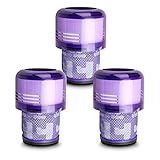
Overview: The Lemige 3 Pack Vacuum Filters provides replacement filtration for Dyson V11 and V15 cordless vacuum series, offering a cost-effective alternative to Dyson-branded parts while maintaining high-efficiency performance for cordless cleaning systems.
What Makes It Stand Out: These filters feature H13 efficiency rating, matching original Dyson performance by trapping 99.97% of particles as small as 0.3 microns. The two-in-one design integrates multiple filtration stages into a single unit. Compatibility spans numerous V11 variants (Origin, Torque Drive, Animal, Complete, Extra) and V15 models (Detect, V15s Detect Submarine), covering graded models SV14, SV15, SV17, SV22, SV28, and SV47, making it versatile across the Dyson cordless lineup.
Value for Money: At three filters per package, this set provides 9-18 months of coverage based on the recommended 3-6 month replacement cycle. The price significantly undercuts Dyson OEM filters while delivering equivalent H13 filtration performance. For households with pets or allergies, maintaining fresh filters improves suction and air quality without premium costs, reducing annual maintenance expenses by nearly half.
Strengths and Weaknesses: Strengths include broad Dyson V11/V15 compatibility, H13 filtration efficiency, substantial cost savings, and the convenience of a three-pack. The filters install easily without tools. Weaknesses include being an aftermarket product, which may concern warranty-conscious users. Some users report slight fit variations requiring firmer installation pressure. The 3-6 month replacement interval is shorter than some competitors’ washable options, increasing long-term frequency.
Bottom Line: For Dyson V11 and V15 owners seeking reliable filtration without OEM prices, the Lemige 3 Pack delivers excellent value. The H13 efficiency and comprehensive model compatibility make it a worthy alternative, though warranty considerations should be weighed against the significant cost savings.
6. Leadaybetter 5 Pack for Kenmore EF-2 86880 Exhaust Vacuum HEPA Filters. Compare to Replace Sears Part # 20-86880 (86880), 40320, EF2, 610445. Also Replaces Panasonic MC-V194H
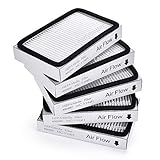
Overview: This five-pack of HEPA filters delivers OEM-compatible performance for select Kenmore and Panasonic canister vacuums. Designed to replace part numbers 86880, EF-2, and MC-V194H, these filters target households seeking consistent air quality maintenance without premium pricing. The H12-grade filtration captures 99.9% of particles as small as three microns, addressing common allergens like dust mites, pollen, and pet dander effectively.
What Makes It Stand Out: The Leadaybetter filters distinguish themselves through genuine HEPA-level efficiency at a fraction of manufacturer costs. Unlike generic alternatives that use lower-grade materials, these employ environmentally friendly construction while maintaining strict particle interception standards. The five-month supply kit eliminates frequent reordering hassles, and the brand’s 24-hour customer service commitment provides unusual support depth for consumable parts. Clear model compatibility listings reduce purchase errors, a common frustration with vacuum accessories.
Value for Money: At roughly one-fifth the cost of single OEM filters, this bulk package offers substantial savings. With each filter lasting 1-2 months, the five-pack covers nearly half a year of maintenance for under twenty dollars. Compared to washable options that degrade over time, these disposable filters maintain consistent performance throughout their lifespan. The cost-per-filter breakdown makes this an economical choice for households prioritizing respiratory health without stretching budgets.
Strengths and Weaknesses: Pros include true HEPA H12 filtration, broad model compatibility, eco-conscious materials, and responsive customer service. The five-pack quantity provides excellent convenience. Cons center on the non-washable design requiring regular replacement, which generates more waste than reusable alternatives. The 1-2 month replacement frequency may feel aggressive for light users, and the “wipe-clean only” maintenance limits refresh options between changes.
Bottom Line: For Kenmore canister vacuum owners needing reliable allergen control, this Leadaybetter five-pack represents smart bulk purchasing. While not washable, the proven filtration performance and significant cost savings justify the regular replacement schedule. Ideal for pet owners and allergy sufferers who prioritize air quality over reusability.
7. Lemige Vacuum Replacement Filters for Shark Rocket Vacuum HV345 HV343AMZ ZS350 ZS351 ZS352 HV320 HV321 HV322 HV324Q HV345 HV401, 4 Foam&Felt Filters + 4 Post-Filters, Part # XPMFK320&1084FTV320

Overview: This comprehensive filter kit addresses the complete filtration system for Shark Rocket stick vacuums in the HV320 series and beyond. Containing four foam pre-filters, four felt filters, and four post-motor filters, it matches OEM part numbers XPMFK320 and 1084FTV320. The kit specifically targets Shark Rocket models HV320 through HV401, excluding variants with holed pre-motor filters—a critical distinction that prevents compatibility mishaps.
What Makes It Stand Out: The Lemige kit’s attention to version specificity sets it apart. By explicitly warning about filter design differences (holed vs. non-holed), it prevents costly purchasing mistakes common with Shark accessories. The 60 PPI foam density and textured felt surfaces demonstrate engineering consideration, maximizing particle capture of food debris, hair, and allergens. The complete four-change system means users refresh all filtration stages simultaneously, maintaining optimal suction performance rather than mixing old and new components.
Value for Money: With four complete filter sets priced comparably to a single OEM replacement pair, the value proposition is compelling. Each set lasts 2-3 months, translating to nearly a year’s coverage. Hand-washability extends practical lifespan beyond the recommended replacement schedule for budget-conscious users. The inclusion of post-filters—often sold separately—eliminates additional purchases, making this an all-in-one maintenance solution.
Strengths and Weaknesses: Strengths include precise model compatibility guidance, high-density filtration media, complete system replacement approach, and excellent cost-per-unit value. The washable design supports sustainability. Weaknesses involve the version-specific limitation, which requires careful pre-purchase verification. Light users may find the 2-3 month replacement guideline aggressive, and over-washing can degrade foam integrity over time.
Bottom Line: Shark Rocket owners seeking hassle-free maintenance should verify their filter type, then purchase confidently. This kit’s thoughtful compatibility warnings and comprehensive coverage make it an outstanding value. For households with pets or heavy debris, the complete system refresh approach ensures consistent performance unmatched by partial replacements.
8. 6 Pack Vacuum Filter Replacement Kit for Dyson V7, V8 Animal and V8 Absolute Cordless Vacuum, 3 Post Filter, 3 Pre Filter, Replaces Part # 965661-01 & 967478-01

Overview: This six-piece kit maintains Dyson V7 and V8 cordless vacuum performance with three pre-filters and three post-filters, plus a cleaning brush. Compatible with Animal and Absolute variants, it replaces parts 965661-01 and 967478-01. The FSC-certified paper construction aligns with environmental considerations while preserving Dyson’s cyclone efficiency. Users receive a balanced supply covering approximately nine months of typical use.
What Makes It Stand Out: The kit’s FSC certification addresses growing consumer concerns about sustainable materials in consumables. Unlike standard paper filters, this responsibly sourced construction doesn’t compromise filtration efficiency. The included cleaning brush—a simple but overlooked accessory—helps maintain pre-filter performance between changes, potentially extending usable life. The balanced 3:3 ratio matches Dyson’s recommended simultaneous pre- and post-filter replacement schedule, preventing performance imbalances.
Value for Money: Priced at roughly 30% of a single Dyson-branded filter set, this six-pack delivers exceptional savings. The nine-month coverage period minimizes reordering frequency, while the cleaning brush adds practical value. FSC certification typically commands premium pricing, yet this kit remains budget-friendly. For V7/V8 owners facing discontinued OEM parts, it provides an affordable continuity solution without sacrificing quality.
Strengths and Weaknesses: Pros include genuine Dyson compatibility, sustainable materials, balanced filter ratio, and useful cleaning brush. The multi-month supply reduces maintenance frequency. Cons involve paper construction requiring complete replacement rather than washing, and the 2-3 month schedule may not suit all usage patterns. Some users report slightly tighter fits requiring careful installation. The kit doesn’t suit V6 models, limiting versatility across Dyson cordless lines.
Bottom Line: Dyson V7 and V8 owners prioritizing environmental responsibility and cost savings will find this kit ideal. The FSC-certified construction and thoughtful inclusion of a cleaning brush demonstrate quality commitment. While not washable, the performance matches OEM standards at a fraction of the cost, making it a smart choice for maintaining cordless vacuum efficiency.
9. Vacuum Filter Replacement Compatible with Fabuletta FSV001/FSV101,Girnoor G160/G165, Lubluelu 202, Oraimo OSV-102, VacLife VL732 Stick Vacuum Cleaners - 4 Pack

Overview: This universal filter set serves multiple emerging stick vacuum brands including Fabuletta, Girnoor, Lubluelu, Oraimo, and VacLife models. The four-pack of foam filters targets cordless stick vacuums from manufacturers sharing common filter designs. As a standard version without top holder, it requires pre-purchase verification but offers broad cross-brand compatibility. The straightforward foam construction prioritizes functional replacement over proprietary branding.
What Makes It Stand Out: The multi-brand compatibility addresses a growing market segment of affordable stick vacuums lacking robust aftermarket support. By covering five brands across numerous models, it eliminates frustrating searches for obscure OEM parts. The washable and reusable design contrasts sharply with disposable HEPA alternatives, offering long-term sustainability. The simple foam construction without plastic holders reduces waste and simplifies installation—just rinse, dry, and reinstall.
Value for Money: Four filters priced below fifteen dollars represents remarkable value, especially for budget vacuum brands where OEM parts can be disproportionately expensive. With proper washing, each filter can serve 3-6 months, potentially delivering years of coverage. The universal approach means one purchase serves multiple vacuum types in multi-vacuum households. Compared to brand-specific replacements costing $8-12 each, this pack offers 70-80% savings.
Strengths and Weaknesses: Strengths include exceptional cross-brand compatibility, washable reusability, simple installation, and outstanding affordability. The foam material effectively captures typical household debris. Weaknesses involve the version specificity warning—users must confirm their filter lacks a top holder. Foam filtration is less efficient than HEPA for microscopic allergens. The generic design lacks brand-specific optimization, potentially affecting fit precision in some models.
Bottom Line: Owners of compatible off-brand stick vacuums should stock these immediately. The combination of universal fit, washable design, and unbeatable price makes this essential for budget-conscious households. While not HEPA-grade, the convenience and cost savings far outweigh minor filtration compromises. Verify your filter version, then enjoy years of affordable maintenance.
10. Colorfullife Filters for Shark Rotator Pro Lift-Away NV500, NV501, NV502, NV503, NV505, NV510, NV520,NV552,UV560, Xff500 Xhf500 (Not Fit NV650,NV750 Series)

Overview: This Colorfullife kit provides complete filtration maintenance for Shark Rotator Pro Lift-Away NV500 series vacuums. Containing four foam and felt filter sets plus two post-motor filters, it replaces part numbers XFF500 and XHF500. The package covers multiple replacement cycles for the primary washable components and the secondary exhaust filtration. Explicit compatibility warnings prevent purchasing errors with similar-looking NV650 and NV750 series models.
What Makes It Stand Out: The kit’s comprehensive approach—providing both pre-motor foam/felt sets and post-motor filters—addresses the complete airflow path. Many competitors sell these separately, forcing multiple purchases. The clear “NOT FIT” warnings demonstrate unusual attention to Shark’s confusing model numbering, saving customers from frustrating returns. High-strength, environmentally protected materials ensure durability through repeated wash cycles, maintaining structural integrity where cheaper alternatives degrade.
Value for Money: Offering four full pre-motor changes and two post-motor filters, this kit delivers 12-18 months of maintenance for roughly the cost of two OEM filter pairs. The washable design multiplies value further, as proper care extends lifespan beyond recommended 3-month intervals. For households with pets, having spare filters ready enables quick swaps during deep-cleaning sessions without waiting for wash cycles. The cost-per-year analysis shows 60-70% savings versus manufacturer parts.
Strengths and Weaknesses: Pros include complete system coverage, explicit compatibility guidance, durable washable materials, and exceptional long-term value. The multi-filter count supports heavy-use households. Cons involve the initial higher price point versus single-filter packs, and post-motor filters aren’t washable—requiring eventual replacement. Some users report slight color bleeding during first washes. The kit’s specificity means it has no cross-model utility.
Bottom Line: NV500 series owners seeking hassle-free, long-term maintenance should purchase this kit immediately. The comprehensive coverage and thoughtful compatibility warnings eliminate guesswork. While the upfront cost exceeds single-filter options, the 12+ month coverage and washable durability make it the most economical choice for maintaining Shark Rotator performance. Perfect for pet owners and frequent cleaners.
Understanding Vacuum Filter Technologies for Allergen Control
Modern vacuum filters employ sophisticated technologies that go far beyond simple mesh screens. Understanding these mechanisms helps you evaluate performance claims and select filters that genuinely address your allergy concerns rather than just promising results.
HEPA Filtration Standards Explained
True HEPA filters must capture 99.97% of particles as small as 0.3 microns, a size that represents the most penetrating particle diameter. This standard, established by the Department of Energy, ensures consistent performance across all certified products. When evaluating replacement filters, look for language specifying “True HEPA” or “Certified HEPA” rather than vague terms like “HEPA-like” or “HEPA-style,” which lack regulatory backing. The 0.3-micron threshold is critical because these particles are small enough to penetrate deep into lungs and trigger allergic reactions, yet large enough that many inferior filters miss them entirely.
Multi-Stage Filtration Systems
Premium allergen-control filters rarely work alone. They function as part of a multi-stage system that typically includes a pre-filter for larger debris, a primary HEPA filter for microscopic particles, and sometimes a post-filter for final air polishing. This layered approach extends the life of your main HEPA filter while ensuring comprehensive contaminant removal. When shopping for replacements, consider whether you’re purchasing a complete filter set or just one component of a larger system, as incomplete replacements can compromise overall performance.
Pre-Filters and Their Role
Pre-filters act as the first line of defense, capturing hair, lint, and larger dust particles before they reach the main HEPA filter. This not only improves cleaning efficiency but also significantly extends the lifespan of your more expensive primary filter. Some pre-filters are washable and reusable, offering both cost savings and environmental benefits. For homes with pets, a robust pre-filter system is non-negotiable, as pet hair can quickly clog a HEPA filter, reducing suction and filtration effectiveness within weeks.
Key Features to Evaluate in Replacement Filters
Beyond basic HEPA certification, several design features determine how effectively a filter controls allergens in real-world conditions. These details often separate mediocre filters from exceptional ones.
True HEPA vs HEPA-Type Distinction
The market is flooded with filters labeled “HEPA-type” or “HEPA-style,” which sound impressive but meet no official standards. These products typically capture only 85-90% of particles, leaving significant amounts of allergens circulating in your home. Always verify that a filter meets the True HEPA standard of 99.97% efficiency at 0.3 microns. Some manufacturers include independent lab test results—while not mandatory, these provide additional confidence in performance claims.
Filter Material Composition
High-quality filters use pleated, wet-laid glass microfiber or synthetic media with electrostatic properties that attract and hold particles. The pleating design increases surface area, allowing for greater contaminant holding capacity without restricting airflow. Some advanced filters incorporate activated carbon layers to neutralize odors from pets, cooking, or smoke—particularly beneficial for those with chemical sensitivities alongside allergies. The material’s durability also matters; flimsy filters can tear during installation or use, creating bypass channels that render the filter useless.
Sealing and Gasket Design
A filter is only as good as its seal. Even the most efficient HEPA filter fails if air bypasses it through gaps around the edges. Premium replacement filters feature closed-cell foam gaskets or rubber seals that create an airtight fit within the vacuum chamber. Inspect the sealing mechanism before purchase—compression-molded seals generally outperform simple foam strips. For bagless vacuums, the seal between the filter housing and dust container is equally critical and should be checked regularly for wear.
Airflow Resistance Considerations
Exceptional filtration shouldn’t come at the expense of suction power. Filters with excessively dense media can strangle airflow, reducing cleaning effectiveness and forcing the vacuum motor to work harder, potentially shortening its lifespan. Look for filters that balance high filtration efficiency with low pressure drop. Some manufacturers provide CFM (cubic feet per minute) ratings that demonstrate minimal airflow reduction compared to OEM filters. This is particularly important for older vacuums or lower-powered models that can’t compensate for restrictive filters.
Filter Types for Different Vacuum Models
Vacuum design varies dramatically across categories, and each requires specific filter configurations. Understanding these differences ensures you purchase compatible replacements that maintain your machine’s allergen-fighting capabilities.
Upright Vacuum Filters
Upright vacuums typically use a combination of pre-motor and post-motor filters. The pre-motor filter protects the motor from debris, while the post-motor filter cleans exhaust air before it re-enters your room. For allergen control, the post-motor filter is most critical and should always be True HEPA-rated. Many modern uprights use cyclonic separation to reduce filter loading, but this doesn’t eliminate the need for regular replacement. Check whether your model requires a separate foam pre-filter in addition to the main HEPA cartridge.
Canister Vacuum Filters
Canister vacuums often feature more sophisticated filtration systems due to their design flexibility. Many models accommodate larger filter media, which can mean longer replacement intervals and better airflow characteristics. The filter location varies—some mount in the canister body, others in the powerhead. When replacing canister filters, verify whether you need a filter for the main unit, the powerhead, or both. Some premium canisters also include motor filters that require periodic replacement to maintain suction.
Stick and Handheld Vacuum Filters
Compact stick and handheld vacuums present unique challenges for allergen control. Their small size limits filter area, requiring more frequent replacements. Most use a single integrated filter unit that combines pre-filter and HEPA functions. Because these vacuums are often used for quick cleanups, filters can clog rapidly with fine dust. For allergy sufferers, consider replacing stick vacuum filters every 2-3 months, even if the manufacturer suggests longer intervals. Some newer models feature washable filters, but washing can degrade electrostatic properties over time.
Robot Vacuum Filters
Robot vacuum filters are tiny but mighty, capturing allergens from daily maintenance cleaning. Their small surface area means they fill up quickly, especially in homes with pets. Most robot vacuums use a small HEPA cartridge alongside a primary mesh filter. Because robots operate autonomously, it’s easy to forget filter maintenance. Set calendar reminders to check these filters weekly—many are washable, but replacement every 3-6 months ensures optimal allergen control. The sealed dustbin design of most robots actually enhances filtration when properly maintained.
Central Vacuum System Filters
Central vacuum systems handle large volumes of air and debris, making their filters critical for whole-home air quality. These systems typically use large cartridge filters or bag-like filter media in the main power unit, often located in a garage or basement. The exhaust may vent outside, which reduces indoor recirculation concerns but doesn’t eliminate the need for effective filtration. Central vacuum filters require replacement less frequently but should be inspected semi-annually. Some systems include optional exhaust filters for additional allergen control.
Allergen Control Performance Factors
Technical specifications tell only part of the story. Real-world performance depends on how these features work together to address specific allergy triggers present in your environment.
Micron Capture Efficiency
While HEPA certification covers 0.3-micron particles, many allergens are even smaller. Cat dander proteins can be as tiny as 0.1 microns, and some bacteria measure 0.2 microns. Premium filters often exceed HEPA standards, capturing particles down to 0.1 microns with 99% efficiency. Look for filters that publish sub-micron performance data if you have severe allergies or multiple pets. This information is typically found in technical specifications rather than marketing materials.
Dust Retention Capacity
A filter’s holding capacity determines how long it maintains efficiency before clogging. Filters with greater capacity don’t just last longer—they maintain consistent suction and filtration throughout their lifespan. Pleated designs with deep folds offer more surface area and higher capacity. For large homes or high-traffic households, capacity should be a primary consideration. A filter that needs monthly replacement may cost more long-term than a premium option lasting six months, even if the upfront price is higher.
Anti-Microbial Treatments
Moisture from cleaning can create breeding grounds for mold and bacteria within filters, potentially releasing spores back into your home. Some replacement filters incorporate anti-microbial treatments that inhibit microorganism growth. These treatments, often silver-ion based, don’t wash off during normal use and can be particularly beneficial in humid climates or for those with mold allergies. Verify that any anti-microbial claims are backed by independent testing rather than just marketing language.
Activated Carbon for Odor Control
Allergies and chemical sensitivities often go hand-in-hand. Activated carbon layers adsorb volatile organic compounds (VOCs), pet odors, and smoke smells that HEPA filters alone cannot address. The carbon is typically impregnated into a separate filter layer or embedded in the HEPA media. For comprehensive indoor air quality improvement, consider filters with activated carbon, especially if you live in urban areas with higher pollution levels or use cleaning chemicals that leave residual odors.
Maintenance and Replacement Guidelines
Even the best filter performs poorly when neglected. Proper maintenance schedules ensure consistent allergen control and protect your vacuum investment.
Recommended Replacement Intervals
Manufacturer guidelines provide a baseline, but actual replacement frequency depends on usage patterns and home conditions. For allergy sufferers, replace filters at 50-75% of the recommended interval. In a home with pets and carpet, this might mean monthly pre-filter cleaning and HEPA filter replacement every 3-4 months instead of the standard 6-month recommendation. Hardwood floors with no pets might allow you to extend to 8-10 months. The key is consistency—set reminders and stick to them.
Cleaning vs. Replacing Filters
Some filters are marketed as washable, but cleaning has limitations. Washing removes debris but can damage delicate filter fibers and eliminate electrostatic charges that capture smaller particles. For True HEPA filters, replacement is almost always better than washing. Pre-filters and foam filters can typically be rinsed and reused multiple times. If you do wash filters, allow them to dry completely for at least 24 hours—installing a damp filter promotes mold growth that worsens allergies.
Signs Your Filter Needs Changing
Reduced suction power is the most obvious indicator, but other signs include visible dust on surfaces immediately after vacuuming, increased allergy symptoms following cleaning sessions, or a musty odor from the vacuum exhaust. Some advanced vacuums have filter indicator lights, but don’t rely solely on these—by the time the light activates, allergen recirculation may already be occurring. Perform a visual inspection monthly; if the filter appears gray and clogged with fine dust, it’s time for replacement regardless of the schedule.
Compatibility and Sizing Considerations
A filter that doesn’t fit perfectly is worse than no filter at all, creating bypass leaks that compromise the entire system. Precision matters more than price when it comes to compatibility.
OEM vs. Aftermarket Options
Original Equipment Manufacturer (OEM) filters guarantee exact fit and specifications but often cost significantly more. Aftermarket filters can offer comparable performance at lower prices, but quality varies widely. When considering aftermarket options, look for filters that explicitly state they meet or exceed OEM specifications. Check customer reviews specifically mentioning fit and seal quality. Some premium aftermarket manufacturers publish comparative test data showing equivalent or superior performance to OEM filters.
Model-Specific vs. Universal Filters
Model-specific filters are engineered for exact vacuum dimensions and airflow characteristics. Universal filters claim to fit multiple models but often require trimming or don’t seal properly. For allergen control, avoid universal filters—the potential for air leaks around an imperfect seal defeats the purpose of HEPA filtration. Even if a universal filter costs less, the compromised performance makes it a poor value. Always prioritize model-specific replacements, verifying part numbers against your vacuum’s manual.
Verification Methods
Before purchasing, cross-reference your vacuum’s model number with the filter manufacturer’s compatibility list. Check the filter’s dimensions and compare them to your original. Many manufacturers provide online tools where you input your vacuum model to confirm fit. When the filter arrives, inspect it immediately—compare gasket thickness, pleat depth, and overall construction to your original before installation. This allows for returns if discrepancies exist.
Cost-Effectiveness and Value
Allergen control is an investment in health, but that doesn’t mean overspending. Strategic purchasing decisions can reduce long-term costs without compromising air quality.
Price-Performance Balance
The most expensive filter isn’t always the best, but extremely cheap filters rarely perform adequately. Establish a price baseline by checking OEM filter costs, then look for aftermarket options priced 20-40% lower that still publish performance specifications. Avoid no-name filters sold in bulk without any technical data—these often use inferior media that degrades quickly. Consider the total cost of ownership: a $30 filter lasting 6 months is more economical than a $15 filter needing replacement every 2 months.
Bulk Purchasing Strategies
If you’ve found a filter that works well for your vacuum and allergy needs, buying multi-packs can offer significant savings. Many reputable manufacturers offer 3-pack or 6-pack options at discounted per-unit prices. Before bulk buying, verify the filter’s shelf life—most unused filters remain effective for 2-3 years if stored in a dry, sealed environment. Don’t buy more than a 2-year supply to avoid potential degradation of filter media or gaskets.
Warranty and Return Policies
Quality filter manufacturers stand behind their products with satisfaction guarantees or performance warranties. While a warranty on a consumable item might seem unnecessary, it indicates manufacturer confidence. Check return policies before purchasing—some retailers allow filter returns if unopened, while others prohibit returns on opened packages. Keep purchase receipts and note installation dates; if a filter fails prematurely, you may be eligible for a replacement.
Environmental and Health Considerations
Your filter choice impacts both indoor air quality and the broader environment. Balancing these factors leads to more sustainable allergen control.
Eco-Friendly Filter Materials
Traditional filter media can be difficult to recycle, but some manufacturers now use biodegradable or recyclable materials. Look for filters with cardboard frames rather than plastic, and media made from recycled synthetic fibers. While these eco-friendly options may cost slightly more, they reduce landfill impact. Some companies offer take-back programs where you return used filters for proper recycling—an excellent option for environmentally conscious consumers.
Filter Disposal Best Practices
Used filters contain concentrated allergens and should be handled carefully. Seal old filters in plastic bags before disposal to prevent releasing trapped particles. If you have severe allergies, consider wearing a mask when changing filters. Never attempt to shake out or compress a used filter outdoors—this aerosolizes allergens and defeats the purpose of having captured them. Check local regulations; some areas classify used vacuum filters as general waste, while others have specific disposal guidelines.
Certifications to Look For
Beyond HEPA certification, several third-party validations indicate superior performance. The Asthma and Allergy Foundation of America (AAFA) certification requires products to meet strict standards for allergen reduction. ISO 16890 classifications provide detailed performance data across different particle sizes. Energy Star certification for vacuums includes filtration efficiency standards. While not all filters carry these marks, their presence provides independent verification of marketing claims.
Installation and Usage Tips
Proper installation and usage habits maximize filter effectiveness and ensure your vacuum operates at peak allergen-control performance.
Proper Installation Techniques
Always power off and unplug your vacuum before changing filters. Inspect the filter housing for debris or damage—clean it thoroughly with a damp cloth. Install the new filter with the airflow arrow pointing in the correct direction (usually toward the motor). Press firmly around the entire perimeter to ensure the gasket seats evenly. Run the vacuum for 30 seconds after installation and check for any air leaks around the filter cover. A proper seal is silent; whistling sounds indicate bypass.
Maximizing Filter Lifespan
Empty dust containers before they reach maximum capacity—overfilling forces debris into the filter media. Vacuum slowly to allow adequate dwell time for particle capture. Use appropriate power settings; max power isn’t always necessary and can overload filters with fine dust. In high-dust situations, vacuum in short sessions rather than one marathon cleaning, allowing the filter to clear between uses. These habits can extend filter life by 25-40% while maintaining suction performance.
Common Installation Mistakes
Forcing a filter into place can tear the media or compress the gasket, creating permanent bypass channels. Installing filters backwards reduces efficiency and can damage the vacuum. Forgetting to replace filter covers or seals leaves gaps that allow unfiltered air to escape. Using filters that have been stored improperly—exposed to moisture or crushing—can lead to premature failure. Always store spare filters in their original packaging in a climate-controlled environment.
Frequently Asked Questions
How do I know if my vacuum filter is actually HEPA-rated?
Look for specific language stating “True HEPA” or “Certified HEPA” with 99.97% efficiency at 0.3 microns. Reputable manufacturers include this data on packaging or product descriptions. Avoid vague terms like “HEPA-like” which have no regulatory meaning. Some products include certification numbers you can verify online.
Can I wash my HEPA filter to extend its life?
Washing True HEPA filters is not recommended. Water damages the delicate fiber structure and removes electrostatic charges essential for capturing sub-micron particles. While the filter may look clean after washing, its efficiency drops significantly. Pre-filters and foam filters can be washed, but HEPA filters should always be replaced when dirty.
How often should allergy sufferers replace vacuum filters?
Replace HEPA filters every 3-4 months in homes with pets or carpet, and every 5-6 months in homes with hard floors and no pets. Pre-filters should be cleaned monthly. These intervals are shorter than manufacturer recommendations but ensure consistent allergen control. Adjust based on your symptom severity and cleaning frequency.
Are aftermarket filters as good as original manufacturer filters?
Quality aftermarket filters can match or exceed OEM performance, but research is essential. Look for aftermarket brands that publish detailed specifications, including efficiency percentages and pressure drop data. Read reviews focusing on fit and seal quality. Avoid generic no-name filters that lack technical documentation.
Why does my vacuum smell bad even with a new filter?
Odor issues often stem from the vacuum itself rather than the filter. Check for debris trapped in hoses or brush rolls, which can harbor mold and bacteria. Clean the dust container thoroughly with mild detergent. If the smell persists, the vacuum’s internal passages may need professional cleaning. Activated carbon filters can help with residual odors.
Do robot vacuum filters really help with allergies?
Yes, when maintained properly. Robot vacuums capture allergens from daily surface cleaning, preventing accumulation. Their small filters fill quickly, so check them weekly and replace every 3-6 months. While they don’t replace deep cleaning with a full-size vacuum, they significantly reduce daily allergen levels, especially in bedrooms and high-traffic areas.
What’s the difference between a pre-filter and a HEPA filter?
Pre-filters capture large particles like hair and lint, protecting the main HEPA filter from rapid clogging. HEPA filters capture microscopic allergens down to 0.3 microns. A complete system needs both—pre-filters extend HEPA filter life, while HEPA filters provide the allergen control essential for allergy sufferers. Never operate a vacuum without both properly installed.
Can using a high-efficiency filter damage my vacuum?
Only if the filter is excessively restrictive or improperly installed. Quality HEPA filters are engineered to balance filtration with airflow. Problems arise with ultra-dense filters not designed for your specific vacuum model, or when filters aren’t seated correctly, forcing the motor to work harder. Stick to model-specific replacements from reputable manufacturers.
How do I dispose of old vacuum filters safely?
Seal used filters in a plastic bag before placing them in household trash. This prevents allergen release during handling and disposal. Don’t attempt to shake out or compress filters outdoors. For those with severe allergies, wear a mask when changing filters. Some manufacturers offer take-back programs for environmentally conscious disposal.
Should I upgrade my vacuum instead of just replacing the filter?
If your vacuum is more than 8-10 years old, lacks a sealed system, or uses a non-HEPA filter by design, upgrading may be more effective than filter replacement alone. Modern vacuums with sealed HEPA systems and better overall engineering provide superior allergen control. However, if your current vacuum is HEPA-compatible and in good condition, quality replacement filters can restore its performance effectively.
See Also
- Top 10 Best Vacuum Cleaner Filters for Allergen Control in 2026
- Top 10 Best Replacement Vacuum Filters for Home Use in 2026
- Top 10 Best Replacement Vacuum Filters for Allergy Sufferers in 2026
- Top 10 Best Vacuum Cleaner Bags for Allergen Control in 2026
- 10 Best Paper Vacuum Bags for Allergen Control in 2026