Table of Contents
Hardwood floors bring timeless elegance and warmth to any home, but they also demand thoughtful care to maintain their beauty for decades. Choosing the wrong cleaning tools can lead to irreversible damage like scratches, dull finishes, or even warping from excess moisture. It’s not just about making your floors look clean today—it’s about preserving their value and character for years to come. Too many homeowners learn this lesson the hard way after using a harsh scrubber or a bucket that leaves behind stubborn water rings, turning what should be a simple chore into a costly restoration project.
Imagine gliding across your living room on smooth, gleaming floors that feel as pristine underfoot as they did the day they were installed. This isn’t magic—it’s the result of using the right tools designed specifically for the unique needs of hardwood. The perfect mop and bucket system works with your floors, not against them, lifting dirt gently while controlling moisture with surgical precision. Forget one-size-fits-all solutions; true hardwood care requires understanding materials, mechanics, and methods that respect the wood’s natural vulnerability. Let’s explore how to make your cleaning routine a celebration of your floors’ beauty, not a threat to it.
Top 10 Mops and Buckets for Hardwood Floors
Detailed Product Reviews
1. O-Cedar EasyWring Microfiber Spin Mop, Bucket Floor Cleaning System, Red, Gray, Standard
 System, Red, Gray, Standard](https://m.media-amazon.com/images/I/51NkNmoUAKL._SL160_.jpg)
Overview: The O-Cedar EasyWring is a comprehensive floor cleaning system centered around a bucket with an integrated spin wringer and a triangular microfiber mop head. Designed for efficiency on hard surfaces like hardwood, tile, and laminate, it emphasizes chemical-free cleaning using microfiber technology and plain water. What Makes It Stand Out: Its patented triangular mop head rotates 360 degrees, excelling at reaching corners, baseboards, and under furniture—areas traditional mops miss. The hands-free wringer with Splash Guard minimizes mess during operation and transport, while the microfiber effectively captures dirt and removes over 99% of bacteria with water alone. Value for Money: Priced competitively, it eliminates ongoing costs for disposable pads or harsh chemicals. The included refill lasts up to three months, and machine-washable heads offer long-term savings versus single-use systems, though replacement refills add minor recurring expense. Strengths and Weaknesses: Strengths: Exceptional corner access, effective deep cleaning with water, splash-resistant bucket, durable microfiber. Weaknesses: Bucket can feel bulky to maneuver, triangular head may leave slight gaps on very wide baseboards, refill replacement needed quarterly. Bottom Line: An excellent choice for thorough, chemical-free hard floor cleaning, especially in homes with tight corners. Its durability and effective design justify the price for regular users seeking a reliable, reusable system.
2. O-Cedar RinseClean Spin Mop & Bucket System | Clean with Water | Removes 99% of Bacteria Plastic

Overview: The O-Cedar RinseClean system prioritizes hygiene by ensuring users clean with consistently fresh water. It features a bucket with a foot-pedal activated spin mechanism and machine-washable microfiber pads, targeting hard floor surfaces without chemicals. What Makes It Stand Out: The unique dual-chamber bucket design keeps rinse water separate from dirty water, guaranteeing clean water contact throughout mopping. Combined with microfiber proven to remove 99% of bacteria using only water, it offers superior sanitation and ease of use via the foot pedal for controlled wringing. Value for Money: Significant long-term savings are achieved by avoiding disposable spray mops and cleaners. The machine-washable pads drastically reduce ongoing costs compared to leading disposable brands, making it highly economical despite a moderate initial investment. Strengths and Weaknesses: Strengths: Unmatched water cleanliness for hygienic results, simple foot-pedal operation, effective bacteria removal, cost-efficient reusable pads. Weaknesses: Bucket lacks splash guard during transport, foot pedal requires space near bucket, pad rotation isn’t as agile as triangular heads for tight corners. Bottom Line: Highly recommended for those prioritizing germ-free cleaning and cost savings over time. It’s a hygienic, efficient system ideal for households focused on health and reducing recurring cleaning expenses.
3. JOYMOOP Mop and Bucket Set with Wringer, Flat Mops for Floor Cleaning, Wall Mop Cleaner with Long Handle, Hardwood Floor Mop with 4 Microfiber Pads
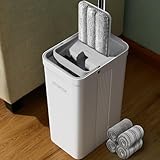
Overview: This JOYMOOP set features a dual-tank bucket system (wash/dry chambers) paired with a flat-head mop and an extendable handle. It targets comprehensive cleaning for floors, walls, and high surfaces using reusable microfiber pads. What Makes It Stand Out: The true innovation is the separate wash and dry chambers within one bucket, enabling true hands-free cleaning and optimal pad moisture control. The 360° rotating flat head and extendable stainless steel handle (26.5"-60") make it uniquely versatile for floors, walls, ceilings, and baseboards. Value for Money: Includes four reusable microfiber pads, offering immediate value. The dual-tank system reduces labor time significantly, and the pads’ machine-washability provides long-term savings versus disposable options, though pad replacement frequency is higher (1-2 months). Strengths and Weaknesses: Strengths: Dual-tank efficiency, exceptional versatility (floors to walls), compact storage, strong water absorption. Weaknesses: Flat head less effective in tight corners than triangular designs, initial setup requires wetting pads to avoid insertion issues, bucket capacity is moderate (6.5L). Bottom Line: A top pick for versatile, whole-home cleaning. Its dual-tank system and wall-cleaning capability deliver outstanding value for users needing a single tool for floors, walls, and tight spaces, despite minor corner limitations.
4. JOYMOOP Mop and Bucket with Wringer Set, Hands Free Flat Floor Mop and Bucket, with 3 Washable Microfiber Pads, Wet and Dry Use, Floor Cleaning System

Overview: This JOYMOOP model refines the dual-tank concept into a streamlined hands-free system. It includes a wet/dry separation bucket, a flat microfiber mop head, three reusable pads, and focuses on efficient wet and dry cleaning for diverse hard surfaces. What Makes It Stand Out: The integrated wash squeegee in the wet chamber automatically removes hair and debris from the pad during cleaning, maintaining effectiveness. The flat head design, optimized for corners and under-furniture access, combined with true wet/dry separation, ensures consistent performance without hand contact. Value for Money: The three included machine-washable pads and efficient dual-tank design minimize both time and long-term costs. It outperforms spray mops in value, especially for larger homes, though pad replacement every 1-2 months is necessary for peak performance. Strengths and Weaknesses: Strengths: Automatic debris removal, excellent tight-space access, true wet/dry separation, dual-use (wet/dry), compact storage. Weaknesses: Flat head still lags slightly behind triangular designs in extreme corners, bucket lacks a dedicated transport handle, pad absorption may diminish over multiple washes. Bottom Line: An efficient, versatile system ideal for daily cleaning of varied surfaces. Its debris-clearing squeegee and wet/dry functionality offer strong value, making it a practical, cost-effective upgrade from basic mops.
5. O-Cedar EasyWring Microfiber Spin Mop & Bucket Floor Cleaning System + 2 Extra Refills, Red/Gray

Overview: This enhanced O-Cedar EasyWring bundle includes the core spin mop system plus two additional microfiber refill heads. It delivers the same hands-free wringing and deep-cleaning microfiber performance as the standard model, now with extended usability. What Makes It Stand Out: The standout feature is the inclusion of two extra refills (totaling three heads), providing up to nine months of cleaning without additional purchases. It retains all key benefits: the corner-reaching triangular head, Splash Guard bucket, and ability to remove 99% of bacteria using only water. Value for Money: The bundle offers exceptional value by significantly reducing the cost-per-use. Buying refills separately is more expensive; this package provides immediate long-term savings and convenience, making it the most economical O-Cedar EasyWring option upfront. Strengths and Weaknesses: Strengths: Unbeatable value with extra refills, superior corner/baseboard cleaning, chemical-free effectiveness, splash-resistant operation. Weaknesses: Same bucket bulkiness as standard model, refills still require quarterly replacement eventually, limited color options. Bottom Line: The definitive recommendation for O-Cedar EasyWring users. The included refills dramatically enhance cost efficiency without sacrificing the system’s proven performance, making it the smartest investment for sustained, effective hard floor cleaning.
6. O-Cedar H2prO Flat Mop System | Quick Cleaning Tool | Clean with Clean Water | Machine Washable Reusable Microfiber Mop Pad | Safe on Wood Floors, Vinyl, Tile, Baseboards, Walls

Overview: The O-Cedar H2prO is a battery-free flat mop system designed for efficient, chemical-free cleaning of hard floors. Its dual-tank design and microfiber pad target quick, hygienic cleanups without cross-contamination.
What Makes It Stand Out: The standout feature is its dual-tank system, which strictly separates clean and dirty water, ensuring every pass uses fresh water for superior results on surfaces up to 650 sq ft per fill. Integrated water jets evenly saturate the reusable microfiber pad without batteries, while its slim profile fits under sinks for easy storage.
Value for Money: Priced competitively, it eliminates disposable pad costs with its machine-washable head and includes one spare. The no-battery operation saves long-term expenses, though initial cost is slightly higher than basic mops. It’s ideal for eco-conscious users prioritizing sustainability over ultra-low upfront pricing.
Strengths and Weaknesses: Strengths: Excellent water separation prevents streaks; lightweight and compact; effective on multiple surfaces; sustainable reusable pads. Weaknesses: Manual water dispensing requires squeezing; smaller tank may need frequent refills for large areas; no scrubbing capability for tough grime.
Bottom Line: A reliable, eco-friendly choice for routine hard-floor maintenance, especially in smaller spaces. Its water separation tech delivers noticeably cleaner results than single-tank rivals, justifying the price for those avoiding disposables.
7. O-Cedar Easywring Microfiber Spin Mop & Bucket Floor Cleaning System with 3 Extra Refills

Overview: This spin mop system offers deep cleaning with minimal effort, using microfiber technology to remove 99% of bacteria using only water. It includes a specialized bucket with hands-free wringing for all sealed hard floors.
What Makes It Stand Out: The bucket’s built-in splash-proof wringer enables true hands-free operation, while the 360° rotating triangular mop head reaches corners and baseboards effortlessly. The advanced microfiber captures dirt without chemicals, and three reusable pads extend value.
Value for Money: The inclusion of three washable pads and a durable bucket provides strong longevity. It competes well against disposable-pad systems, though premium spin mops may offer larger buckets. Ideal for families needing frequent, hygienic cleanings without recurrent costs.
Strengths and Weaknesses: Strengths: Exceptional corner access; effective bacteria removal; splash-guard bucket; versatile for all hard floors. Weaknesses: Bucket is bulky for tight storage; spin mechanism requires leg strength; microfiber pads may fray after many washes.
Bottom Line: Highly recommended for thorough, chemical-free cleanings in homes with varied floor layouts. Its corner-reaching design and hygiene focus make it a top pick despite the bucket’s size.
8. BOSHENG Mop and Bucket with Wringer Set, Hands Free Flat Floor Mop and Bucket, 3 Washable Microfiber Pads Included, Wet and Dry Use, Home Floor Cleaning System for All Floor Types and Windows

Overview: BOSHENG’s compact system combines a flat mop, wringer bucket, and three microfiber pads for versatile wet/dry cleaning of floors and windows. It emphasizes space-saving storage and hands-free operation.
What Makes It Stand Out: Its rectangular 360° rotatable mop head excels in corners and narrow spaces, outperforming triangular designs. The unique auto-rebound wringer (30° angle) prevents hand contact with dirt, and the dual-groove bucket efficiently manages moisture with scraping blades.
Value for Money: The three included machine-washable pads and all-in-one storage (mop fits inside bucket) offer exceptional value. It undercuts premium brands while covering floor-to-window use, though pad durability lags behind higher-end options.
Strengths and Weaknesses: Strengths: Superior corner cleaning; compact storage; effective moisture control; multi-surface use. Weaknesses: Wringer mechanism feels less sturdy; pads lack ultra-fine microfiber; limited reach without extensions.
Bottom Line: A practical, budget-friendly solution for small homes or offices needing flexible cleaning. Its corner agility and tidy storage make it a smart buy despite modest build quality.
9. SIMPLI-MAGIC 79349 Spin Mop Cleaning System with 3 Microfiber Mop Heads, Red/GRAY,Red/Black

Overview: This straightforward spin mop system prioritizes simplicity and durability for quick cleanups on all hard floors, featuring three reusable microfiber heads and an extendable pole.
What Makes It Stand Out: Its no-frills design focuses on effortless spinning for rinsing, reducing user fatigue. The extendable pole accommodates various heights, and the machine-washable heads promise long-term use—reinforced to outlast cheaper alternatives.
Value for Money: With three robust pads included and readily available refill packs (sold separately), it minimizes ongoing costs. It’s more affordable than electric systems but lacks advanced features like water separation, positioning it as a solid entry-level option.
Strengths and Weaknesses: Strengths: Simple, intuitive operation; durable pads; lightweight pole; excellent for quick spot-cleaning. Weaknesses: Basic bucket without splash guard; no corner-targeting head shape; requires manual bucket hauling.
Bottom Line: Best for budget-focused users needing a reliable, no-hassle mop for routine tasks. Skip if you prioritize deep cleaning or ergonomic bucket mobility.
10. ADICOM Mop and Bucket Set | Auto-Spray Cleaning | Dirty Water Separation Keep Water Fresh | Flat Mop & Bucket with Scraper | 3X Washable Pads | Mops for Floor Cleaning All Floors Tile Wall Window

Overview: ADICOM’s innovative system features an electric auto-rinse pump and dual-tank separation, targeting large homes with its high-capacity, hands-off cleaning approach for floors, walls, and windows.
What Makes It Stand Out: The electric pump auto-activates spray jets for instant mop rinsing—eliminating manual pumping. Dual 6L tanks cover 1,000+ sq ft per fill, while the angled mop head and three extension rods tackle baseboards, ceilings, and tight spots effortlessly.
Value for Money: Premium pricing is justified by the time-saving electric system, massive coverage, and included scraper tool. It outperforms manual dual-tank mops but costs more than basic spin mops. Ideal for large spaces where efficiency offsets the investment.
Strengths and Weaknesses: Strengths: Revolutionary auto-rinse; exceptional reach and coverage; wheels for mobility; three durable pads. Weaknesses: Bulky bucket; requires charging; higher upfront cost; overkill for small apartments.
Bottom Line: A game-changer for large or multi-level homes prioritizing speed and reduced effort. Worth the splurge if you dread traditional mopping, but excessive for compact living.
Understanding Hardwood Floor Vulnerabilities
Hardwood floors, while stunning, have specific weaknesses that demand careful cleaning strategies. Water is the primary enemy—excessive moisture can seep between planks, causing swelling, cupping, or finish deterioration. Abrasives in dirt or harsh scrubbing pads can scratch the surface, while harsh chemicals strip protective finishes, leaving wood exposed to stains and wear. Recognizing these vulnerabilities is the first step toward choosing tools that protect rather than harm.
Why Moisture Control is Non-Negotiable
Hardwood’s porous nature means it readily absorbs liquids. Even small amounts of standing water from an overly wet mop can penetrate the wood grain or joints, leading to irreversible damage over time. Effective cleaning systems must allow for precise moisture application—damp, not wet—and rapid drying. Systems with adjustable wring mechanisms or dedicated damp-mopping modes are essential for maintaining this delicate balance, preventing the slow creep of moisture that silently compromises your floor’s integrity.
The Finish Factor: Oil vs. Polyurethane
Your floor’s protective finish dictates cleaning compatibility. Oil-finished woods (like those treated with hardwax oil) require pH-neutral cleaners and minimal water, as excess moisture can penetrate deeper. Polyurethane-finished floors are more water-resistant but still vulnerable to harsh chemicals that cause cloudiness or peeling. Always match your mop’s moisture output and cleaning solution to your specific finish type—using tools designed for general surfaces on specialty finishes is a recipe for disaster.
How Dirt Accelerates Wear
Grit and sand act like sandpaper underfoot, creating micro-scratches that dull the finish and expose raw wood. A truly effective cleaning system starts with thorough dry dusting or vacuuming before any liquid application. Mops with superior dry-pickup capabilities in their microfiber pads prevent this abrasive dirt from being ground into the surface during the wet mopping phase, significantly extending the life of your floor’s luster.
Decoding Mop Types for Hardwood Safety
Not all mops are created equal, especially when navigating the delicate landscape of hardwood floors. The wrong design can introduce too much water, scratch surfaces, or fail to lift fine debris effectively. Understanding the mechanics and materials of different mop types is crucial for selecting a tool that cleans deeply without compromise.
Flat Mops: Precision and Control
Flat mops excel on hardwood due to their even pressure distribution and targeted moisture application. Look for models with chamois or high-quality microfiber pads that can be dampened precisely—often via a spray mechanism—rather than dunked in water. Their low-profile design allows them to glide under furniture and into corners, ensuring no spot is missed while minimizing water exposure. Opt for pads with smooth, non-abrasive edges to prevent scratching baseboards or floor edges.
Spray Mops: The Moisture Management Advantage
Spray mops put you in complete control of liquid application. Instead of wringing a saturated head, you mist the floor directly with a measured amount of solution just before mopping. This eliminates the risk of drips or over-wetting common with traditional bucket systems. Key features to prioritize include an ergonomic trigger for consistent spray, a refillable tank for eco-friendliness, and machine-washable microfiber pads that maintain absorbency after multiple washes.
Traditional String Mops: Proceed with Extreme Caution
While nostalgic, string mops pose significant risks for hardwood. Their deep fibers trap excessive water, leading to pooling and prolonged moisture exposure. The twisting action of wringing can also be inconsistent, leaving patches too wet. If you must use one, select a model with a superior centrifugal wringer bucket (discussed later) and only use it with a barely damp technique—but flat or spray mops are overwhelmingly safer for preserving your investment.
Bucket Systems That Protect Your Investment
The bucket is far more than a water carrier; it’s the command center for moisture control. A poorly designed bucket leads to inconsistent wringing, dirty water reuse, and accidental spills—all enemies of hardwood. The right system ensures water is used efficiently, kept clean, and removed effectively from the floor surface.
The Centrifugal Wringer: A Game-Changer for Dryness
Centrifugal wringer buckets use a spinning drum activated by a foot pedal to extract water through centrifugal force. This method achieves a significantly drier mop head than manual wringing, crucial for hardwood. The consistent pressure removes water evenly without damaging mop fibers, resulting in a uniformly damp (not dripping) pad. Look for models with easy pedal access and a sturdy drum mechanism that won’t jam with frequent use.
Dual-Chamber Designs: Keeping Clean and Dirty Water Separate
Dual-bucket systems feature one chamber for clean solution and a separate well for the wringer. This prevents dirty mop water from contaminating your fresh cleaning solution, ensuring every pass uses clean water. For hardwood, this means no redepositing grit or grime onto the floor, reducing micro-scratches and streaking. Ensure the chambers are deep enough to accommodate your mop head fully without splashing.
Stability and Spill Prevention Features
A wobbly or top-heavy bucket is a hardwood hazard waiting to happen. Prioritize models with wide, non-slip bases and low centers of gravity. Integrated wheels should lock securely during use, and handle designs must allow for easy, controlled movement without tipping. Spill-proof lids or secure locking mechanisms on the clean-water chamber are vital for transporting the bucket safely between rooms, especially on smooth surfaces.
Microfiber: The Unsung Hero of Hardwood Cleaning
Microfiber isn’t just a buzzword—it’s a scientifically engineered fabric that revolutionizes hardwood care. Its unique structure lifts and traps dirt, dust, and liquids far more effectively than cotton, while being gentle on finishes. Understanding why and how it works helps you select the best pads for your specific mop system.
The Science of Split Fibers
High-quality microfiber consists of ultra-fine, split fibers creating a massive surface area with electrostatic properties. This generates a mild magnetic pull that attracts and holds onto dust, pet hair, and microscopic debris that regular cloths push around. For hardwood, this means less scrubbing (reducing scratch risk) and deeper cleaning without harsh chemicals, as the fibers mechanically lift dirt rather than relying solely on solvents.
GSM Density: What the Numbers Mean
GSM (grams per square meter) measures microfiber weight and density. For hardwood, 250-350 GSM offers the ideal balance: dense enough to trap fine particles and resist shedding lint, yet light enough to dry quickly and avoid excessive water retention. Avoid very high GSM (over 400) for damp mopping, as it holds too much moisture. Lower GSM (under 200) may lack the absorbency needed for effective cleaning and wear out faster.
Proper Care for Longevity and Performance
Microfiber pads lose effectiveness if not maintained correctly. Wash them separately from cotton (which leaves lint) using fragrance-free, bleach-free detergent. Avoid fabric softeners—they coat fibers, killing absorbency. Air-dry or use low heat; high heat melts fibers. Replace pads when they stop feeling slightly “grabby” or show signs of fraying, as worn fibers can scratch finishes. Proper care ensures consistent, safe cleaning performance.
Essential Features Beyond the Basics
While core functionality is vital, thoughtful design enhancements make a significant difference in daily usability and hardwood protection. These features transform a chore into a seamless, efficient process that you’re more likely to do correctly and consistently.
Ergonomic Handles for Strain-Free Use
Repetitive motions during mopping can cause wrist, shoulder, or back strain. Look for handles with soft, non-slip grips that reduce vibration and fatigue. Telescoping designs accommodate different heights, promoting an upright posture. Some models feature swiveling heads that glide effortlessly around obstacles, eliminating the need for awkward twisting motions that can lead to spills or uneven cleaning pressure on the floor.
Machine-Washable Components for Hygiene
Reusable microfiber pads are essential, but they must be easy to clean and sanitize. Ensure pads snap on/off quickly without tools and are fully machine-washable. Handles and frames should also be wipe-clean. Avoid systems with hard-to-remove parts where moisture and dirt can accumulate, breeding mildew and odors that could transfer back to your floors during cleaning.
Compact Storage Solutions
Clunky equipment discourages regular cleaning. Prioritize mops that stand upright on their own and buckets that nest or collapse for tight storage spaces like closets or under sinks. Wall-mount hooks or stands keep components organized and dry, preventing mustiness and making it effortless to grab your tools for quick touch-ups between deep cleans.
The Right Cleaning Solutions: Less is More
What you put in the bucket matters as much as the bucket itself. Hardwood finishes are sensitive, and many common household cleaners are surprisingly damaging. Choosing the right solution—or knowing when plain water suffices—is critical for maintaining your floor’s health.
Why Plain Water Often Suffices
For routine maintenance on lightly soiled, well-maintained polyurethane-finished floors, distilled or filtered water applied with a damp microfiber mop is frequently all you need. The microfiber lifts dirt mechanically, and water evaporates quickly without residue. This minimizes chemical exposure, preserving the finish’s clarity and longevity. Reserve cleaners for visible grime or sticky spots—you’ll likely use far less than you think.
Navigating pH-Neutral Cleaners
When a cleaner is necessary, pH-neutral formulas (typically between 7-8) are the only safe choice for most hardwood finishes. Avoid anything labeled “degreaser,” “all-purpose,” or containing ammonia, vinegar (despite popular myths), or citrus oils—they degrade finishes over time. Look for cleaners explicitly formulated for pre-finished or finished hardwood floors, and always test in an inconspicuous area first. Dilute according to instructions; more is rarely better.
The Vinegar Myth Debunked
Despite widespread online advice, vinegar (an acid) is harmful to most modern hardwood finishes. It can strip protective coatings, cause cloudiness, and leave a sticky residue that attracts more dirt. While it might offer a temporary shine, the long-term damage isn’t worth it. Stick to pH-neutral cleaners or plain water for genuinely safe results. Your floors will thank you years down the line.
Establishing a Sustainable Cleaning Routine
Effective hardwood care isn’t about occasional deep cleans; it’s built on consistent, gentle habits. Integrating the right tools into a simple, sustainable routine prevents major issues and keeps floors looking their best with minimal effort.
The Daily Dry Dusting Imperative
Before any liquid touches your floor, remove loose dirt and grit. Use a soft-bristled broom, a dry microfiber dust mop, or a vacuum with a hard floor setting (avoiding beater bars). This 2-minute task prevents abrasive particles from being ground into the finish during wet mopping, significantly reducing wear. Do this daily in high-traffic areas and before any damp mopping session.
The Damp Mopping Sweet Spot
Mop only when necessary—not daily. For most homes, once a week is sufficient. Always work in small sections, using a clean, damp (not wet) pad. Rinse the pad frequently in clean water (using your dual-bucket system) to avoid redepositing dirt. Focus on lifting dirt, not scrubbing. After mopping, open windows or use fans to accelerate drying—hardwood should never feel cool or damp to the touch for more than 15-20 minutes.
Deep Cleaning Without Damage
For stuck-on grime, never resort to soaking or harsh scrubbing. Instead, apply a small amount of pH-neutral cleaner directly to the spot, let it dwell for 30 seconds to loosen debris, then gently wipe with a damp microfiber corner. For persistent marks, a barely damp white melamine foam pad (used with extreme light pressure) can sometimes help, but test first and rinse immediately. Reserve true deep cleans for every few months, not weekly.
Avoiding Common Hardwood Cleaning Pitfalls
Even with good intentions, homeowners often make mistakes that compromise their floors. Awareness of these frequent errors is half the battle in preventing them.
The Over-Wetting Trap
The most pervasive mistake is using a mop that’s too wet. Water pooling in corners, along baseboards, or between planks is a death sentence for hardwood. If your floor looks shiny and wet immediately after mopping, you’ve used too much water. Master the “damp, not wet” technique—your mop pad should feel cool and slightly moist, but not release water when pressed firmly.
Ignoring Manufacturer Guidelines
Your floor’s warranty likely specifies approved cleaning methods. Disregarding these (e.g., using steam mops on floors labeled “no steam”) voids coverage. Always consult your flooring manufacturer’s care instructions—they know the exact chemistry of your finish. When in doubt, default to the gentlest method possible: dry dusting followed by a damp microfiber mop with water.
Using the Wrong Tools for the Job
Shoes, paper towels, or old t-shirts seem convenient but are disastrous for hardwood. Shoes track in grit; paper towels scratch and leave lint; cotton rags hold too much water and can discolor finishes. Invest in purpose-built tools. A quality hardwood-safe system pays for itself by preventing damage that costs hundreds to repair.
Frequently Asked Questions
Frequently Asked Questions
Can I use a steam mop on hardwood floors?
No. Steam mops force superheated water vapor deep into wood joints, causing swelling, warping, and finish failure. Even “low steam” models pose significant risks. Always avoid steam on solid or engineered hardwood.
How often should I replace my microfiber mop pads?
Replace pads every 3-6 months with regular use, or immediately if frayed. Worn pads lose effectiveness, shed fibers, and can scratch finishes. Regular washing extends their life, but monitor their texture and cleaning power.
Is it safe to use a vinegar and water solution?
No. Vinegar’s acidity degrades most modern polyurethane and aluminum oxide finishes over time, causing cloudiness and stickiness. Stick to pH-neutral cleaners or plain water for safe, effective cleaning.
Why do my floors look streaky after mopping?
Streaks usually mean residue from too much cleaner, improper rinsing, or a dirty mop pad. Always dilute cleaners correctly, rinse pads frequently in clean water, and ensure your microfiber is clean and not overloaded with solution.
Can I mop hardwood floors with just water?
Yes, for routine cleaning on polyurethane-finished floors. Use distilled or filtered water with a damp microfiber mop. Avoid tap water if it’s very hard, as minerals can leave deposits. Always dry the floor thoroughly within 20 minutes.
What’s the safest way to remove sticky spots?
Dampen a corner of your microfiber pad with plain water, rub the spot gently, and immediately dry with a clean, dry cloth. For stubborn residue, use a tiny amount of pH-neutral cleaner on the damp pad, then rinse the area with a water-dampened pad.
Should I avoid all wax-based cleaners?
Yes, unless your floor has an oil-based finish specifically requiring it. Wax builds up on modern pre-finished floors, creating a dull, slippery film that’s difficult to remove. Most contemporary finishes don’t need waxing.
How do I know if my mop is too wet?
Press the mop pad firmly with your hand. If any water squeezes out, it’s too wet. It should feel cool and slightly damp but not release moisture. After mopping, the floor should not look glossy or feel cool to the touch beyond a minute.
Can I use a robot mop on hardwood?
Only if specifically designed for sealed hardwood and with precise moisture control. Many leak or over-wet. Check your flooring warranty and the robot’s specs carefully—manual mops offer safer, more reliable results for most homeowners.
Why is my floor dull after cleaning?
Dulling is often caused by residue from improper cleaners (like vinegar or soap), using a dirty mop pad that spreads grime, or excessive water clouding the finish. Switch to pH-neutral cleaners, fresh microfiber pads, and ensure thorough rinsing and drying.