Table of Contents
Keeping your floors dry isn’t just about cleanliness—it’s about safety, maintenance, and longevity. Whether you’re managing a busy commercial kitchen, maintaining a warehouse, or simply want to protect your home’s beautiful tile work, water left standing on hard surfaces can lead to dangerous slips, stubborn stains, and costly damage. Floor squeegees have evolved from simple rubber blades on sticks to sophisticated tools engineered for specific surfaces and situations, making them indispensable for anyone serious about floor care.
The right squeegee transforms a tedious mopping session into a quick, efficient process that leaves tile and concrete surfaces nearly dry in a single pass. But not all squeegees are created equal, and choosing the wrong one can mean scratched surfaces, ineffective water removal, or a tool that falls apart after a few uses. Understanding what features matter most for your specific needs will save you time, money, and frustration while ensuring your floors receive the care they deserve.
Top 10 Floor Squeegees
Detailed Product Reviews
1. CLEANHOME Rubber Floor Squeegee for Concrete Floor, Tile Floor, Metal Aluminium Heavy Duty Garage Shower Floor Squeegee Broom for Removing Water, Commercial Scrubber Mop with Extendable Long Handle
, Metal Aluminium Heavy Duty Garage Shower Floor Squeegee Broom for Removing Water, Commercial Scrubber Mop with Extendable Long Handle](https://m.media-amazon.com/images/I/31gvqd2e4aL._SL160_.jpg)
Overview: The CLEANHOME Rubber Floor Squeegee is a heavy-duty cleaning tool designed for both residential and commercial applications. With its 17-inch rubber blade mounted on a sturdy aluminum base, this squeegee promises exceptional durability compared to plastic or iron alternatives. The extendable handle adjusts from 44 to 54 inches, making it suitable for various user heights and cleaning scenarios.
What Makes It Stand Out: This squeegee distinguishes itself through its robust aluminum construction that resists rust and corrosion, ensuring longevity in wet environments. The ergonomic foam-covered handle provides superior grip comfort during extended use, while the angled head design allows for efficient water movement across floors. Its commercial-grade build quality makes it particularly suitable for demanding environments like garages, hospitals, and hotels.
Value for Money: Priced competitively for a heavy-duty tool, this squeegee offers excellent long-term value. The aluminum components and quality rubber blade outlast cheaper plastic alternatives, reducing replacement frequency. For homeowners with large garages or commercial cleaners requiring reliable daily-use equipment, the investment pays for itself through durability and performance.
Strengths and Weaknesses: Pros: Heavy-duty aluminum construction resists rust; comfortable foam grip; adjustable handle length; versatile for multiple surfaces; commercial-grade durability. Cons: 17-inch blade may be narrow for very large areas; handle adjustment range could be broader; some users may prefer a rotating head feature.
Bottom Line: The CLEANHOME squeegee is an excellent choice for those prioritizing durability and professional-grade performance. Its robust construction and ergonomic design make it ideal for regular use on concrete, tile, and other hard surfaces. While it lacks some advanced features, its reliability and build quality make it a worthwhile investment.
2. Floor Squeegee with 180° Rotating Head, Squeegee for Floor with 52’’ Long Handle, Squeegee Broom, Squeegee for Window Cleaning, Bathroom Tile, Garage Concrete, Deck, Shower Glass (White)
 with 180° Rotating Head, Squeegee for Floor with 52'' Long Handle, Squeegee Broom, Squeegee for Window Cleaning, Bathroom Tile, Garage Concrete, Deck, Shower Glass (White)](https://m.media-amazon.com/images/I/31SdpBZN8BL._SL160_.jpg)
Overview: This innovative floor squeegee features a unique 180° rotating head that sets it apart from traditional fixed-head designs. With a 14.2-inch soft rubber blade and adjustable stainless steel handle extending from 20 to 52 inches, it offers flexibility for various cleaning tasks from floor to window applications.
What Makes It Stand Out: The standout feature is undoubtedly the rotating head mechanism, allowing users to adjust the blade angle with a simple button press. This adaptability makes it exceptionally versatile for cleaning floors, windows, shower glass, and other surfaces. The stainless steel pole with anti-rust paint ensures longevity, while the compact storage length of 20 inches makes it convenient for small spaces.
Value for Money: This squeegee provides strong value for users needing multi-surface versatility. While the blade width is narrower than some competitors, the rotating functionality effectively compensates by improving maneuverability and reach. The quality materials and innovative design justify its mid-range price point, especially for those who prioritize adaptability.
Strengths and Weaknesses: Pros: 180° rotating head offers unmatched flexibility; compact storage size; stainless steel anti-rust pole; suitable for windows and floors; lightweight design. Cons: 14.2-inch blade is relatively narrow; maximum 52-inch length may be short for taller users; rotating mechanism could wear over time.
Bottom Line: Ideal for users seeking maximum versatility, this squeegee excels in multi-surface cleaning applications. The rotating head feature is genuinely useful, making it particularly valuable for cleaning windows and tight spaces. Though not the largest or longest option, its adaptability makes it a smart choice for most households.
3. Eazer Floor Squeegee Broom: Heavy Duty Scrubber with Extendable 60’’ Aluminum Pole and Rubber Blade for Kitchen, Swimming Pool, Concrete Floors,Shower,Tiles,Garages,Windows,Glass,Pet Hair Removal

Overview: The Eazer Floor Squeegee Broom combines heavy-duty cleaning capability with innovative design features. Boasting a 17-inch rubber blade and an impressive 60-inch maximum reach, this tool extends from 37.8 to 60 inches using a screw pole and telescopic design. Its universal interface allows connection to other Eazer cleaning accessories.
What Makes It Stand Out: Eazer’s universal interface system is a game-changer, enabling users to attach different cleaning heads like window brushes, effectively creating a modular cleaning system. The 60-inch maximum length is among the longest available, reducing back strain for tall users. The screw pole design provides exceptional stability compared to click-lock mechanisms, preventing unwanted collapse during vigorous use.
Value for Money: This squeegee sits at a slightly higher price point but delivers premium features that justify the cost. The modular design philosophy means you’re investing in a system, not just a single tool. For users already in the Eazer ecosystem or those wanting maximum reach and versatility, the value proposition is compelling.
Strengths and Weaknesses: Pros: Exceptional 60-inch maximum length; universal interface for attachments; screw pole design ensures stability; versatile for pet hair removal; quality rubber blade. Cons: Higher price point; requires other Eazer products to maximize interface benefit; screw adjustment slower than quick-lock systems.
Bottom Line: The Eazer squeegee is perfect for users wanting maximum reach and system expandability. Its innovative universal interface and impressive length make it ideal for large spaces and tall individuals. While it costs more than basic models, the quality and potential for expansion make it a forward-thinking investment for serious cleaners.
4. Floor Squeegee for Concrete, 30’’ Large Rubber Broom for Tile, 59’’ Long Handle Heavy Duty Water Wiper for Garage, Deck

Overview: This floor squeegee prioritizes coverage and efficiency with its massive 30-inch blade, making it the widest option in this lineup. Designed for large area cleaning, it features a 59-inch handle and a fixed 45-degree angle head optimized for smooth, effortless water removal from concrete, tile, and other flat surfaces.
What Makes It Stand Out: The extraordinary 30-inch blade width dramatically reduces cleaning time for large spaces like garage floors, patios, and pool decks. The fixed 45-degree angle is ergonomically optimized to minimize user effort while maximizing water displacement. The reinforced handle joint with a plastic sleeve adds durability where many squeegees fail, and the built-in hang loop simplifies storage.
Value for Money: For those with substantial floor areas, this squeegee offers unmatched time-saving value. The efficiency gained from the wide blade means fewer passes and faster cleanup. While it may cost more than standard-width models, the labor savings on large jobs quickly offset the initial investment. It’s a specialist tool that delivers exceptional ROI for the right user.
Strengths and Weaknesses: Pros: Massive 30-inch blade covers huge areas quickly; reinforced handle joint prevents breakage; 59-inch handle length; built-in storage hook; optimized 45-degree angle. Cons: Too large for small or cluttered spaces; fixed angle lacks versatility; heavier than narrower models; may be overkill for average homeowners.
Bottom Line: This squeegee is a powerhouse for large-scale cleaning operations. If you’re regularly clearing substantial floor areas, its 30-inch blade will save you significant time and effort. However, its size makes it impractical for smaller spaces. Choose this if you have a large garage, commercial space, or patio area that demands maximum efficiency.
5. Squeegee Broom for Floor, 18’’ Heavy Duty Rubber Wiper with 60’’ Long Handle for Bathroom Tile, Garage Concrete, Deck, Shower Glass, Window Cleaning
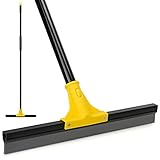
Overview: This versatile squeegee broom features an 18-inch rubber blade and an impressive handle that adjusts from 19 to 62.5 inches, making it one of the longest options available. Designed for both indoor and outdoor use, it handles everything from bathroom tiles to garage floors and even window cleaning with equal effectiveness.
What Makes It Stand Out: The exceptional handle length range (19-62.5 inches) accommodates users of all heights and allows cleaning of high windows without additional tools. The segmented handle design lets users customize length by adding or removing sections, offering more flexibility than telescopic systems. The angled head and foam grip enhance comfort during extended use.
Value for Money: This squeegee offers excellent value through its extreme adjustability and multi-surface versatility. The ability to configure the handle length precisely to your needs eliminates the compromise found in fixed-range telescopic models. For users wanting one tool that transitions from floor to window cleaning seamlessly, this represents strong value.
Strengths and Weaknesses: Pros: Outstanding 62.5-inch maximum length; highly customizable handle; versatile for floors and windows; quality 18-inch blade; comfortable foam grip. Cons: Segment-based adjustment is less convenient than telescopic; storing extra handle sections can be cumbersome; blade could be wider for large floors.
Bottom Line: An incredibly adaptable squeegee that excels for users of varying heights and diverse cleaning needs. The customizable handle length is its killer feature, making it equally effective for floor and window cleaning. While the adjustment method requires more effort than twist-lock systems, the versatility gained makes it an excellent all-around choice for comprehensive home maintenance.
6. LIBMAN 954.0 Soft Rubber Floor Squeegee, 36" Curved Blade

Overview: The LIBMAN 954.0 Soft Rubber Floor Squeegee delivers commercial-grade performance with its massive 36-inch curved blade. Designed for industrial and janitorial applications, this tool commands attention with its substantial 2.744-kilogram weight and robust construction. Originating from China, it represents a no-nonsense approach to large-scale floor maintenance, tackling expansive surfaces that standard squeegees simply cannot manage efficiently. The curved blade design optimizes water channeling, making it ideal for warehouses, commercial kitchens, and industrial facilities where rapid liquid removal is essential. This isn’t a tool for casual home use—it’s built for professionals who demand maximum coverage and durability.
What Makes It Stand Out: The extraordinary 36-inch width sets this squeegee apart from virtually every competitor on the consumer market. Most residential squeegees top out at 24 inches, making the LIBMAN’s coverage area 50% greater, which translates to significantly fewer passes across large floors. The curved blade architecture isn’t merely aesthetic; it creates a natural water channeling system that prevents liquid from escaping the cleaning path. The substantial weight (over 6 pounds) indicates a dense, durable construction that won’t flex or buckle under pressure, ensuring consistent blade-to-floor contact across the entire width.
Value for Money: For facility managers and cleaning contractors, this squeegee offers exceptional ROI. While the initial investment exceeds smaller models, the time savings on large-scale jobs justifies the cost. A warehouse that might require 30 passes with a standard 18-inch squeegee needs only 15 with this 36-inch model, effectively halving labor time. Compared to assembling multiple smaller tools, this single, durable unit eliminates replacement costs and streamlines equipment inventory.
Strengths and Weaknesses: Pros: Massive 36-inch coverage area; heavy-duty construction prevents flexing; curved blade channels water effectively; professional-grade durability. Cons: Excessive weight and size for residential use; requires significant storage space; handle not included in package; may be too large for tight spaces or doorways.
Bottom Line: The LIBMAN 954.0 is the definitive choice for commercial and industrial environments where maximum efficiency trumps all other considerations. For homeowners, it’s overkill—but for professionals managing expansive spaces, it’s an indispensable time-saving investment that pays for itself through dramatically reduced labor hours.
7. Rubbermaid Commercial Products Heavy-Duty Floor Dual Squeegee Black for Warehouses/Concrete/Car Garage/Basement Floor

Overview: Rubbermaid Commercial Products delivers industrial-strength cleaning capability with this heavy-duty dual squeegee. Engineered for demanding environments like warehouses, garages, and basements, this tool features a galvanized metal frame and locking strip that ensures structural integrity under heavy loads. The dual-blade configuration with non-marking black rubber provides twice the wiping efficiency, making short work of liquid spills and caked-on dirt. Designed to fit standard tapered handles, it integrates seamlessly into existing commercial cleaning systems. This is pure utility—no frills, just reliable performance built to withstand daily abuse in the toughest work environments.
What Makes It Stand Out: The dual-blade design represents a significant leap in cleaning efficiency. While most squeegees rely on a single blade, this model’s twin rubber edges perform a double-pass in a single motion, capturing residual water that typically requires a second swipe. The galvanized metal frame isn’t just durable—it resists corrosion in damp environments, extending the tool’s lifespan far beyond painted or plastic alternatives. The locking strip prevents blade slippage during aggressive pushing or pulling, maintaining consistent contact pressure across the entire cleaning path.
Value for Money: As a frame-only purchase (handle sold separately), the value proposition centers on longevity. Rubbermaid’s commercial division engineered this for years of service, not months. The replaceable blade system means you refresh only the wear component, not the entire tool. For facility managers, this modular approach reduces total cost of ownership compared to disposable squeegees. The premium over residential models is justified by the metal construction and dual-blade efficiency.
Strengths and Weaknesses: Pros: Dual-blade design doubles efficiency; galvanized frame resists rust; non-marking rubber safe on all floors; locking strip prevents blade separation; fits standard handles. Cons: Handle not included; heavier than plastic models; overkill for light residential use; premium price point for home users.
Bottom Line: This Rubbermaid dual squeegee excels in commercial settings where durability and efficiency drive purchasing decisions. For homeowners with large garages or workshops, it’s a worthwhile upgrade. For professional cleaners, it’s a must-have tool that outperforms and outlasts consumer-grade alternatives.
8. Squeegee Broom for Floor, 18" Heavy Duty Floor Squeegee with Rubber Scrubbing Teeth, 2-in-1 Magic Silicone Broom for Pet Hair, Dust, Water, Tile and Carpet, 61" Long Handle

Overview: This innovative 18-inch squeegee broom redefines versatility with its 2-in-1 design that tackles pet hair, dust, water, and dried stains across multiple surfaces. The telescopic handle extends from 18 to 61 inches, accommodating users of all heights while enabling access to hard-to-reach areas. Featuring a dual-sided head with rubber scrubbing teeth on one side and a flat squeegee edge on the other, it functions as a broom, mop, and squeegee simultaneously. The 180° swivel mechanism allows cleaning under furniture and around obstacles with unprecedented flexibility. Constructed with a stainless steel handle and washable rubber head, it’s built for heavy-duty household use.
What Makes It Stand Out: The dual-sided head architecture addresses two distinct cleaning challenges in one tool. The scrubbing teeth agitate dried spills and embedded pet hair from carpet fibers, while the flat edge efficiently moves liquids and fine dust. The 180° swivel isn’t a simple hinge—it offers multiple connection points along the head, not just the center, enabling angled approaches to baseboards and corners. For pet owners, this tool’s ability to attract hair through static charge makes it superior to traditional bristle brooms that simply push hair around.
Value for Money: As a genuine multi-tool that replaces a broom, mop, and squeegee, this product delivers strong value for households with diverse cleaning needs. The adjustable handle eliminates the need for separate tools for different heights or tasks. While specialized squeegees may outperform it in specific applications, none match its versatility at this price point. For pet owners, the hair-removal capability alone justifies the investment.
Strengths and Weaknesses: Pros: 2-in-1 dual-sided head; 180° swivel for maneuverability; telescopic 61-inch handle; excellent pet hair removal; multi-surface versatility. Cons: 18-inch width requires more passes for large areas; complex swivel mechanism may loosen over time; rubber teeth can wear with abrasive use; not commercial-grade for heavy industrial spills.
Bottom Line: This squeegee broom shines in households with pets and varied flooring types. Its adaptability makes it an excellent primary cleaning tool for apartments and small homes, though those with expansive spaces may want a wider squeegee for water removal tasks. For pet owners, it’s a game-changer.
9. Unger - 961350 Professional AquaFlex Uneven Surface Floor Squeegee with Splash Guard, 22"

Overview: Unger’s Professional AquaFlex squeegee addresses the persistent challenge of cleaning uneven surfaces with its innovative 22-inch conforming blade. Designed specifically for tile, textured concrete, and other irregular floors, this tool features a flexible rubber edge that maintains contact across surface variations. The integrated splash guard prevents water from splashing back onto cleaned areas, while the Lock-On connection ensures a secure, no-spin attachment to Unger poles. Built for semi-professionals and demanding DIYers, this squeegee prioritizes precision and adaptability over sheer width, making it the specialist’s choice for challenging floor profiles.
What Makes It Stand Out: The AquaFlex blade technology is the star feature—its ability to flex and conform to grout lines, tile edges, and surface undulations ensures complete water removal where rigid blades leave gaps. The splash guard, often overlooked on standard squeegees, proves invaluable when moving significant volumes of water, keeping your work area contained. Unger’s Lock-On system eliminates the frustrating rotation common with threaded connections, maintaining blade orientation during aggressive strokes. This attention to professional detail distinguishes it from consumer-grade alternatives.
Value for Money: While the pole is sold separately, the specialized blade design justifies the premium for those battling uneven floors. Standard squeegees require multiple passes over grout lines and texture variations; the AquaFlex captures everything in one sweep. For professional cleaners servicing tile-heavy commercial bathrooms or kitchens, the time savings compound quickly. Compared to Unger’s full professional kits, this modular approach allows investment in only the needed components.
Strengths and Weaknesses: Pros: Conforming blade excels on uneven surfaces; splash guard contains water; Lock-On prevents rotation; professional-grade durability; 22-inch width balances coverage and maneuverability. Cons: Requires separate pole purchase; premium price; specialized design less efficient on perfectly flat floors; limited to Unger pole compatibility.
Bottom Line: This is the definitive squeegee for tile and textured floors. Homeowners with elaborate tile work will appreciate the thoroughness, but the target audience is clearly professional cleaners who need specialized performance. For flat concrete or hardwood, simpler squeegees suffice—but for uneven surfaces, nothing matches the AquaFlex.
10. Floor Squeegee for Concrete Floor,18" Large Heavy Duty Squeegee for Floor, Rubber Broom with 62" Long Handle for Bathroom Tile, Garage Concrete, Deck, Shower Glass, Window Cleaning
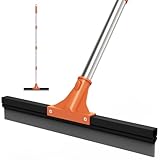
Overview: This 18-inch heavy-duty floor squeegee positions itself as the ultimate all-in-one cleaning solution for homeowners and light commercial users. Featuring a wear-resistant rubber blade paired with a high-strength stainless steel handle that adjusts from 32 to 62 inches, it tackles everything from garage floors to shower glass. The one-touch lock mechanism ensures stable handle adjustment, while the ergonomic foam grip reduces fatigue during extended use. Designed to hug surfaces for streak-free results in a single pass, this tool eliminates the need for multiple cleaning implements. It promises commercial durability at a consumer-friendly price point.
What Makes It Stand Out: The one-touch locking system distinguishes this from twist-lock handles that gradually loosen during use. The foam grip, wrapped around stainless steel, provides comfort without compromising durability—a thoughtful hybrid approach. The blade’s wear-resistant formulation maintains its edge longer than standard rubber, while its flexibility ensures conforming contact across various surfaces. The 18-inch width strikes an optimal balance between maneuverability in tight spaces and reasonable coverage for residential areas.
Value for Money: As a complete package with handle included, this squeegee offers immediate value. The adjustable length eliminates the need for multiple tools or awkward bending, reducing physical strain and potential injury. While professional cleaners might demand wider blades or specialized features, homeowners get premium materials—stainless steel and wear-resistant rubber—at a mid-range price. The multi-surface capability replaces several dedicated tools, further enhancing its cost-effectiveness.
Strengths and Weaknesses: Pros: Complete package with adjustable handle; ergonomic foam grip; wear-resistant rubber blade; one-touch lock stability; versatile multi-surface use. Cons: 18-inch width requires more passes for large garages; foam grip may degrade with harsh chemicals; stainless steel adds weight; blade replacement mechanism unclear.
Bottom Line: This squeegee excels as a primary household cleaning tool for those wanting professional-grade materials without commercial complexity. Perfect for homeowners with mixed flooring types, it’s versatile, durable, and thoughtfully designed. For large commercial spaces, consider wider options—but for most homes, this strikes the ideal balance of performance, durability, and value.
Understanding Floor Squeegee Fundamentals
What Makes a Quality Floor Squeegee Effective
A truly effective floor squeegee combines several key elements working in harmony. The blade material must be both flexible enough to conform to surface irregularities and firm enough to maintain consistent pressure across its width. The handle connection needs to be robust enough to withstand repeated pressure without loosening or breaking. Weight distribution plays a crucial role too—too heavy and it’s exhausting to use; too light and it may skip across the surface rather than making proper contact.
Why Tile and Concrete Demand Different Approaches
Tile surfaces, with their grout lines and potentially delicate glazes, require squeegees that can navigate these variations without causing damage. Concrete, especially polished or sealed varieties, needs blades that won’t leave marks or streaks while still moving large volumes of water efficiently. The porosity of unsealed concrete presents yet another challenge, as water can seep in quickly, making speed and thoroughness essential. Understanding these surface-specific demands helps you select a tool that works with your flooring rather than against it.
Blade Material Science and Selection
Rubber Blades: The Traditional Workhorse
Natural rubber blades offer excellent flexibility and water removal capabilities, making them ideal for smooth tile surfaces. They resist chemicals found in most cleaning solutions and maintain their edge well under normal use. However, they can degrade when exposed to oils, grease, or prolonged sunlight, making them less suitable for automotive shops or outdoor storage areas. Their relatively low cost makes them a popular choice for residential users who need reliable performance without a significant investment.
Foam and Neoprene Options for Heavy-Duty Applications
Foam blades excel at moving large volumes of water and are particularly effective on uneven surfaces like textured concrete or tile with deep grout lines. Their cellular structure acts like a sponge while still maintaining enough rigidity to push water forward. Neoprene blades stand up better to petroleum products, harsh chemicals, and extreme temperatures, making them the go-to choice for industrial environments where exposure to such substances is common. Both materials typically command higher prices but deliver specialized performance that justifies the cost in demanding situations.
Synthetic and Specialty Blade Materials
Modern synthetic blends combine the best properties of multiple materials, offering chemical resistance, UV stability, and consistent performance across temperature ranges. These advanced formulations often feature reinforced edges that resist nicks and cuts from debris on the floor. Some specialty blades incorporate antimicrobial compounds, an excellent feature for food service or healthcare environments where hygiene is paramount. While these premium options represent a larger upfront investment, their extended lifespan and specialized properties often deliver better long-term value.
Handle Systems and Ergonomic Design
Threaded vs. Tapered Connections: What You Need to Know
Threaded connections provide the most secure attachment, allowing you to apply significant downward pressure without fear of the handle separating from the blade assembly. This design typically uses a standard acme thread pattern that accepts various handle lengths and materials. Tapered connections offer more flexibility for quick handle changes but may loosen during vigorous use, requiring periodic tightening. For commercial applications where the squeegee sees constant use, threaded connections generally prove more reliable and ultimately more cost-effective.
Handle Length and Material Considerations
Aluminum handles strike an excellent balance between strength and weight, resisting corrosion while remaining light enough for extended use. Wood handles provide a traditional feel and natural grip but can absorb moisture and may splinter over time. Fiberglass composite handles offer superior strength and chemical resistance, making them ideal for industrial settings, though they typically come at a premium price point. Telescoping handles add versatility, allowing a single tool to work in tight corners and open areas alike, though the adjustment mechanisms require occasional maintenance to prevent seizing.
Ergonomic Features That Reduce Fatigue
Look for handles with textured grips or foam coverings that provide secure hold even when wet. Some designs incorporate angled grips that position your wrist more naturally during the pulling motion, significantly reducing strain during large jobs. The balance point where the handle meets the blade frame affects how the tool feels in use—well-designed squeegees position this point to minimize the effort needed to maintain proper blade angle against the floor.
Width and Size Strategy
Narrow Blades for Precision Work
Eighteen to twenty-four inch blades excel in bathrooms, kitchens, and other spaces with obstacles like equipment legs, island bases, or tight corners. Their compact size allows for better maneuverability and control, letting you work around fixtures without drenching adjacent areas. These smaller squeegees require more passes to cover large areas but deliver superior results in confined spaces where precision matters more than speed.
Wide Format Options for Open Areas
Thirty-six to forty-eight inch blades transform floor drying in warehouses, garages, and large commercial spaces. A single pull with a wide squeegee can clear a path wide enough to walk through immediately, dramatically reducing drying time. The challenge lies in maintaining consistent pressure across the entire blade width—cheaper wide squeegees often flex in the middle, leaving a streak of water that defeats the purpose of using a large tool. Quality wide squeegees feature reinforced frames that distribute pressure evenly.
Curved vs. Straight Blade Profiles
Straight blades work best on truly flat surfaces, providing maximum contact area and efficient water movement. Curved blades, also called “floor sweepers,” channel water toward the center, preventing it from escaping around the edges during long pulls. This design proves invaluable when moving large volumes of water toward a drain, as it concentrates the flow rather than spreading it. The curve radius affects performance—gentle curves work well for general purpose use, while aggressive curves excel in flood recovery situations.
Special Features That Enhance Performance
Squeegee Brooms and Hybrid Designs
Combination tools featuring squeegee blades on one side and brush bristles on the other offer remarkable versatility. The brush side sweeps up debris that might otherwise nick your blade or scratch the floor, while the squeegee side follows immediately to remove the water. This design eliminates the need for separate sweeping and drying steps, cutting cleaning time significantly. However, the dual-purpose nature means compromises in both functions—brushes may be less dense than dedicated brooms, and squeegee blades may be shorter than specialized tools.
Adjustable Blade Angles for Maximum Efficiency
Premium squeegees allow you to adjust the blade angle relative to the handle, optimizing performance for pushing versus pulling motions. A more vertical angle excels at pushing large volumes of water forward, while a lower angle works better for final drying passes that remove the last thin film of water. Some designs feature a pivoting head that automatically adjusts to maintain optimal contact angle as you change your grip height or move through irregular areas.
Replacement Blade Systems and Cost Considerations
The ability to replace just the blade rather than the entire tool represents significant long-term savings. Look for squeegees with readily available replacement blades that install without specialized tools. Some manufacturers use proprietary blade profiles that lock you into their ecosystem, while others adopt standard shapes that allow you to shop around for the best blade prices. Consider the replacement blade cost when evaluating the total investment—an inexpensive squeegee requiring expensive proprietary blades may cost more over its lifetime than a premium tool with affordable replacement options.
Surface-Specific Techniques
Best Practices for Tile Floor Drying
Start by removing loose debris with a broom or vacuum to prevent scratching. Work in sections, pulling water toward a floor drain or onto a towel if no drain exists. For tile with deep grout lines, make a second pass perpendicular to the first to extract water from the grout channels. Pay special attention to edges where water tends to pool, using the squeegee’s corner or a smaller handheld version for these areas. Always pull the squeegee toward you rather than pushing away—this gives better control and prevents water from splashing onto already-dried sections.
Concrete Floor Considerations and Methods
Unsealed concrete requires speed, as absorption begins immediately. Use wider squeegees to cover more area quickly, working in systematic rows that overlap slightly to ensure complete coverage. For polished or sealed concrete, check that your blade material won’t leave marks—some softer blades can deposit residue on highly polished surfaces. Expansion joints and cracks present challenges; a firm blade that doesn’t dip into these crevices works best, as flexible blades may leave water in the depressions. Consider using a foam blade for rough, broom-finished concrete where standard rubber blades might skip over the texture.
Managing Different Tile Textures and Grout Depths
Smooth, glazed tiles are the easiest to dry—almost any quality squeegee will perform well. Textured tiles, such as slip-resistant varieties, require blades that can reach into the surface depressions. Foam blades often outperform rubber on these surfaces. For tile with wide or deep grout lines, consider making a dedicated pass with the squeegee angled to dig into the grout channels. Some professionals keep a second, narrower squeegee specifically for grout line extraction, using it after the main tile surface has been cleared.
Maintenance and Longevity
Proper Cleaning After Each Use
Rinse the blade thoroughly to remove any grit or debris that could cause scratches on the next use. A quick wipe with a clean cloth prevents mineral buildup from hard water, which can degrade blade flexibility over time. Store squeegees with the blade elevated or hanging rather than resting on the blade edge, which can cause permanent deformation. For squeegees used with harsh chemicals, a more thorough rinse with mild soap ensures chemical residues don’t accelerate blade breakdown.
Blade Inspection and Replacement Timing
Inspect blades regularly for nicks, cuts, or rounded edges that reduce effectiveness. Even small imperfections can leave streaks of water or, worse, scratch your flooring. Replace blades when you notice performance declining—waiting until the blade is completely worn costs you time and effort on each use. Most blades last several months with regular use, but heavy-duty commercial applications may require replacement every few weeks. Keep a spare blade on hand to avoid downtime when replacement becomes necessary.
Storage Solutions That Protect Your Investment
Wall-mounted storage brackets keep squeegees organized and prevent blade damage. If hanging storage isn’t possible, store squeegees flat with the blade facing upward, never resting on the working edge. Avoid storing in direct sunlight or extreme temperatures, which can accelerate rubber degradation and cause handles to warp or crack. For facilities with multiple squeegees, a dedicated storage area near the cleaning supply room ensures tools stay clean and ready for immediate deployment.
Common Mistakes to Avoid
Using the Wrong Blade Material for Your Application
That bargain rubber squeegee might seem like a smart purchase until it dissolves after contact with industrial degreasers. Conversely, using a heavy-duty neoprene blade on your delicate bathroom tile is overkill that wastes money and may leave marks. Match the blade material to your specific cleaning chemicals and floor type. When in doubt, start with a quality natural rubber blade—it handles most residential and light commercial applications competently.
Applying Incorrect Pressure and Angle
Too much pressure flexes the blade excessively, causing it to skip and leave water behind. Too little pressure prevents the blade from making full contact, especially on uneven surfaces. The optimal angle varies by blade type but generally ranges from 30 to 45 degrees relative to the floor. Practice on a small test area to find the sweet spot where the blade squeegees cleanly without excessive effort. Remember that wider blades require more downward pressure to maintain consistent contact across their full width.
Neglecting Debris Removal Before Squeegeeing
Nothing destroys a squeegee blade faster than dragging it across sand, gravel, or other abrasive debris. Always sweep or vacuum thoroughly before squeegeeing. This simple step extends blade life dramatically and prevents scratching your flooring. In environments with constant debris, consider a squeegee broom hybrid or make sweeping an integral part of your floor drying routine. The extra few minutes spent removing debris saves hours of potential floor restoration work later.
Safety and Ergonomic Considerations
Preventing Slip Hazards During Use
Ironically, the process of drying floors can create temporary slip hazards. Work methodically from one end of the space to the other, giving yourself a dry path to exit. Use wet floor signs even during the drying process—until the floor is completely dry, it remains a slip risk. In commercial settings, consider cordoning off sections and drying them sequentially to maintain safe pedestrian routes. Wear shoes with excellent traction, and never run while squeegeeing, as the wet floor reduces your stability.
Reducing Physical Strain and Injury Risk
Floor squeegeeing involves repetitive pulling motions that can strain your back, shoulders, and wrists. Take frequent breaks during large jobs, switching arms periodically to distribute the workload. Use your legs and core rather than just your arms and back—bend at the knees and engage your abdominal muscles when pulling. For extensive commercial spaces, consider squeegees with offset handles that allow a more natural wrist position, reducing the risk of repetitive strain injuries that can develop over time.
Chemical Safety and Protective Equipment
When using squeegees with cleaning solutions, wear appropriate protective gear. Rubber gloves protect your hands from harsh chemicals and prevent skin irritation from prolonged water exposure. Safety goggles are wise when working with strong cleaners that might splash. Ensure adequate ventilation, especially in enclosed spaces where chemical fumes can accumulate. Read all product labels carefully—some cleaning agents require specific dilution ratios or minimum dwell times before squeegeeing to work effectively and safely.
Environmental and Economic Factors
Water Conservation Benefits
Squeegees dramatically reduce water usage compared to traditional mopping. A squeegee moves water efficiently without repeatedly rinsing and wringing, saving gallons per cleaning session. This conservation matters both environmentally and financially, especially in areas with high water costs or restrictions. For businesses, promoting water-efficient cleaning methods can contribute to sustainability certifications and reduce utility expenses. The minimal water left behind also means faster drying, reducing opportunities for mold and mildew growth.
Eco-Friendly Blade Material Options
Natural rubber remains the most environmentally friendly blade material, being biodegradable and derived from renewable resources. Some manufacturers now offer blades made from recycled materials, reducing environmental impact while maintaining performance. When replacement time comes, check if your old blades can be recycled—some specialized programs accept them. Choosing squeegees with replaceable blades rather than disposable units reduces plastic waste from handles and frames, aligning your floor care routine with broader environmental responsibility goals.
Cost-Per-Use Analysis
A $30 squeegee that lasts five years with occasional blade replacements costs pennies per use, while a $10 squeegee that fails within months represents false economy. Factor in replacement blade availability and cost when calculating true value. Commercial users should track usage hours and replacement intervals to determine which models deliver the lowest operational costs. Often, mid-range professional squeegees offer the best balance of durability, performance, and replacement part availability, delivering superior long-term value over both budget and premium extremes.
Shopping and Selection Strategy
Where to Find Quality Floor Squeegees
Janitorial supply stores offer the widest selection and most knowledgeable staff who can answer specific questions about your application. Hardware stores typically carry residential-grade options suitable for home use. Online marketplaces provide access to professional-grade tools but require careful research to avoid counterfeit or misrepresented products. Restaurant supply stores often stock heavy-duty squeegees designed for kitchen environments, which work excellently in residential garages and workshops too. For specialized industrial applications, direct ordering from manufacturers ensures you get the exact specifications you need.
Key Specifications to Evaluate Before Buying
Check the blade thickness—thicker blades generally last longer but may be less flexible on uneven surfaces. Examine the frame construction; welded or single-piece frames outperform bolted assemblies that can loosen over time. Look for solid reviews mentioning durability in situations similar to yours. Warranty terms often indicate manufacturer confidence—longer warranties suggest better build quality. Consider the total ecosystem: Are replacement blades readily available? Does the manufacturer offer other sizes with interchangeable parts? These factors affect long-term satisfaction more than initial purchase price.
Professional Recommendations and Industry Standards
Facilities managers consistently recommend squeegees with threaded connections and replaceable blades for any application requiring regular use. Cleaning professionals often suggest owning multiple sizes—a wide one for open areas and a narrow one for detail work. Many industries have specific requirements; food service operations, for example, need squeegees with FDA-approved materials. Researching what professionals in your specific industry use provides valuable guidance that transcends marketing claims and focuses on real-world performance.
Frequently Asked Questions
How often should I replace my squeegee blade?
Most blades need replacement every 3-6 months with regular use, though commercial applications may require monthly changes. Replace immediately if you notice nicks, tears, or rounded edges that reduce effectiveness. Inspect the blade weekly for damage that could scratch floors.
Can I use the same squeegee on tile and concrete?
Yes, but choose your blade material carefully. Natural rubber works well on both surfaces for general use. For rough concrete, foam blades perform better. For polished tile, ensure the blade won’t leave marks by testing in an inconspicuous area first.
What’s the best way to clean a squeegee blade?
Rinse with clean water after each use, wiping with a soft cloth to remove debris. For chemical residues, wash with mild soap and water. Avoid harsh solvents that can degrade the blade material. Store hanging or with the blade edge elevated.
Why does my squeegee leave streaks?
Streaks usually indicate a damaged blade, incorrect angle, or insufficient pressure. Check for nicks or cuts in the blade edge. Adjust your angle to 30-45 degrees and apply consistent, moderate pressure. Ensure the blade remains in full contact across its width.
Are foam blades better than rubber?
Neither is universally better. Foam excels at moving large water volumes on uneven surfaces but wears faster. Rubber lasts longer and provides better precision on smooth surfaces. Choose based on your specific flooring type and water volume.
How do I prevent my squeegee from scratching tile?
Always sweep or vacuum before squeegeeing to remove abrasive debris. Inspect the blade for damage before each use. Use appropriate pressure—too much force can trap particles under the blade. Replace blades at the first sign of wear.
What’s the ideal squeegee width for home use?
A 24-inch squeegee offers the best versatility for most homes, providing good coverage while still maneuverable in bathrooms and kitchens. Consider an 18-inch squeegee for very tight spaces or a 36-inch version for large garages or basements.
Can squeegees be used with cleaning chemicals?
Yes, but verify your blade material is compatible. Natural rubber resists most household cleaners but degrades with petroleum products and strong solvents. Neoprene handles harsh chemicals better. Always rinse the blade thoroughly after chemical use.
Why do commercial squeegees cost more?
Commercial squeegees use more durable materials, feature reinforced frames, and offer replaceable blade systems. They’re built for daily use and typically last years rather than months. The higher initial cost delivers lower cost-per-use over time.
Is there a technique for drying grout lines effectively?
Make a dedicated pass with the squeegee angled to direct pressure into the grout channels. A narrower blade or handheld squeegee works best for this detail work. Follow up by running the squeegee along the grout lines perpendicularly to extract trapped water.
See Also
- 10 Best Floor Squeegees for Fast, Streak-Free Drying in 2026
- The 10 Ultimate Best Floor Squeegees for Large Surface Drying in 2026
- 10 Best Microfiber Floor Towels for Quick Drying in 2026
- 10 Best Cotton Floor Towels for Gentle, Natural Floor Drying in 2026
- The 10 Ultimate Best Extra Large Floor Towels for Whole-Room Drying in 2026