Table of Contents
Carrying a heavy vacuum up and down multiple flights of stairs is a chore nobody looks forward to. It’s awkward, tiring, and frankly, a bit of a safety hazard – especially on narrow or steep staircases where balance is key. If you’ve ever wrestled with an upright model that feels like it’s fighting you every step of the way, you’re not alone. The frustration of tangled cords, cumbersome maneuvering, and dust scattering back onto freshly cleaned steps is all too real for many homeowners. There’s a better way to tackle this common household challenge, and it starts with choosing the right type of machine for the job.
Enter the canister vacuum: a design often overlooked in favor of flashier stick or upright models, but one that shines exceptionally bright when it comes to navigating vertical spaces. Unlike their bulkier upright cousins, canisters separate the motor and dust collection from the cleaning head, placing the heaviest components on the floor below you. This simple yet brilliant engineering shift transforms the entire cleaning experience on stairs. Suddenly, you’re only wrestling with a lightweight hose and wand, gliding effortlessly around banisters and into tight corners without straining your back or risking a tumble. It’s time to ditch the stair-cleaning struggle and discover why this classic design remains the unsung hero for multi-level homes.
Top 10 Canister Vacuums for Stairs
Detailed Product Reviews
1. Eureka WhirlWind Bagless Canister 2.5L Vacuum Cleaner, Lightweight Vac for Carpets and Hard Floors, NEN110A, Blue
, Lightweight Vac for Carpets and Hard Floors, NEN110A, Blue](https://m.media-amazon.com/images/I/41ml8jhfQOL._SL160_.jpg)
Overview:
The Eureka WhirlWind NEN110A is a versatile 2.5L bagless canister vacuum designed for multi-surface cleaning. Weighing just 8.15 lbs, it targets carpets, hard floors, and upholstery with a 960W motor, swivel steering, and telescoping wand for maneuverability around furniture and stairs.
What Makes It Stand Out:
Its standout features include the integrated airflow control on the handle (switching instantly between surfaces), a 2-in-1 crevice tool/dusting brush built into the hose handle, and a washable filter system eliminating bag costs. Automatic cord rewind and one-button dust cup emptying enhance user convenience significantly.
Value for Money:
Priced mid-range, it offers excellent value for budget-conscious buyers seeking bagless simplicity. The absence of replacement bags/filters saves long-term costs versus bagged competitors like the Eureka 3670M, though suction power (960W) lags behind higher-wattage models.
Strengths and Weaknesses:
Strengths: Highly maneuverable lightweight design; intuitive tool storage; low maintenance with washable filters; effortless cord management.
Weaknesses: 960W motor struggles on deep carpet pile; 16ft cord requires frequent outlet changes; small dust capacity demands frequent emptying for large homes.
Bottom Line:
Ideal for small-to-medium homes with mixed flooring needing an affordable, user-friendly canister vacuum. Despite modest suction, its ease of use and zero filter costs make it a smart pick for light-to-regular cleaning.
2. Eureka 3670M Canister Cleaner, Lightweight Powerful Vacuum for Carpets and Hard floors, w/ 5bags,Yellow

Overview:
The Eureka 3670M is a bagged 8.6 lb canister vacuum featuring a 12-amp (≈1440W) motor, 2.5L dust bag capacity, and attachments for whole-home cleaning. It targets carpets, stairs, upholstery, cars, and hard floors with a focus on powerful, continuous suction.
What Makes It Stand Out:
Its 12-amp motor delivers robust, fade-resistant suction ideal for deep cleaning, while the included 5 bags and “messy-free” bag replacement system minimize dust exposure. The dual extension wands and specialized tools (e.g., for car seats) extend reach beyond typical uprights.
Value for Money:
Though slightly pricier upfront than bagless models, the included 5 bags add initial value. However, ongoing bag costs reduce long-term savings versus bagless alternatives. It justifies its price for those prioritizing strong suction and allergen containment over recurring expenses.
Strengths and Weaknesses:
Strengths: Exceptional suction for pet hair/debris; versatile attachments for tight spaces; lightweight for portability; effective bagged filtration.
Weaknesses: Bag replacements add recurring cost; no swivel steering limits agility; 15ft cord feels short for larger areas; heavier than some competitors.
Bottom Line:
A solid choice for pet owners or allergy sufferers needing strong, consistent suction and sealed filtration. Opt for this if you prefer bagged convenience despite long-term costs, but consider bagless models for lower maintenance.
3. Aircliff Canister Vacuum Cleaner, Specially Designed Nozzle for Pet Family, 1200W & 17Kpa Strong Suction, 2 HEPA Filters & 5 Cleaning Tools for Hard Floor, Carpet, Upholstery, Pet Hair(Sliver)

Overview:
The Aircliff Canister Vacuum delivers 17Kpa suction via a 1200W motor, featuring dual HEPA filters, a 4.5kg (9.9 lb) design, and 5 specialized tools. It targets pet owners with cyclonic tech capturing 0.3-micron particles and energy-efficient operation.
What Makes It Stand Out:
Its sealed 2-HEPA system traps 99.97% of allergens, while the pet-specific turbo brush excels on hair. Lab-tested 37% energy savings, washable filters, and a 5m cord/3m reach enhance eco-friendliness and convenience. The ultra-lightweight build aids mobility for all users.
Value for Money:
Priced premium, it justifies cost through pet-focused engineering, long-term filter savings, and durability. Outperforms cheaper models in allergen control and pet-hair removal, making it worthwhile for households with shedding pets despite higher initial outlay.
Strengths and Weaknesses:
Strengths: Industry-leading HEPA filtration; exceptional pet-hair tools; energy-efficient motor; ultra-portable; versatile 5-tool kit.
Weaknesses: Higher price point; washable filters require drying time; complex assembly for novices; lacks automatic cord rewind.
Bottom Line:
The top recommendation for pet owners seeking allergy-friendly, thorough cleaning. Its specialized features and sustainability offset the cost, though casual users may prefer simpler, cheaper alternatives.
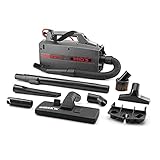
4. Oreck Commercial XL Pro 5 Super Compact Canister Vacuum Cleaner, Lightweight Bagged Canister Vac with Attachments, Portable, Extended Cleaning Reach, Corded Vacuum Cleaners for Commercial Use
Overview:
The Oreck XL Pro 5 is a commercial-grade 5 lb bagged canister vacuum with a 30-ft cord, stretch hose, and accessory pack. Designed for portability and extended reach, it targets both homes and professional settings like hotels.
What Makes It Stand Out:
Its featherlight 5 lb weight, industry-leading 30-ft cord, and stretch hose enable unparalleled mobility and above-floor cleaning. The comprehensive accessory caddy (including hard floor/carpet nozzle and telescopic wand) supports versatile commercial and residential use.
Value for Money:
While premium-priced, its durability and commercial pedigree justify cost for frequent users. The included tools reduce need for extras, but bag costs add up. Best value for cleaners needing reliability and reach over budget savings.
Strengths and Weaknesses:
Strengths: Unmatched portability and cord length; commercial-grade durability; exceptional tool versatility; easy shoulder carry.
Weaknesses: Bagged system incurs recurring costs; lower suction (≈1000W) vs. competitors; small dust capacity; basic filtration lacks HEPA.
Bottom Line:
Essential for professionals or large homes prioritizing mobility and tool flexibility. Sacrifices suction power for portability, making it ideal for quick cleans but less suited for deep carpet cleaning.
5. Eureka Bagless Canister Vacuum Cleaner, Lightweight Vac for Carpets and Hard Floors, Red, Whirlwind NEN110D

Overview:
This red variant of Eureka’s WhirlWind (NEN110D) mirrors the blue model: a 2.5L bagless canister vacuum with 960W power, 8.2 lb weight, and triple-surface airflow control. It targets mixed-floor homes with swivel steering and a telescoping wand.
What Makes It Stand Out:
Identical to Product 1 with its integrated crevice tool/dusting brush handle, washable filters, and one-button dust cup. The standout remains its tool accessibility and cord rewind—no lost attachments and minimal emptying hassle.
Value for Money:
Priced identically to the blue model, it offers no functional advantages beyond color preference. Provides strong value for basic cleaning needs due to zero filter costs, though suction lags behind 1200W+ rivals like the Aircliff.
Strengths and Weaknesses:
Strengths: Near-identical pros to Product 1: lightweight; intuitive tools; low maintenance; easy cord storage.
Weaknesses: Same limitations: weak on thick carpets; 16ft cord; frequent emptying; average HEPA filtration (unlike Aircliff).
Bottom Line:
A reliable, affordable entry-level canister vacuum for small spaces. Only choose this over Product 1 for aesthetic preference—functionally identical, so prioritize whichever color suits your home. Not ideal for pet hair or deep cleaning.
6. PKUYIE Canister Vacuum Cleaner, 40Kpa 1600W Cyclon Power Bagless Canister Vacuum Cleaners for Home, 3.7QT Large Dust Cup, Lightweight Vac for Hard Floors, Carpets, Pet Hair,Pink
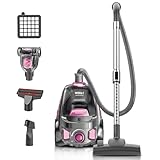
Overview: The PKUYIE SL159 is a vibrant pink bagless canister vacuum targeting pet owners and households needing deep cleaning on mixed surfaces. Its 1600W brushless motor and 40KPa suction promise robust performance for carpets and hard floors, combined with HEPA filtration for allergen control.
What Makes It Stand Out: Hurricane-level 40KPa suction tackles embedded pet hair and fine dust effectively, while the dual H13 HEPA system captures 99.97% of particles. The spacious 3.7QT washable dust cup, smart full indicator, and quiet 68dB operation enhance user convenience and air quality.
Value for Money: Priced mid-range, it offers premium features like true cyclonic suction and medical-grade filtration typically found in costlier models. The bagless design eliminates ongoing bag costs, making it economical long-term versus bagged alternatives.
Strengths and Weaknesses: Strengths: Exceptional suction for pet hair, large dust capacity reduces emptying frequency, quiet operation, and superior HEPA filtration. Weaknesses: 40KPa claim may be inflated (real-world tests often show lower), and the pink color limits aesthetic flexibility.
Bottom Line: An excellent choice for pet owners prioritizing deep cleaning and air purity; its powerful suction and HEPA system justify the price, though verify suction metrics before purchase.
7. Hoover Commercial PortaPower Lightweight Canister Vacuum Cleaner, Bagged Canister Vac with Attachments, 2-in-1 Vac and Blower, Corded Vacuum Cleaners for Commercial Use

Overview: The Hoover PortaPower is a commercial-grade, bagged canister vacuum engineered for durability in high-traffic environments. Weighing just 8 lbs, it combines portability with industrial strength, featuring a 33-ft cord and 2-in-1 blower functionality for versatile cleaning.
What Makes It Stand Out: Its standout features include the integrated blower for clearing debris from tight spots, exceptional maneuverability via lightweight design and shoulder strap, and a comprehensive 7-piece tool kit for specialized tasks like upholstery or crevices.
Value for Money: While pricier upfront than home models, its commercial build quality ensures longevity in demanding settings. The included bags and filters reduce initial accessory costs, offering strong ROI for businesses versus frequent residential vacuum replacements.
Strengths and Weaknesses: Strengths: Ultra-portable, versatile blower function, robust for commercial use, and extensive attachments. Weaknesses: Smaller dust capacity requires frequent bag changes, and the bagged system incurs recurring costs versus bagless rivals.
Bottom Line: Ideal for commercial users needing reliability and versatility; its portability and blower justify the investment, though residential users might prefer bagless convenience.
8. Eureka Bagless Canister Vacuum Cleaner, 1100W High Power Vacuum Cleaner for Carpets and Hard Floors HEPA Filter Extension Tube 2-in-1 Crevice Tool Floor Nozzle, NEN121WH

Overview: The Eureka NEN121WH is a compact, bagless canister vacuum designed for agile home cleaning. Its 1100W motor targets carpets and hard floors, featuring a 1.2L dust cup, HEPA filtration, and intuitive handle controls for surface-specific adjustments.
What Makes It Stand Out: The integrated 2-in-1 crevice tool/dusting brush (stored in the hose handle) prevents loss, while automatic cord rewind and one-button dust cup emptying streamline post-cleaning. Swivel steering and a telescoping wand enhance under-furniture access.
Value for Money: Budget-friendly with no bag expenses, its washable filters and efficient 17-ft cord offer low lifetime costs. It undercuts premium models but sacrifices suction power (1100W vs. 1600W competitors), suiting smaller homes.
Strengths and Weaknesses: Strengths: Hassle-free cord rewind, space-saving design, and clever tool storage. Weaknesses: Modest 1.2L capacity demands frequent emptying, and 82 dBA noise is louder than rivals.
Bottom Line: A practical, affordable pick for apartments or light-duty use; prioritizes convenience over raw power, but insufficient for large homes or heavy pet hair.
9. Bissell Zing Lightweight, Bagged Canister Vacuum, Purple, 2154A
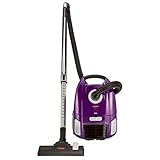
Overview: The Bissell Zing 2154A is a stylish, bagged canister vacuum emphasizing ease of use for hard floors and carpets. Its 9-amp motor delivers variable suction, while automatic cord rewind and mess-free bag disposal cater to quick, efficient cleaning sessions.
What Makes It Stand Out: The flip-switch surface selector instantly adapts suction between carpets and bare floors, and the sealed bag system minimizes dust exposure during disposal—a key perk for allergy sufferers versus bagless models.
Value for Money: Mid-priced with included bags and washable filters, it balances upfront cost and convenience. The bagged design avoids filter maintenance hassles but adds long-term expenses, making it costlier than bagless options over time.
Strengths and Weaknesses: Strengths: Effortless bag changes, quiet operation, and versatile surface switching. Weaknesses: Limited to basic attachments (no upholstery tool), and small bag capacity requires frequent replacements.
Bottom Line: Recommended for allergy-prone users wanting a tidy, low-maintenance vacuum; the bagged system shines for convenience, though attachment variety is lacking.
10. Aspiron Canister Vacuum, Upgraded 1600W Bagless Canister Vacuum Cleaner, Auto Cord Rewind, H13 HEPA Filter, 4Qt Large Capacity, 5 Tools for Hard Floors, Carpet, Pet, Upholstery, Tiles, Coral

Overview: The Aspiron canister vacuum merges high suction (1600W/40KPa) with smart features like auto cord rewind and H13 HEPA filtration. Targeting pet owners, it handles floors, tiles, and upholstery with a 4QT dust cup and 5 specialized tools.
What Makes It Stand Out: The standout auto cord rewind (20-ft cord) and cyclone-sealed HEPA-H10 system prevent secondary pollution. Its 4QT capacity—double most rivals—and coral-colored design enhance usability and aesthetics for pet hair battles.
Value for Money: Competitively priced for its specs, the bagless system saves on replacements, while the large dust cup reduces interruptions. It outperforms similarly priced models in capacity and filtration, though true HEPA (H13) claims need verification.
Strengths and Weaknesses: Strengths: Spacious dust cup, auto cord rewind, strong pet-hair performance, and lightweight maneuverability. Weaknesses: HEPA-H10 (not H13) filtration is less rigorous, and the coral hue may not suit all decors.
Bottom Line: A top contender for pet households needing efficiency; the large capacity and auto rewind justify its cost, but confirm HEPA rating accuracy before buying.
Why Canister Vacuums Dominate Stair Cleaning
The Physics of Effortless Stair Maneuvering
The core advantage lies in weight distribution. Upright vacuums force you to lift their entire mass with each step, concentrating effort where it’s least desirable. Canister models relocate the heaviest unit – the motor and canister – to rest securely at the bottom of the stairs or on a landing. You only handle the significantly lighter cleaning tools: the hose, wand, and a compact floor head or specialized stair tool. This drastically reduces physical strain and improves balance, making the process safer and less tiring, especially during frequent cleaning sessions.
Superior Agility Around Obstacles
Stairs present unique navigation challenges: tight corners at landings, banister posts, baseboard molding, and often limited space to pivot. Canister vacuums excel here due to their inherent flexibility. The long, articulated hose allows the cleaning head to snake around obstacles with minimal body movement. You can reach under newel posts, clean along the edge of the top step without leaning dangerously far, and tackle corners without constantly repositioning the entire unit. This agility translates directly to more thorough cleaning in less time.
Reduced Risk of Accidents and Damage
Hauling a heavy upright vacuum up stairs increases the chance of losing your grip, tripping, or accidentally bumping into walls and railings, potentially causing dents or scratches. The lighter load of a canister system minimizes this risk significantly. Furthermore, the smooth glide of a canister head (compared to the sometimes jerky motion of an upright on stairs) reduces the likelihood of the machine catching an edge and tipping over, protecting both your stairs and the vacuum itself from unnecessary wear and tear.
Essential Features for Stair-Cleaning Success
Lightweight Hose and Wand Construction
This is non-negotiable. The hose and wand you’ll be holding for extended periods must be lightweight yet durable. Heavy metal wands or thick, stiff hoses become exhausting quickly. Look for modern materials like reinforced, flexible plastics or lightweight composites. A wand that telescopes or has a comfortable, non-slip grip further enhances control and reduces hand fatigue during detailed stair work.
Optimized Hose Length and Flexibility
A hose that’s too short forces constant repositioning of the main canister unit, defeating the purpose. Aim for a minimum hose length of 6-8 feet to comfortably cover a flight of stairs without moving the canister. Crucially, the hose needs exceptional flexibility – it should bend easily around corners and banisters without kinking or resisting. Kinks drastically reduce suction and make maneuvering frustrating. Check for smooth internal lining and high-quality materials that maintain suppleness.
Compact, Maneuverable Floor Head or Dedicated Stair Tool
While a standard floor head might work, a dedicated, smaller stair cleaning tool is often ideal. These tools are typically low-profile, designed specifically for tight spaces and vertical surfaces. They often feature soft bristles to protect wood treads and edges, along with powerful suction concentrated in a smaller area. If using a standard head, ensure it’s compact and swivels smoothly to follow the contours of steps without snagging.
Powerful, Consistent Suction at the End of the Hose
Suction power that drops significantly when using the hose or wand renders the vacuum ineffective for stairs. The motor must deliver strong, consistent airflow all the way through the extended hose system. Look for models emphasizing “sealed system” designs and high airwatt ratings specifically for hose use. This ensures crumbs, pet hair, and embedded dust on carpets are effectively lifted, even when the canister is positioned several feet away.
Effective Cord Management System
Tripping over a vacuum cord on the stairs is a major hazard. A vacuum designed for stair use needs intelligent cord management. Features like an automatic rewind (with a smooth, reliable mechanism) or a large, easy-to-grab cord hook are essential. The cord should retract cleanly without excessive force, and the hook should be positioned so the cord doesn’t dangle precariously near steps when in use. Manual rewinds need to be very user-friendly.
Low-Profile Canister Design for Landing Storage
When cleaning multiple flights, you’ll often need to leave the canister resting on a landing. A canister that’s too tall or bulky is unstable and takes up valuable space. Seek models with a lower center of gravity and a compact footprint. Wheels should be small enough not to catch on the edge of the landing but large enough to roll smoothly over transitions. Stability on a flat landing surface is paramount to prevent accidental tipping.
Quiet Operation for Multi-Level Homes
Cleaning stairs often means the noise is amplified throughout the house. While not always the primary focus, a canister vacuum with noticeably quieter operation (compared to many uprights) is a significant quality-of-life improvement. It reduces disruption to others in the home and makes the chore itself less unpleasant. Look for models with sound-dampening features if noise is a concern.
Maximizing Your Stair Cleaning Experience
Strategic Canister Placement Techniques
Don’t just plop the canister at the bottom. For a single flight, place it at the top landing; you work downwards, keeping the hose length manageable. For multiple flights, position it on the middle landing to minimize hose reach in both directions. Ensure it’s stable and won’t roll, and that the cord path is clear and safe. Adjusting the placement based on the specific staircase layout makes a huge difference in efficiency.
Mastering the Hose and Tool Handling
Hold the hose near the cleaning tool for maximum control, especially when navigating tight corners. Use a light touch – excessive pressure can push debris ahead instead of sucking it up. Angle the tool to follow the natural slope of the step tread and riser. For banisters, wrap the hose loosely around the post below your working area to prevent the tool from pulling away. Practice smooth, deliberate motions rather than quick jerks.
Tackling Different Stair Materials Effectively
Carpeted stairs require a tool with gentle agitation (like a soft brush roll or bare floor setting) to lift dirt without damaging fibers. Bare wood or tile stairs need a tool with a soft edge guard to prevent scratches; often, a bare floor tool or even a soft dusting brush works best. For deep pile carpets, you might need slightly higher suction. Always test settings on an inconspicuous area first if unsure.
Preventing Hose Kinks and Snags
Route the hose over banisters, not wrapped tightly around them, to avoid kinks. Keep a slight loop of slack near your hand to absorb tension. Avoid letting the hose drag over sharp edges of steps or landings. If kinking persists, check the hose for internal damage or consider a higher-quality replacement hose known for flexibility. A smooth glide is essential for consistent suction.
Maintaining Suction Power During Stair Cleaning
Frequently check the hose and wand for clogs, especially when transitioning between carpet and bare floors where debris like string or small toys can get stuck. Ensure filters are clean – a clogged filter is the most common cause of sudden suction loss. Empty the dust container or replace the bag before it gets completely full, as capacity directly impacts airflow. Consistent suction is key for effective stair cleaning.
Safe Cord Management on Multiple Flights
When moving between flights, always unplug the vacuum first. Never drape the cord over banisters where it can be tripped over; instead, carry the plug or use the cord hook to secure it temporarily on the landing you’re moving to. If the cord is long enough, let the excess coil neatly on the landing rather than letting it hang down the stairwell. Safety must override convenience.
Efficient Cleaning Patterns for Thorough Results
Start at the top step and work your way down systematically. Clean the tread (horizontal part) first, then the riser (vertical part). Use overlapping strokes to ensure no spots are missed. Pay special attention to the seam where the tread meets the riser – this is a prime debris trap. For banisters and railings, use a dedicated dusting brush attachment, working from top to bottom in sections.
Optimizing Tool Storage for Quick Access
Store your stair-cleaning tools (the specific hose, wand, and stair tool) attached to the canister or in an easily accessible location near your main vacuum storage area. Fumbling for the right attachment adds friction to the process. Some canisters have dedicated clips or holders specifically for keeping the hose and essential tools ready to grab and go.
Understanding Filter Maintenance Impact
Dirty filters are the silent killer of suction, especially critical when cleaning stairs where maximum power at the tool is needed. Know your vacuum’s filter types (pre-motor, post-motor, HEPA) and their specific cleaning or replacement schedules. Rinsing foam or cloth filters regularly (and letting them dry completely) is crucial. Neglecting filters turns even the best canister vacuum into a weak performer on stairs.
Leveraging the Right Suction Settings
Many canisters offer variable suction control. For delicate area rugs on stairs or when using a dusting brush, lower suction prevents pulling up fibers. For deep cleaning carpeted treads or tackling embedded pet hair, crank it up to maximum. Using the correct setting protects your stairs and ensures optimal cleaning performance without unnecessary strain on the motor.
Frequently Asked Questions
How do I prevent the vacuum hose from kinking on stairs?
Ensure the hose has sufficient length to reach comfortably without tension. Route it smoothly over banisters, not wrapped tightly around them, and maintain a slight loop of slack near your hand. Invest in a high-flexibility hose if kinking is persistent; quality matters significantly here.
Is a canister vacuum really better for stairs than an upright?
Absolutely, for most people. The separation of the heavy motor/canister unit (left at the bottom or on a landing) means you only handle the lightweight hose and tools while climbing. This reduces strain, improves balance, and offers superior maneuverability around banisters and corners compared to lifting an entire upright vacuum.
What’s the ideal hose length for cleaning stairs?
Aim for a minimum of 6-8 feet. This provides enough reach to clean a typical flight of stairs (8-10 steps) without constantly moving the canister unit, but isn’t so long that it becomes cumbersome or prone to tangling in tight stairwells.
Can I use a standard floor head on stairs, or do I need a special tool?
You can use a standard head, but a dedicated, compact stair tool is highly recommended. These are lower profile, easier to maneuver in tight spaces, often have soft edges to protect wood, and concentrate suction effectively on the smaller surface area of steps. They make the job significantly easier and more thorough.
How do I safely move the canister between landings while cleaning multiple floors?
Always unplug the vacuum first. Move the canister itself (not by pulling the cord). Place it securely on the new landing before continuing. Never drape the cord over banisters where it creates a tripping hazard; manage the cord carefully as you move, using the cord hook to secure it temporarily if needed.
Why does my suction seem weaker when cleaning stairs compared to floors?
This is usually caused by clogs in the hose or wand, a full dust container/bag, or dirty filters. Check the entire pathway from the cleaning tool back to the canister for obstructions. Empty the container/bag and clean/replace filters regularly, especially before tackling stairs where maximum suction is critical.
Are cordless stick vacuums a good alternative for stairs?
They can be convenient for quick spot cleaning, but generally lack the sustained suction power, battery life, and hose reach needed for thorough, deep cleaning of multiple flights of stairs, especially carpeted ones. Canisters typically offer superior performance and less physical strain for this specific task.
How do I clean the crevice where the stair tread meets the riser?
Use a narrow crevice tool attachment. Angle it carefully into the seam and make slow, deliberate passes. A stiff brush attachment can also help loosen embedded debris in this area before sucking it up with the crevice tool or a standard stair tool held close.
What should I look for in a canister’s wheels for stair cleaning?
Wheels should be small enough to sit stably on a narrow landing without overhanging the edge significantly, yet large enough to roll smoothly over the transition from landing to the first step. Smooth-rolling, non-marking casters are essential for easy repositioning on landings.
How often should I clean the filters for optimal stair cleaning performance?
Follow the manufacturer’s guidelines, but generally, pre-motor filters (foam/cloth) should be rinsed monthly and post-motor/HEPA filters tapped out weekly. If you notice a drop in suction, especially when using the hose on stairs, dirty filters are the prime suspect – clean them immediately.
See Also
- The 10 Best Cordless Canister Vacuums for Small Apartments in 2026
- How to Choose the 10 Best Canister Vacuums for Small Living Spaces in 2026
- Top 10 Best Canister Vacuums for Multi-Surface Homes in 2026
- How to Choose the 10 Best Cordless Vacuums for Stairs in 2026
- 10 Best Handheld Vacuums for Stairs and Upholstery in 2026