Table of Contents
Living with allergies means constantly battling invisible invaders. Dust mites, pet dander, pollen, and mold spores lurk in carpets, rugs, and upholstery, turning your home into a potential trigger zone. Standard vacuums often fall short, merely redistributing these allergens back into the air you breathe, leaving you sneezing, itchy, and exhausted. The frustration is real – you clean diligently, yet the symptoms persist, making you question if your efforts are even worthwhile. For allergy sufferers, effective cleaning isn’t just about tidiness; it’s a critical component of managing health and creating a truly restful sanctuary within your own walls.
This is where understanding the specific capabilities of a high-performance canister vacuum becomes non-negotiable. Unlike upright models that can sometimes kick dust up into the breathing zone, canister vacuums offer unique advantages: superior maneuverability around furniture, often quieter operation, and crucially, the potential for truly sealed systems designed to trap the tiniest particles. Choosing the right one isn’t about fancy gimmicks; it’s about investing in a tool engineered to capture and contain the microscopic irritants that compromise your indoor air quality. Let’s dive deep into the features and functionalities that transform a simple cleaning appliance into a powerful ally for your respiratory health.
Top 10 Canister Vacuums for Allergies
Detailed Product Reviews
1. Kenmore 81214 200 Series Pet Friendly Lightweight Bagged Canister Vacuum with HEPA, 2 Motor System, and 3 Cleaning Tools-Orange
 Vacuum with HEPA, 2 Motor System, and 3 Cleaning Tools-Orange](https://m.media-amazon.com/images/I/3154pdmZ19L._SL160_.jpg)
Overview: This orange Kenmore canister vacuum targets pet owners and allergy sufferers, featuring a bagged HEPA system and dual motors for whole-home cleaning on bare floors, carpets, and vehicles. Weighing under 20 pounds, it prioritizes maneuverability with essential attachments. What Makes It Stand Out: Its sealed HEPA filtration traps 99.97% of allergens like dander, crucial for sensitive households. The dual-motor system delivers strong suction across surfaces, enhanced by four height adjustments. The included dusting brush, crevice tool, and bare floor tool store neatly onboard for quick transitions. Value for Money: Priced mid-range, it offers excellent value for pet owners needing reliable HEPA filtration without premium costs. While bagged operation incurs minor ongoing expenses, it avoids the dust clouds common with budget bagless models, making it a cost-effective health investment compared to basic alternatives. Strengths and Weaknesses: Strengths include exceptional allergen containment, lightweight agility, versatile height settings, and convenient tool storage. Weaknesses are the corded design limiting range, modest 120W suction potentially struggling on deep carpet, and the necessity of purchasing replacement bags long-term. Bottom Line: A highly practical, health-focused vacuum for pet owners and allergy sufferers on a budget; ideal for homes with mostly hard floors but less suited for thick carpets or those seeking cordless convenience.
2. Kenmore BC3006 400 Series Pet Friendly Lightweight Bagged Canister Vacuum Cleaner 2-Motor Design with Hair Eliminator Brushroll, HEPA Filter, LED Headlight, Extended Wand and Auto Cord Rewind
 2-Motor Design with Hair Eliminator Brushroll, HEPA Filter, LED Headlight, Extended Wand and Auto Cord Rewind](https://m.media-amazon.com/images/I/41qe9rpESrL._SL160_.jpg)
Overview: The Kenmore BC3006 is a specialized bagged canister vacuum engineered for pet hair challenges, featuring an automatic Hair Eliminator brushroll, sealed HEPA filtration, and extended reach for thorough home cleaning. What Makes It Stand Out: The revolutionary Hair Eliminator brushroll self-clears缠绕 pet hair, eliminating manual scissors removal—a major pain point. Combined with a fully sealed HEPA path capturing 99.97% of fine dust and an LED headlight illuminating dark corners, it excels in deep pet hair removal and allergen control. Value for Money: Positioned at a competitive mid-to-high price, it justifies cost through significant time savings from the Hair Eliminator and durable build quality. The bagged system ensures consistent suction and avoids messy dust cups, offering better long-term reliability than similarly priced bagless models focused on pet hair. Strengths and Weaknesses: Key strengths are the game-changing hair-clearing brushroll, superior sealed filtration, extended 9ft telescoping wand, and auto cord rewind. Weaknesses include the weight potentially challenging for some users, the need for bag replacements, and less agility on very low-pile rugs compared to dedicated uprights. Bottom Line: A top recommendation for multi-pet households seeking effortless, thorough cleaning; the Hair Eliminator feature alone makes it worth the investment over standard pet vacuums.
3. Eureka WhirlWind Bagless Canister 2.5L Vacuum Cleaner, Lightweight Vac for Carpets and Hard Floors, NEN110A, Blue

Overview: The Eureka WhirlWind is an ultra-lightweight (8.15 lbs), bagless canister vacuum designed for effortless maneuvering on carpets and hard floors, featuring a 2.5L dustbin and swivel steering for stairs and furniture. What Makes It Stand Out: Its standout feature is the integrated airflow control switch on the handle, allowing instant adjustment between surface types without stopping. The truly bagless design with washable filters eliminates recurring costs, while the 2-in-1 crevice tool/dusting brush stored on the hose handle ensures tools are always accessible. Value for Money: Excellent value for small-to-medium homes due to zero ongoing filter or bag costs. The 960W motor provides strong suction at an entry-level price point, significantly undercutting premium bagged models while offering comparable convenience for routine cleaning, though durability may not match higher-end units. Strengths and Weaknesses: Major strengths are exceptional lightness, easy one-touch bin emptying, automatic cord rewind, and the clever integrated tool storage. Weaknesses include potential suction loss as the bin fills, less effective fine dust containment than HEPA-filtered bagged vacuums (a concern for allergies), and possible filter maintenance hassles if not cleaned regularly. Bottom Line: A superb budget-friendly choice for quick, hassle-free cleaning in pet-free or light-pet homes; prioritize it for convenience and cost savings, but choose a HEPA model if allergies are a primary concern.
4. Miele Classic C1 Pure Suction Bagged Canister Vacuum, Graphite Grey - Portable, Household

Overview: The Miele Classic C1 Pure Suction is a premium German-engineered bagged canister vacuum, optimized for hard floors and low-pile carpets, emphasizing superior filtration, precise suction control, and enduring build quality. What Makes It Stand Out: Miele’s hallmark is its unparalleled Airclean 3-tiered filtration system (FilterBag, Motor Protection Filter, AirClean Exhaust Filter), scientifically proven to expel cleaner air than it intakes. The six adjustable suction settings allow meticulous surface-specific cleaning, while Miele’s renowned engineering ensures exceptional longevity and quiet operation. Value for Money: Commanding a high price, it delivers exceptional value through unmatched durability (often lasting 15+ years), superior allergen capture critical for health, and consistent performance. While bags add cost, the vacuum’s lifespan and efficiency make it economical long-term versus replacing cheaper models every few years, especially for allergy sufferers. Strengths and Weaknesses: Strengths encompass best-in-class filtration, precise suction control, whisper-quiet operation, robust German build, and included versatile tools. Weaknesses are the significant upfront cost, the heaviest unit in this comparison, and less powerful deep-cleaning on high-pile carpets compared to dedicated motorized heads on other models. Bottom Line: The definitive choice for discerning users prioritizing air quality, longevity, and performance on hard surfaces; a worthwhile investment for health-conscious households despite the premium price.
5. Kenmore Elite 21814 Pet Friendly CrossOver Lightweight Bagged HEPA Canister Vacuum with Pet PowerMate, Extended Telescoping Wand, Retractable Cord, 2 Floor Nozzles, and 4 Cleaning Tools-Silver/Gray
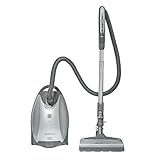
Overview: This Kenmore Elite model is a feature-packed bagged canister vacuum specifically engineered for pet owners, combining a specialized Pet PowerMate tool, dual floor nozzles, extended reach, and HEPA filtration for comprehensive home cleaning. What Makes It Stand Out: The motorized Pet PowerMate attachment is exceptional, lifting stubborn pet hair without tangling, while the unique CrossOver nozzle seamlessly transitions between carpets and hard floors. The extended 11’ aluminum wand, retractable cord, and LED bag-full indicator enhance usability, complemented by HEPA filtration capturing 99.7% of allergens. Value for Money: Positioned as a premium pet vacuum, it offers strong value through its specialized pet tools and versatile design. The CrossOver nozzle eliminates the need for separate heads, and the durable build justifies the cost versus cheaper pet vacuums that often lack effective hair removal or smooth surface transitions. Strengths and Weaknesses: Key strengths are the outstanding Pet PowerMate tool, effortless floor-type switching, extensive 11’ reach, excellent HEPA filtration, and comprehensive tool set. Weaknesses include the weight making it less ideal for frequent stair use, the bagged system requiring replacements, and the HEPA rating (99.7%) being slightly lower than some competitors’ 99.97%. Bottom Line: A top-tier choice for serious pet owners needing versatile, powerful cleaning across all floor types; the CrossOver nozzle and Pet PowerMate deliver unmatched pet hair performance, making it highly recommended despite the premium.
6. Aspiron Canister Vacuum, Upgraded 1600W Bagless Canister Vacuum Cleaner, Auto Cord Rewind, H13 HEPA Filter, 3.7Qt Large Capacity, 5 Tools for Hard Floors, Carpet, Pet, Upholstery, Tiles, Violet
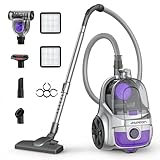
Overview:
The Aspiron Canister Vacuum is a versatile, bagless cleaning solution designed for homes with mixed surfaces. Its 1600W brushless motor targets dust, pet hair, and debris across carpets, hard floors, and upholstery, emphasizing convenience with auto cord rewind and HEPA filtration.
What Makes It Stand Out:
A standout 30Kpa suction power tackles embedded dirt effectively, while the auto cord rewind (via foot pedal) simplifies storage. The fully sealed HEPA-H10 system prevents secondary pollution—ideal for allergy sufferers—and the 3.7Qt bagless dust cup reduces emptying frequency versus smaller competitors. Its lightweight, compact design enhances maneuverability in tight spaces.
Value for Money:
Priced mid-range, it outperforms budget models with its robust suction, cord management, and large capacity. While lacking the 40Kpa suction of pricier Aspiron siblings, it offers superior filtration and convenience over similarly priced bagged alternatives, justifying its cost for allergy-prone or pet-owning households.
Strengths and Weaknesses:
Strengths: Strong 30Kpa suction; auto cord rewind; excellent HEPA-H10 filtration; large 3.7Qt dust cup; lightweight and agile.
Weaknesses: Lower suction than newer 40Kpa models; HEPA-H10 slightly less effective than H13; no dust indicator.
Bottom Line:
A reliable, allergy-friendly choice for multi-surface cleaning. Recommended for pet owners seeking efficient, low-maintenance performance at a reasonable price, though those needing max suction should consider higher-end variants.
7. Eureka 3670M Canister Cleaner, Lightweight Powerful Vacuum for Carpets and Hard floors, w/ 5bags,Yellow

Overview:
The Eureka 3670M is a lightweight, bagged canister vacuum built for whole-home cleaning on carpets, hard floors, stairs, and cars. At just 8.6lbs, it prioritizes portability and simplicity for quick cleanups.
What Makes It Stand Out:
Its ultra-lightweight design (8.6lbs) and 12-amp motor deliver surprising power for its size, enabling effortless carrying between floors. The messy-free dust bag system minimizes contact with debris, and the included 5 bags plus 2 extension wands/attachments extend reach into cars, crevices, and furniture—uncommon in budget canisters.
Value for Money:
An affordable entry point for bagged convenience. The included 5 bags add immediate value, though ongoing bag costs accumulate. It’s less powerful than bagless competitors (1200W vs. 1600W), but excels as a secondary or quick-clean vacuum where portability trumps raw suction.
Strengths and Weaknesses:
Strengths: Extremely lightweight (8.6lbs); easy bag replacement; includes 5 bags and versatile tools; good for stairs/cars.
Weaknesses: Lower suction (1200W); smaller 2.5L bag capacity; no HEPA filtration; bags increase long-term cost.
Bottom Line:
Ideal as a supplementary vacuum for light-duty tasks or multi-level homes where weight matters. Not recommended for deep carpet cleaning or allergy sufferers, but excellent value for basic, portable cleaning.
8. Aspiron Canister Vacuum, Upgraded 1600W Bagless Canister Vacuum Cleaner, Auto Cord Rewind, H13 HEPA Filter, 4Qt Large Capacity, 5 Tools for Hard Floors, Carpet, Pet, Upholstery, Tiles, Sapphire

Overview:
This Aspiron model upgrades its predecessor with 40Kpa suction and a 4Qt dust cup. Targeting pet owners and allergy sufferers, it combines cyclone technology, H13 HEPA filtration, and auto cord rewind for comprehensive home cleaning.
What Makes It Stand Out:
The 40Kpa suction power excels at lifting stubborn pet hair and deep-seated dirt, while the 4Qt bagless cup minimizes interruptions. Auto cord rewind (33ft radius) and a fully sealed H13 HEPA system ensure clean air expulsion—critical for sensitive households. Its compact build and tool storage enhance daily usability.
Value for Money:
Competitively priced for its premium features. The bagless design saves on recurring costs versus bagged models, and the larger capacity improves efficiency over 2-3Qt rivals. Superior to the 30Kpa Aspiron (Product 6) for heavy-duty use, it justifies a slight premium with tangible performance gains.
Strengths and Weaknesses:
Strengths: Industry-leading 40Kpa suction; large 4Qt washable cup; true H13 HEPA filtration; auto cord rewind; excellent pet hair handling.
Weaknesses: Slightly heavier than Eureka; no dust indicator; HEPA filter maintenance required.
Bottom Line:
A top-tier bagless canister vacuum for demanding households. Highly recommended for pet owners or allergy sufferers needing powerful, hygienic cleaning without bag expenses.
9. PKUYIE Canister Vacuum Cleaner, 40Kpa 1600W Cyclon Power Bagless Canister Vacuum Cleaners for Home, 3.7QT Large Dust Cup, Lightweight Vac for Hard Floors, Carpets, Pet Hair, Blue
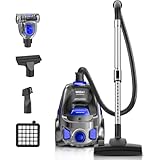
Overview:
The PKUYIE SL159 delivers cyclonic 40Kpa suction in a quiet, user-friendly package. Designed for homes with pets and allergies, it emphasizes air quality and ease of use with dual HEPA filtration and smart indicators.
What Makes It Stand Out:
Dual H13 HEPA filters capture 99.97% of fine particles, outperforming single-filter rivals. The smart dust-full indicator prevents suction loss, while 68dB operation ensures quiet cleaning—rare in high-power vacuums. The 3.7QT bagless cup and lightweight build (with flexible steering) enhance daily practicality.
Value for Money:
Offers premium features (dual HEPA, dust indicator) at a mid-range price. Though capacity matches Product 6, its quieter operation and superior air filtration provide better value for noise-sensitive or health-conscious users versus similarly priced models lacking these extras.
Strengths and Weaknesses:
Strengths: Dual H13 HEPA filtration; quiet 68dB operation; dust-full indicator; strong 40Kpa suction; lightweight agility.
Weaknesses: 3.7QT cup slightly smaller than Aspiron’s 4Qt; no auto cord rewind; wand storage less intuitive.
Bottom Line:
An exceptional choice for allergy sufferers and apartment dwellers prioritizing clean air and quiet use. Recommended over basic models for its thoughtful health-centric design and reliability.
10. Aspiron Canister Vacuum, Upgraded 1600W Bagless Canister Vacuum Cleaner, Auto Cord Rewind, H13 HEPA Filter, 4Qt Large Capacity, 5 Tools for Hard Floors, Carpet, Pet, Upholstery, Tiles, Coral

Overview:
The coral-hued Aspiron model mirrors Product 8’s specs but targets style-conscious buyers. It boasts 40Kpa suction, a 4Qt dust cup, and H13 HEPA filtration for thorough, hygienic cleaning across all surfaces.
What Makes It Stand Out:
Identical to Product 8 in performance (40Kpa suction, auto cord rewind, sealed H13 system), but the coral color offers aesthetic appeal. The cyclone technology and 4Qt bagless cup ensure consistent power and less frequent emptying, while the compact design aids storage in small spaces.
Value for Money:
Priced identically to Product 8 (Sapphire), it’s a standout for those valuing design. No functional upgrades justify a higher cost, but it matches premium competitors on suction and filtration at a fair price—especially valuable for pet owners needing large-capacity, bagless convenience.
Strengths and Weaknesses:
Strengths: Powerful 40Kpa suction; true H13 HEPA filtration; spacious 4Qt cup; auto cord rewind; vibrant color option.
Weaknesses: No dust indicator; HEPA filters require regular cleaning; identical performance to Product 8 limits uniqueness.
Bottom Line:
A functionally excellent vacuum where color preference drives the choice. Highly recommended for buyers seeking top-tier cleaning performance with a pop of personality—identical value to Product 8.
Why Canister Vacuums Excel for Allergy Management
Canister vacuums possess inherent design characteristics that make them particularly well-suited for tackling the unique challenges faced by allergy sufferers. Their configuration offers distinct benefits over other vacuum types when the primary goal is allergen removal and containment.
The Sealed System Imperative
A truly sealed system is the absolute cornerstone of an effective allergy vacuum. This means every component – from the intake nozzle all the way to the exhaust – forms an airtight pathway. Air drawn in must pass through the filtration system before exiting. Even a tiny gap in a non-sealed system allows microscopic allergens to bypass the filters and be blown directly back into your living space, counteracting your cleaning efforts. Look for models explicitly advertising a “completely sealed” or “allergy-sealed” design as a non-negotiable feature.
Superior Maneuverability for Thorough Cleaning
Allergens accumulate everywhere – under furniture, along baseboards, in corners, and on stairs. The canister design, with its separate motor unit connected by a hose and wand to the cleaning head, provides exceptional agility. You can easily glide the lightweight powerhead under sofas, beds, and cabinets, reaching into tight spaces where dust bunnies (and allergens) congregate. This level of access is crucial for comprehensive allergen removal that uprights often struggle to achieve.
HEPA Filtration: The Non-Negotiable Standard
While many vacuums claim “HEPA-like” or “HEPA-style” filtration, true allergy relief demands a certified HEPA filter. True HEPA (High-Efficiency Particulate Air) filters, meeting the stringent HEPA standard (capturing 99.97% of particles as small as 0.3 microns), are essential for trapping the ultra-fine particles that trigger allergies. Ensure the vacuum uses a certified HEPA filter, not just one labeled “HEPA.” This filter should be the final stage before exhaust air leaves the machine.
Essential Features for Maximum Allergen Capture
Beyond the foundational sealed system and true HEPA, several specific features significantly enhance a canister vacuum’s ability to create a healthier home environment for sensitive individuals.
Multi-Stage Filtration Architecture
True HEPA is vital, but it works best as the final stage in a multi-layered defense. Effective allergy vacuums employ a pre-motor filter (often a foam or cloth filter) to capture larger debris like hair and dust bunnies, protecting the HEPA filter and extending its life. This staged approach ensures the HEPA filter isn’t prematurely clogged by larger particles, allowing it to focus on the microscopic allergens it’s designed for.
Motor Power and Airflow Dynamics
Raw suction power (measured in air watts) matters, but it must be paired with intelligent airflow design. Sufficient power is needed to lift embedded allergens deep within carpet fibers, but the airflow path must be optimized to move that contaminated air efficiently through the sealed filtration system without creating turbulence that could dislodge particles. Look for models emphasizing balanced airflow and strong suction specifically designed for deep cleaning carpets where allergens hide.
Low-Profile Powerheads for Deep Reach
The cleaning head’s ability to get close to the carpet fibers is critical. A low-profile powerhead design allows the brush roll (if present and appropriate for your flooring) or the suction path to sit closer to the surface, agitating and extracting deeply embedded dust mites and dander more effectively than bulkier heads. This is especially important for medium-pile carpets common in many homes.
Effective Brush Roll Design (When Needed)
While bare floors are common, many homes have carpets. For carpeted areas, a brush roll can help dislodge allergens. However, for allergy sufferers, consider models with brush roll shut-off options. This allows you to disable the rotating brush on hard floors, preventing it from scattering fine dust particles back into the air. If you have pets, a tangle-free brush roll design is highly beneficial to prevent hair from wrapping around the roller and reducing suction.
User-Friendly Maintenance Features
Consistent performance relies on easy maintenance. Canister vacuums designed for allergy sufferers should feature tool-free filter access, clear indicators for when filters need cleaning or replacement, and straightforward dust bin or bag emptying mechanisms that minimize user exposure to captured allergens. Hassle-free maintenance encourages regular upkeep, which is vital for sustained effectiveness.
Optimizing Performance for Your Specific Needs
Understanding your home environment and personal sensitivities allows you to prioritize the most relevant features within the allergy-focused vacuum category.
Navigating Flooring Transitions Seamlessly
Homes rarely have just one type of flooring. A versatile canister vacuum should transition effortlessly between plush carpets, area rugs, and hard surfaces like wood, tile, or vinyl. Look for models with height adjustment controls on the powerhead to optimize suction and brush roll engagement for different surfaces, ensuring maximum allergen pickup whether you’re on thick carpet or smooth hardwood.
Tackling Pet Allergens Effectively
Pet owners face the added challenge of dander, a potent allergen. Beyond standard HEPA filtration, features become crucial: specialized pet tools (like crevice tools with rubber edges for upholstery), powerful suction to lift embedded dander from furniture, and filters specifically designed to handle the extra load of pet hair without clogging prematurely. Tangle-free brush rolls are almost mandatory in pet-owning households.
Managing Noise Sensitivity
Many allergy sufferers also experience heightened sensitivity to noise, especially if allergies contribute to sinus pressure or headaches. Canister vacuums generally operate more quietly than uprights, but noise levels still vary significantly. Pay attention to decibel (dB) ratings; models specifically designed for quiet operation (often below 70 dB) can make the cleaning experience far less stressful and disruptive, especially in open-plan homes or when others are present.
Hose and Cord Length for Effortless Coverage
Reducing strain and increasing cleaning efficiency is key for consistent use. A longer, flexible hose (at least 8-10 feet) provides greater reach from the canister, minimizing the need to drag the unit constantly. Similarly, a generous power cord (at least 15-20 feet) reduces the frequency of plugging and unplugging as you move room to room, making thorough cleaning less of a chore and more likely to be completed.
Lightweight Design and Ergonomic Handling
Allergy management is an ongoing task. A vacuum that’s overly heavy or awkward to maneuver will discourage regular, thorough cleaning. Evaluate the weight of both the canister and the powerhead. Lightweight materials, smooth-rolling casters on the canister, and ergonomic handles on the wand and powerhead significantly reduce physical fatigue, making it easier to clean multiple rooms effectively.
Bagged vs. Bagless Considerations
This is a critical choice impacting allergen containment. Bagged systems generally offer superior containment; when you remove the full bag, the allergens are sealed inside, minimizing your exposure during disposal. High-quality hypoallergenic bags are essential. Bagless models require emptying a dust bin directly over a trash can, which can release a cloud of fine particles back into the air unless done very carefully, often outdoors. For severe allergies, the sealed convenience of a bagged system is frequently preferred despite the ongoing cost of replacement bags.
Maximizing Your Allergy Vacuum’s Effectiveness
Owning the right tool is only half the battle; using it correctly and consistently is paramount for reducing allergen levels in your home.
Establishing a Strategic Cleaning Frequency
Dusting and vacuuming too infrequently allows allergens to build up to problematic levels. For allergy sufferers, vacuuming high-traffic areas and bedrooms at least 2-3 times per week is often recommended. Carpets and rugs act as reservoirs for allergens, so consistent cleaning prevents deep embedding. Adjust frequency based on pet presence, season (higher during pollen season), and individual symptom severity.
Mastering Proper Vacuuming Technique
Slow and steady wins the race with allergens. Rushing the vacuum over the surface allows fine particles to escape capture. Move the powerhead slowly (about one foot per second), making multiple overlapping passes in different directions, especially on carpets. This gives the suction and brush roll (if used) time to agitate and extract deeply embedded particles. Don’t forget edges and corners where dust accumulates.
Prioritizing Critical Zones
Focus extra attention on areas where you spend the most time and where allergens concentrate: bedrooms (especially under and around the bed), living room seating areas, and any rooms with carpets or heavy upholstery. Vacuum mattresses and pillows periodically using the appropriate tool (check manufacturer guidelines). Don’t neglect hard-to-reach spots behind furniture and along baseboards.
Diligent Filter Maintenance Schedule
Filters are the heart of your allergen defense. Neglecting them renders even the best vacuum ineffective. Clean pre-motor foam/fabric filters according to the manual (usually rinsing and air-drying monthly). Replace HEPA filters as recommended by the manufacturer (typically every 6-12 months, but heavily dependent on usage and environment). Using a clogged or expired HEPA filter drastically reduces capture efficiency and can strain the motor.
Comprehensive Cleaning Beyond Vacuuming
A vacuum is powerful, but it’s part of a larger strategy. Combine regular vacuuming with other practices: using a damp microfiber cloth for dusting (dry dusting just moves particles around), washing bedding weekly in hot water, keeping windows closed during high pollen counts, and using high-quality HVAC filters. This multi-pronged approach creates the cleanest possible indoor environment.
Frequently Asked Questions
Frequently Asked Questions
How can I verify if a vacuum has a true HEPA filter? Look for explicit certification language like “Meets HEPA standard” or “Certified HEPA” (capturing 99.97% of particles 0.3 microns). Avoid terms like “HEPA-like,” “HEPA-type,” or “HEPA-style,” which indicate inferior filtration. Manufacturer specifications or independent testing documentation should confirm true HEPA status.
What’s the biggest mistake allergy sufferers make with their vacuum? Using a vacuum without a sealed system. Even with a HEPA filter, gaps in the housing or hose connections allow allergens to bypass filtration and blow back into the room, making cleaning counterproductive. Always prioritize a completely sealed design.
Are bagged or bagless vacuums better for severe allergies? Bagged systems generally offer superior allergen containment. When the bag is full, you seal the allergens inside and dispose of it, minimizing your exposure. Emptying a bagless bin often releases fine dust into the air unless done very carefully, usually outdoors. For severe sensitivities, bags are often the safer choice.
How often should I replace the HEPA filter? Follow the manufacturer’s specific recommendation, typically every 6 to 12 months. However, heavy use, pet dander, or high pollen seasons can shorten this lifespan. If you notice reduced suction, increased dustiness in the air after vacuuming, or the vacuum smells musty, it’s likely time for a replacement, even if the schedule hasn’t elapsed.
Can I just use any vacuum with a HEPA filter attachment? No. A standalone HEPA filter attachment is insufficient. The entire vacuum system must be sealed to ensure all air passes through the HEPA filter. Without a sealed pathway from intake to exhaust, allergens will leak out before reaching the filter, negating its benefits. The HEPA filter must be integrated into a sealed system.
Why is slow vacuuming speed important for allergies? Moving too quickly doesn’t give the suction adequate time to lift deeply embedded allergens from carpet fibers or allow the filtration system to effectively capture fine particles. Slow, deliberate passes (about one foot per second) with overlapping strokes significantly improve allergen removal efficiency.
Do I need a brush roll for allergy cleaning? It depends on your flooring. For carpets, a brush roll helps agitate and lift embedded allergens. However, always ensure it has a shut-off feature for hard floors to prevent scattering dust. For homes with mostly hard floors, a suction-only head might be preferable, but carpets generally benefit from a brush roll for deep cleaning.
How do I clean the vacuum itself to prevent allergen buildup? Regularly wipe down the exterior housing, hose, and wand with a damp cloth. Clean the dust bin (if bagless) thoroughly after each use. Washable pre-motor filters according to the manual. For bagged models, ensure the bag compartment is wiped clean when changing bags. Never wash the HEPA filter unless the manual explicitly states it’s washable (most are not).
Is higher suction power always better for allergies? Sufficient suction is necessary to extract deeply embedded particles, but it must be balanced with effective filtration and a sealed system. Excessive, uncontrolled suction without proper airflow management can sometimes stir up more dust than it captures. Look for models designed with optimized airflow specifically for allergen removal, not just raw power numbers.
Can a vacuum help with airborne allergens like pollen? Vacuums primarily capture settled allergens from surfaces. While they don’t directly clean the air like an air purifier, removing the reservoir of settled particles (dust, dander) significantly reduces the amount that gets stirred back into the air by normal activity. For airborne particles, a dedicated HEPA air purifier is recommended alongside regular vacuuming.
See Also
- The 10 Best Canister Vacuums Every Apartment Dweller Needs This Year
- The 10 Best Canister Vacuums Every First-Time Homeowner Needs This Year
- The 10 Best Vacuum Floor Brushes Every Allergy Sufferer Needs This Year
- The 10 Best Upright Vacuums Every First-Time Homebuyer Needs This Year
- The 10 Best Upright Vacuums Every New Homeowner Needs This Year