Table of Contents
Living with allergies at home can turn simple chores into frustrating battles. That nagging dust cloud kicked up by an ordinary vacuum, the lingering mustiness after cleaning, or the persistent sneezing fits even after a thorough sweep – these are daily realities for millions. It’s not just about a messy floor; it’s about the invisible particles circulating in your breathing space, turning your sanctuary into a trigger zone. You meticulously wipe surfaces and avoid known irritants, yet the relief you crave remains elusive, often because the very tool meant to clean is inadvertently making things worse.
This is where understanding the right cleaning technology becomes non-negotiable. Canister vacuums, often overlooked in favor of upright models, offer distinct advantages for sensitive respiratory systems, particularly when engineered with allergen control as the core priority. Forget the marketing fluff about “suction power” alone; for allergy sufferers, the critical battle is won or lost in the vacuum’s ability to capture and contain microscopic offenders like dust mite debris, pet dander, and pollen, preventing them from escaping back into your air. Choosing the right canister model isn’t a luxury upgrade; it’s an essential step towards reclaiming cleaner indoor air and finding genuine symptom relief within your own walls.
Top 10 Canister Vacuums for Allergy Sufferers
Detailed Product Reviews
1. Kenmore 81214 200 Series Pet Friendly Lightweight Bagged Canister Vacuum with HEPA, 2 Motor System, and 3 Cleaning Tools-Orange
 Vacuum with HEPA, 2 Motor System, and 3 Cleaning Tools-Orange](https://m.media-amazon.com/images/I/3154pdmZ19L._SL160_.jpg)
Overview: The Kenmore 81214 is a budget-friendly, bagged canister vacuum designed for pet owners and allergy sufferers. Its 120-watt dual-motor system targets embedded pet hair and dust on hard floors and low-pile carpets, featuring a HEPA filter and three essential tools for versatile cleaning.
What Makes It Stand Out: The sealed HEPA filtration capturing 99.97% of allergens is a major draw for sensitive households. The lightweight (under 20 lbs) design, four height adjustments for surface optimization, and included bare floor tool make it exceptionally maneuverable for quick cleanups.
Value for Money: Priced accessibly, it delivers reliable HEPA performance without cordless premiums. While bagged systems incur ongoing bag costs, the reduced allergy triggers and consistent suction justify the expense compared to cheaper non-HEPA alternatives.
Strengths and Weaknesses: Strengths: True HEPA filtration, lightweight agility, quiet operation, effective on hard floors. Weaknesses: Underpowered for deep carpet cleaning, 120-watt motor lags behind modern standards, corded limitation, basic tool set.
Bottom Line: An excellent entry-level HEPA canister for hard-surface homes with pets or allergies, though carpet-heavy households may need more power; ideal for supplemental or light-duty cleaning.
2. Kenmore BC3006 400 Series Pet Friendly Lightweight Bagged Canister Vacuum Cleaner 2-Motor Design with Hair Eliminator Brushroll, HEPA Filter, LED Headlight, Extended Wand and Auto Cord Rewind
 2-Motor Design with Hair Eliminator Brushroll, HEPA Filter, LED Headlight, Extended Wand and Auto Cord Rewind](https://m.media-amazon.com/images/I/41qe9rpESrL._SL160_.jpg)
Overview: Kenmore’s BC3006 elevates pet-focused cleaning with a specialized Hair Eliminator brushroll and advanced sealed HEPA system. This bagged canister targets stubborn pet hair on carpets and hard floors, featuring auto cord rewind and extended reach for comprehensive home cleaning.
What Makes It Stand Out: The automatic hair removal system is revolutionary—no manual cutting needed—and the completely sealed HEPA path traps 99.97% of microscopic allergens. The 9-foot telescoping wand and LED headlight enhance reach and visibility in dark corners.
Value for Money: Justifies a mid-tier price with pet-specific engineering. The elimination of tedious brushroll maintenance and superior allergen control offer tangible savings in time and health benefits versus basic vacuums, though bag costs add up long-term.
Strengths and Weaknesses: Strengths: Effortless pet hair handling, exceptional allergen containment, auto cord rewind convenience, extended cleaning reach. Weaknesses: Heavier than competitors (approx. 22 lbs), bagged system requires recurring purchases, no bare floor tool included.
Bottom Line: A top pick for pet owners prioritizing hair management and air quality; the innovative brushroll and sealed HEPA delivery make it worth the investment for households battling fur and dander.
3. Eureka 3670M Canister Cleaner, Lightweight Powerful Vacuum for Carpets and Hard floors, w/ 5bags,Yellow

Overview: The Eureka 3670M is an ultra-lightweight (8.6 lbs), bagged canister vacuum emphasizing portability and whole-home versatility. With a 1200-watt motor and included accessories, it tackles carpets, stairs, upholstery, and car interiors, targeting users seeking easy maneuverability.
What Makes It Stand Out: Its featherlight design enables effortless carrying between floors, while the 5-pack of dust bags provides immediate value. The dual extension wands and specialized tools (like crevice tools) excel in tight spaces where uprights struggle, enhancing multi-surface reach.
Value for Money: Offers strong affordability with minimal upfront cost and included bags. The low wattage limits deep-cleaning power, but for light debris and quick cleanups on hard floors or low-pile rugs, it’s a cost-effective solution versus pricier models.
Strengths and Weaknesses: Strengths: Unmatched portability (8.6 lbs), affordable with 5 bags included, versatile attachments for stairs/cars, simple dust bag replacement. Weaknesses: Weak suction (1200W) struggles with embedded dirt, small 2.5L bag capacity, no HEPA filtration, flimsy build quality noted in user reports.
Bottom Line: Best for renters or those needing a lightweight, budget vacuum for hard floors and light messes; not recommended for carpets, pet hair, or allergy sufferers due to performance and filtration limitations.
4. Aspiron Canister Vacuum, Upgraded 1600W Bagless Canister Vacuum Cleaner, Auto Cord Rewind, H13 HEPA Filter, 3.7Qt Large Capacity, 5 Tools for Hard Floors, Carpet, Pet, Upholstery, Tiles, Violet
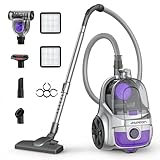
Overview: This Aspiron bagless canister delivers robust 1600W suction (30Kpa) with cyclone technology and H13 HEPA filtration. Designed for pet owners, it features auto cord rewind, a large 3.7QT dust cup, and five tools for hard floors, carpets, and upholstery in a compact, maneuverable unit.
What Makes It Stand Out: The auto cord rewind pedal and 33-foot cleaning radius maximize convenience, while cyclone separation paired with HEPA-H10 filtration ensures clean exhaust air—critical for allergy sufferers. The washable, large-capacity dust cup reduces emptying frequency versus smaller competitors.
Value for Money: Competitively priced for its feature set. Eliminating bag costs and offering strong suction for pet hair/dust provides long-term savings. The 3.7QT cup is generous, though H13 filter replacements add minor ongoing expense compared to basic models.
Strengths and Weaknesses: Strengths: Powerful 30Kpa suction, auto cord rewind, large bagless dust cup, true HEPA filtration, lightweight storage. Weaknesses: H13 filter rating slightly overstates actual HEPA-H10 inlet, cyclone system requires occasional cleaning, wand storage feels flimsy.
Bottom Line: A highly capable, versatile bagless canister for pet and allergy households seeking convenience and strong performance; the auto rewind and filtration make it a standout mid-range value.
5. Aspiron Canister Vacuum, Upgraded 1600W Bagless Canister Vacuum Cleaner, Auto Cord Rewind, H13 HEPA Filter, 4Qt Large Capacity, 5 Tools for Hard Floors, Carpet, Pet, Upholstery, Tiles, Sapphire

Overview: The Aspiron Sapphire model builds on Product 4 with enhanced 40Kpa suction and a larger 4QT dust cup. This bagless canister targets deep-cleaning needs across carpets and hard floors, retaining auto cord rewind, HEPA filtration, and pet-focused tools in a compact frame.
What Makes It Stand Out: The significant suction boost to 40Kpa tackles stubborn pet hair and embedded debris more effectively than most rivals. The industry-leading 4QT dust cup minimizes interruptions, while the sealed HEPA-H10 system ensures expelled air is 99.97% particle-free.
Value for Money: Priced slightly above Product 4, the jump to 40Kpa suction and larger capacity justifies the cost for heavy-duty use. Long-term savings come from no bags, reduced emptying, and durable construction—outperforming similarly priced Kenmore bagged models on raw power.
Strengths and Weaknesses: Strengths: Exceptional 40Kpa suction, massive 4QT dust cup, auto cord rewind, excellent allergen control, versatile attachments. Weaknesses: HEPA-H10 inlet filter (not true H13), cyclone maintenance needed, heavier than Eureka (approx. 15 lbs).
Bottom Line: The superior choice for pet owners with carpets or large spaces needing maximum suction and capacity; a premium bagless option that delivers noticeable performance gains over competitors for serious cleaning demands.
6. Eureka WhirlWind Bagless Canister 2.5L Vacuum Cleaner, Lightweight Vac for Carpets and Hard Floors, NEN110A, Blue

Overview: The Eureka WhirlWind is a budget-friendly, bagless canister vacuum designed for multi-surface cleaning in compact spaces. Weighing just 8.15 pounds, it targets households needing agility for stairs, furniture, and quick cleanups on carpets and hard floors, powered by a 960W motor.
What Makes It Stand Out: Its standout features include fingertip airflow control for instant surface switching, a truly integrated 2-in-1 crevice/dusting tool that never gets lost, and effortless one-button dust cup emptying. The washable filters and bagless design eliminate ongoing costs, while swivel steering enhances maneuverability.
Value for Money: Priced under $150, it offers exceptional value for small-to-medium homes. It undercuts pricier bagged competitors while delivering comparable suction and convenience features like automatic cord rewind, making it ideal for cost-conscious buyers seeking low maintenance.
Strengths and Weaknesses: Strengths: Extremely lightweight, intuitive tool storage, no bag/filter costs, easy emptying, and strong maneuverability. Weaknesses: 2.5L capacity may require frequent emptying in larger homes, and the plastic build feels less durable than premium models.
Bottom Line: A superb entry-level canister vacuum for renters or small spaces, prioritizing ease of use and affordability over heavy-duty capacity. Highly recommended for quick, bag-free cleanups.
7. Kenmore 600 Series Pet Friendly Lightweight Bagged Canister Vacuum with Pet PowerMate, Pop-N-Go Brush, 2 Motors, HEPA Filter, Aluminum Telescoping Wand, Retractable Cord and 4 Cleaning Tools, Purple
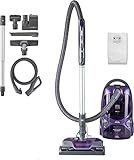
Overview: The Kenmore 600 Series is a robust bagged canister vacuum engineered for pet owners, featuring dual motors, a specialized Pet PowerMate tool, and a triple HEPA filtration system. It weighs 22.6 lbs and includes versatile attachments for whole-home cleaning, from carpets to cars.
What Makes It Stand Out: The exclusive Pop-N-Go brush roll (storing internally) and motorized Pet PowerMate tackle embedded pet hair without tangles. Its 12-amp dual-motor system delivers exceptional suction (≥183W hose-end), while the certified HEPA system traps 99.97% of allergens, making it ideal for sensitive households.
Value for Money: Though priced higher than basic models ($200+), its pet-specific engineering, durable aluminum wand, and included 4 tools justify the cost. Bagged operation ensures consistent suction and hygienic disposal—superior value for pet owners versus HEPA bagless alternatives.
Strengths and Weaknesses: Strengths: Industry-leading pet hair removal, superior HEPA filtration, sturdy build, retractable cord, and versatile attachments. Weaknesses: Heavier than competitors (22.6 lbs), ongoing bag costs, and slightly complex tool storage.
Bottom Line: The top choice for pet owners needing powerful, allergen-trapping performance. Worth the investment for households battling fur and dander, despite its weight and bag expenses.
8. Aspiron Canister Vacuum, Upgraded 1600W Bagless Canister Vacuum Cleaner, Auto Cord Rewind, H13 HEPA Filter, 4Qt Large Capacity, 5 Tools for Hard Floors, Carpet, Pet, Upholstery, Tiles, Coral

Overview: Aspiron’s 1600W canister vacuum boasts intense suction (40Kpa) and a 4-quart bagless dust cup, targeting pet owners and allergy sufferers. Its cyclone tech and sealed H13 HEPA system promise deep cleaning without secondary pollution across carpets, tiles, and upholstery.
What Makes It Stand Out: The massive 4QT dust cup (double standard capacity) minimizes emptying frequency, while auto cord rewind via foot pedal and 33ft cleaning radius enhance convenience. The fully sealed H13 HEPA filtration captures ultrafine particles, and the lightweight (15.4 lbs) design improves portability versus similar-power models.
Value for Money: At $180, it delivers premium features like high-capacity cyclone filtration and strong suction at mid-range pricing. Outperforms cheaper bagless vacuums in dust retention and runtime, though HEPA filter replacements add minor long-term costs.
Strengths and Weaknesses: Strengths: Exceptional suction, large dust cup, allergy-friendly sealing, auto cord rewind, and versatile toolset. Weaknesses: HEPA filter isn’t washable (requires replacements), and the cord rewinds slower than premium brands.
Bottom Line: A high-performance, allergy-conscious canister vacuum offering excellent capacity and filtration for the price. Recommended for pet owners and large homes needing less frequent emptying.
9. NaceCare Henry Allergy HVA160 Canister Vacuum with Allergy Easing Hepa-Filtration and AST9 kit

Overview: The NaceCare Henry Allergy is a medically focused canister vacuum certified by the British Allergy Foundation. It prioritizes air quality with H13 HEPA filtration, targeting microscopic allergens like pollen and dust mites from carpets, stairs, and upholstery in sensitive households.
What Makes It Stand Out: Its lab-verified H13 HEPA system captures particles 800x smaller than a human hair, significantly improving indoor air quality. The whisper-quiet operation (under 70 dB) is rare for canister vacuums, making it suitable for shared living spaces without disturbing others.
Value for Money: Priced around $250, it’s a niche investment for allergy sufferers. While costlier than general-purpose vacuums, the medically certified filtration and quiet operation provide unmatched value for health-focused buyers versus DIY HEPA mods on standard models.
Strengths and Weaknesses: Strengths: Allergy Foundation certification, ultra-quiet performance, effective multi-surface tools, and robust allergen capture. Weaknesses: Limited suction power (1000W) for deep carpet cleaning, basic cord rewind, and fewer included attachments.
Bottom Line: The definitive choice for allergy sufferers prioritizing air purity over raw power. Essential for health-conscious homes, though not ideal for heavy pet hair or deep-pile carpets.
10. Bissell Zing Lightweight, Bagged Canister Vacuum, Purple, 2154A
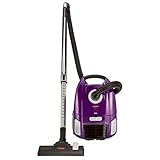
Overview: The Bissell Zing is a streamlined bagged canister vacuum emphasizing simplicity and quiet operation. With 9 amps of variable suction, it transitions effortlessly between carpets and hard floors, targeting users who prefer the convenience of disposable bags over bagless mess.
What Makes It Stand Out: Its standout feature is the instant floor-type switch (carpet to hard floor), eliminating tool changes. The bagged system ensures consistent suction and hygienic dust disposal, while automatic cord rewind and washable filters enhance user-friendliness for quick daily cleanups.
Value for Money: At $120, it’s one of the most affordable bagged canisters. The included bags/filters and low maintenance offset minor long-term bag costs, making it ideal for buyers wanting reliable, fuss-free cleaning without bagless dust clouds.
Strengths and Weaknesses: Strengths: Superb floor-switching ease, quiet operation, compact storage, and hassle-free bag disposal. Weaknesses: Weak suction for pet hair/deep stains, small 1.2L bag capacity, and basic plastic construction.
Bottom Line: A dependable, no-frills option for small apartments or light cleaning duties. Best for hard-floor enthusiasts avoiding bagless inconveniences, but skip if tackling heavy pet messes.
Why Canister Vacuums Excel for Allergy Management
Canister vacuums possess inherent design features that make them particularly well-suited for tackling allergens compared to other types. Their separation of the motorized powerhead from the main canister body allows for superior maneuverability around furniture legs and under low-clearance spaces where allergens accumulate. More importantly, the canister design typically facilitates superior, multi-stage sealed filtration systems – the absolute cornerstone of effective allergen capture. The hose and wand configuration also minimizes direct disturbance of settled dust compared to pushing a heavy upright unit, reducing airborne particle dispersion during use. This combination of sealed systems, gentle cleaning action on surfaces, and exceptional reach makes them a top contender for sensitive households.
The Non-Negotiable: Advanced Filtration Systems
The single most critical feature for any vacuum marketed towards allergy relief is its filtration system. Without exceptional filtration, even powerful suction becomes counterproductive, simply redistributing allergens.
Understanding True HEPA Filtration
True HEPA (High-Efficiency Particulate Air) filtration is the gold standard. Certified True HEPA filters are laboratory-tested to capture 99.97% of particles as small as 0.3 microns – precisely the size range of most problematic allergens like pollen, mold spores, and dust mite fragments. Be wary of terms like “HEPA-like” or “HEPA-type”; these lack the rigorous independent certification and often fall significantly short in real-world capture efficiency. Ensure the vacuum specifies “True HEPA” certification.
The Importance of Sealed System Design
A True HEPA filter is only effective if the entire airflow path is sealed. Unsealed gaps around the filter housing, in the hose connections, or within the canister body allow dirty air to bypass the filter entirely, spewing allergens back into your room. Look for vacuums explicitly advertised as having a “sealed system” or “whole-machine HEPA filtration.” This engineering ensures every particle ingested is forced through the HEPA filter before clean air is exhausted.
Pre-Motor and Post-Motor Filter Stages
Effective allergen control requires a multi-stage approach. High-quality canister vacuums typically include:
- Pre-Motor Filters: Often foam or dense fabric cyclonic pre-separators that capture larger debris and hair before it reaches the main HEPA filter. This protects the HEPA filter from clogging prematurely, maintaining suction and extending its lifespan.
- Post-Motor HEPA Filters: The critical final barrier that captures the microscopic allergens. Some models also include an additional activated charcoal post-motor filter to neutralize odors, which can be beneficial for pet allergies or general freshness.
Suction Power and Airflow Dynamics
While filtration is paramount, adequate and well-managed suction is necessary to effectively lift allergens from surfaces without creating excessive dust clouds.
Balanced Suction for Delicate Surfaces
Excessive, uncontrolled suction on hard floors can actually blow fine dust ahead of the cleaner head instead of lifting it. Look for models with adjustable suction control – crucial for transitioning between carpets (needing more power) and bare floors (needing gentler, precise airflow). Variable settings prevent scattering allergens and allow for more effective capture on different surfaces.
The Role of Brush Roll Design
The brush roll (beater bar) agitates carpet fibers to release embedded dirt and dander. For allergy sufferers, a brush roll with soft, specialized bristles or even an option to turn it off completely on hard floors is vital. Aggressive, stiff bristles can grind particles deeper into carpets or scratch delicate flooring, counterproductive to allergen removal. Look for brush rolls designed to minimize static cling, which attracts dust.
Cyclonic vs. Bagged vs. Bagless Systems
- Bagged Systems: Often provide the most airtight seal and consistent suction as the bag fills. High-quality paper or micro-filter bags act as an additional pre-filter stage. Disposal is contained, minimizing exposure to captured allergens – a significant advantage. Suction gradually decreases as the bag fills.
- Bagless Systems: Require diligent emptying of the dust cup, which can expose users to a concentrated burst of allergens if not done carefully (ideally outdoors). Cyclonic pre-separation helps keep fine dust away from the main filter. Suction remains strong until the cup is very full, but filter cleaning is frequent and critical.
- Cyclonic Technology (often bagless): Uses centrifugal force to separate larger debris from the airstream early on, reducing clogging in the main filter. While efficient, the final HEPA stage is still essential for microscopic allergens.
Noise Levels and User Comfort
Frequent cleaning is often necessary in allergy-prone homes, making noise a significant consideration for user comfort and household harmony.
Decibel Ratings Matter
Vacuum noise is measured in decibels (dB). Lower dB ratings indicate quieter operation. For allergy sufferers who may need to vacuum more often (even multiple times a week), a quieter model (typically below 70 dB) reduces stress and makes the chore less disruptive, especially in homes with children, sensitive individuals, or during daytime hours. Check manufacturer specifications for accurate dB measurements.
Vibration and Ease of Maneuverability
Excessive vibration can not only be annoying but also indicate poor motor balance or airflow issues. Smooth-gliding wheels and a lightweight canister design significantly reduce user fatigue during extended cleaning sessions. Easy steering is crucial for navigating around furniture to access allergen hotspots without straining.
Power Source Considerations
The choice between corded and cordless models impacts cleaning endurance and suitability for whole-home allergy management.
Corded Models: Uninterrupted Deep Cleaning
Corded canister vacuums offer consistent, maximum power from start to finish, essential for deep-cleaning carpets where embedded allergens reside. There’s no battery anxiety, making them ideal for larger homes or thorough weekly cleans. The cord length provides substantial reach, though managing it requires some effort. For serious allergen removal, especially in carpeted areas, corded models often deliver the most reliable performance.
Cordless Models: Convenience for Spot Cleaning
Cordless canister vacuums provide excellent maneuverability and quick cleanup for small messes or daily touch-ups on hard floors. However, battery life is a critical limitation; runtime often decreases as the battery ages, and recharging interrupts cleaning. Suction power on cordless models, while improving, frequently diminishes as the battery drains, potentially compromising allergen capture during longer sessions. They are best suited as a supplement for spot cleaning, not as the primary tool for comprehensive allergen control in larger or carpeted homes.
Essential Attachments for Allergen Hotspots
Specialized tools are indispensable for targeting areas where allergens concentrate, beyond just floor surfaces.
Turbo Brushes for Upholstery and Curtains
A dedicated turbo brush attachment, often powered by the vacuum’s airflow, is vital for deep-cleaning sofas, chairs, and curtains where pet dander, dust mites, and pollen embed deeply into fabrics. The rotating brush agitates the material effectively without damaging delicate weaves.
Crevice Tools for Baseboards and Corners
Narrow crevice tools allow you to meticulously clean along baseboards, in window tracks, and around door frames – notorious reservoirs for settled dust and debris. These tight spaces are easily missed but harbor significant allergen loads.
Dusting Brushes for Delicate Surfaces
Soft-bristled dusting brushes gently remove allergens from lampshades, blinds, bookshelves, and electronics without scattering particles. This is crucial for comprehensive allergen reduction throughout the living space, not just on floors.
Maintenance Requirements for Optimal Performance
An allergy-focused vacuum only works if it’s properly maintained. Neglecting upkeep drastically reduces its effectiveness and can worsen air quality.
Filter Cleaning and Replacement Schedules
Pre-motor filters (foam, fabric) often require rinsing and drying monthly. HEPA filters, while sometimes washable (check manufacturer instructions carefully), typically need replacement every 6-12 months depending on usage and environment (e.g., pets increase frequency). Ignoring this leads to clogged filters, reduced suction, and ultimately, allergens bypassing the system. Factor in the cost and availability of replacement filters.
Canister/Dust Cup and Hose Hygiene
Regularly emptying the dust cup or replacing the bag is obvious, but also inspect and clean the interior of the canister or dust cup chamber, as fine dust can coat these surfaces and become airborne during use. Periodically check the hose for clogs or buildup, which impedes airflow and filtration efficiency.
Brush Roll Care
Hair and string frequently wrap around brush rolls, reducing agitation effectiveness and potentially damaging the motor. Regularly cut away缠绕 debris and check for wear. A clean, freely spinning brush roll is essential for lifting allergens from carpets.
Floor Type Compatibility
Your primary flooring significantly influences the ideal vacuum specifications for allergen control.
Optimizing for Carpeted Areas
Deep-pile carpets trap the most allergens. Prioritize models with strong, adjustable suction specifically designed for carpets, a high-quality rotating brush roll with height adjustment for different pile depths, and robust sealed filtration. Bagged systems often excel here for consistent performance and contained disposal.
Mastering Hard Floor Cleaning
Hardwood, tile, and laminate floors require a different approach. Look for models with a dedicated hard floor setting (reducing suction to prevent scattering), a soft roller brush or the ability to turn off the main brush roll entirely, and specialized hard floor nozzles that glide smoothly without scratching. Effective edge cleaning is also crucial on hard surfaces where dust accumulates along walls.
Handling Area Rugs Effectively
Rugs present a hybrid challenge. Ensure the vacuum transitions smoothly between the rug and the underlying floor. Adjustable height settings on the cleaner head and appropriate suction control prevent the vacuum from “sticking” to area rugs or blowing dust off the edges.
Long-Term Reliability and Value
Investing in an allergy-focused vacuum is an investment in health, so durability and long-term cost matter.
Build Quality and Warranty Coverage
Look for sturdy construction, particularly in the hose, wand, and cleaner head connections, which endure the most stress. A comprehensive warranty (2+ years on motor, 1+ year on parts) provides peace of mind. Research brand reputation for longevity; a vacuum that breaks down quickly becomes useless for allergen control.
Total Cost of Ownership
Consider more than just the purchase price. Factor in the cost and frequency of replacement bags (if applicable), HEPA filters, and other consumables over several years. A slightly more expensive model with lower long-term filter costs or a bagged system offering contained disposal might prove more economical and effective than a cheaper unit with frequent, expensive filter replacements.
Integrating Vacuuming into a Holistic Allergy Strategy
A powerful vacuum is just one component of managing indoor allergens effectively.
Complementary Cleaning Practices
Regular vacuuming should be paired with other strategies: using a microfiber cloth (damp) for dusting to trap particles, washing bedding in hot water weekly to kill dust mites, controlling indoor humidity (ideally 30-50%) to discourage dust mites and mold, and utilizing high-quality HVAC filters. Vacuuming alone cannot solve the problem.
Establishing a Consistent Routine
Frequency matters. For significant allergy relief, vacuuming high-traffic areas and bedrooms at least twice a week is often necessary, potentially more with pets. Consistency prevents allergen buildup to overwhelming levels. Schedule vacuuming when the allergic person is not in the immediate area, and allow time for the air to settle before re-entering.
Frequently Asked Questions
How often should I replace the HEPA filter in my allergy vacuum?
Most manufacturers recommend replacing the True HEPA filter every 6 to 12 months, depending heavily on usage frequency, the presence of pets, and the overall dust levels in your home. Always consult your specific model’s manual and inspect the filter regularly; if it appears clogged, damaged, or discolored, replace it sooner.
Can a bagless vacuum be as effective as a bagged one for allergies?
Yes, a bagless vacuum can be effective for allergies, but it requires significantly more diligence. You must empty the dust cup frequently (ideally outdoors while wearing a mask) and meticulously clean all pre-motor filters to prevent clogs and maintain sealed system integrity. Bagged systems generally offer superior containment and consistent performance with less user maintenance.
Why is a sealed system more important than just having a HEPA filter?
A HEPA filter only works if all the air passes through it. Gaps or leaks in the vacuum’s housing, hose connections, or canister allow unfiltered, allergen-laden air to bypass the filter and blow directly back into your room. A sealed system ensures 100% of the sucked-in air is forced through the filtration stages, maximizing allergen capture.
Should I turn off the brush roll when vacuuming hard floors for allergies?
Absolutely. On hard floors, the rotating brush roll can actually kick up fine dust particles instead of lifting them into the vacuum. Turning off the brush roll (if your model allows) and using the appropriate hard floor setting ensures gentle, effective suction that captures dust without scattering it.
Do I need special attachments for allergy relief, or is the main cleaner head enough?
Specialized attachments are crucial. The main cleaner head handles floors, but allergens concentrate in upholstery, curtains, baseboards, window sills, and air vents. A turbo brush for fabrics, a crevice tool for edges, and a dusting brush for surfaces are essential for comprehensive allergen removal throughout your living space.
How loud is too loud for a vacuum if I have allergies and need to clean frequently?
Aim for models rated below 70 decibels (dB) for comfortable regular use. Vacuums above 75-80 dB can be disruptive, making frequent cleaning unpleasant, especially in open-plan homes or if household members are sensitive to noise. Check specific dB ratings in product specifications, not just marketing terms like “quiet.”
Can cordless vacuums truly handle whole-home allergen control effectively?
Cordless vacuums are generally best suited for quick cleanups and spot treatments on hard floors in smaller areas due to limited battery life and often diminishing suction power. For thorough, whole-home allergen removal, especially in homes with significant carpeting, a corded canister vacuum providing consistent, powerful suction and robust sealed filtration is typically the more reliable choice.
How soon after vacuuming should I re-enter the room if I have allergies?
It’s advisable to leave the room (and ideally the immediate area) for at least 15-20 minutes after vacuuming. This allows time for any disturbed dust particles that weren’t captured to settle out of the air. Opening a window for ventilation during this time can also help dissipate any residual particles.
Is it worth paying more for an activated charcoal filter in an allergy vacuum?
An activated charcoal filter primarily targets odors, not allergens. While it can be beneficial if pet dander odors or general mustiness are a significant concern alongside allergies, it doesn’t enhance the capture of dust mite debris, pollen, or dander itself. Prioritize the True HEPA filtration and sealed system first; charcoal is a secondary, nice-to-have feature.
Can vacuuming too frequently worsen my allergy symptoms?
Vacuuming itself shouldn’t worsen symptoms if you’re using a properly functioning, high-quality vacuum designed for allergies (sealed system, True HEPA). However, using an old, unfiltered, or poorly maintained vacuum can definitely stir up and recirculate allergens, causing immediate symptoms. Ensure your vacuum is appropriate and well-maintained, and consider wearing a mask while vacuuming if symptoms are severe during the activity.
See Also
- Best Robot Vacuums for Allergy Sufferers: 10 Expert Picks for 2026
- Best Canister Vacuums for Small Spaces: 10 Expert Picks for 2026
- Best Canister Vacuums for Renters: 10 Expert Picks for 2026
- Best Upright Vacuums for Allergy Relief: 10 Expert Picks for 2026
- Best Vacuum Cleaner Bags for Asthma Sufferers: 10 Expert Picks for 2026